

Ships starting with E

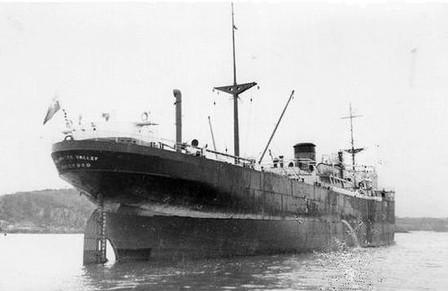
Previous name: West Lynn HMS Willamette Valley
Subsequent name:
Official Number: 167640
Class: Special Service Freighter - Q ship
Pennant No: X39
Laid down:
Builder: Napier & Miller Ltd, Old Kilpatrick, Glasgow
Launched: 1928
Into Service: 17 September 1939
Out of service: 29 June 1940
Fate: Sunk
Items of historic interest involving this ship: -
Background Data: In 1939 Winston Churchill gave authority for a number of merchantmen to be requisitioned for service as Q-ships, although for security purposes they were referred to as Special service Freighters. A fleet of 9 small mainly coal-burning vessels were acquired , 6 for deep-sea work and 3 for coastal work. All were commissioned as HM ships under their original names but were given RFA cover names and on entering harbour and while in harbour they wore the Blue Ensign, behaved as RFA’s and adopted the RFA commercial practices. None of them was really suitable for their intended roles and met with a complete lack of success. Their Q-ship service officially ended on 2 March 1941
14 August 1928 launched by Napier & Miller Ltd., Old Kilpatrick as Yard Nr: 268 named WEST LYNN for Reardon Smith Line Ltd (Sir William Reardon Smith & Sons, Managers) Cardiff
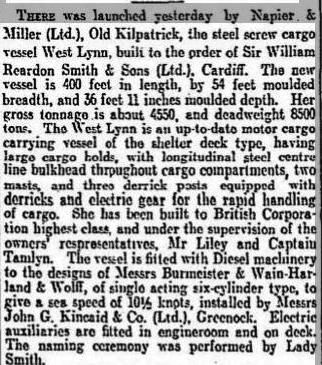
15 August 1928 the Scotsman newspaper reported the launching of the previous day -
1928 completed and transferred to the subsidiary Oakwin Steamship Co Ltd
18 November 1928 arrived at Tacoma for Vancouver
28 November 1928 sailed Portland, Oregon for San Francisco
19 December 1928 arrived at Panama
11 January 1929 passed Gravesend
8 February 1929 sailed Glasgow for Vancouver
27 February 1929 arrived at Colon, Republic of Panama
2 April 1929 sailed Los Angeles
3 May 1929 passed Dover and later the same day passed Gravesend
17 May 1929 sailed Manchester for Vancouver
4 October 1929 sailed from Portland, Oregon
17 November 1929 passed Gravesend
25 November 1929 passed the Lloyds Signal Station on the Lizard sailing west
26 November 1929 passed Point Lynas
29 November 1929 berthed at Manchester
18 January 1930 sailed Port Arthur for the Panama Canal
23 March 1930 sailed Shanghai, China
26 April 1930 sailed San Francisco
1 October 1930 sailed Sydney, NSW for Dakar
14 November 1930 sailed Dakar
16 December 1930 sailed Cardiff for Vancouver
1931 renamed WILLAMETTE VALLEY by her owners
10 April 1931 sailed Cardiff for Singapore
28 April 1931 passed Perrim
15 May 1931 sailed Singapore
27 June 1931 signalled her owners 'Proceeding Colombo making water. Port pumps are preventing water from gaining. Later her owners reported the situation had improved and the ship was making for Suez
22 November 1931 arrived at Aberdeen, Washington
7 December 1931 sailed Los Angeles
19 December 1931 arrived Panama City
21 December 1931 transitted the Panama Canal
9 January 1932 arrived London from Tacoma
17 January 1932 passed the Lloyds Signal Station on the Lizard sailing west
12 May 1932 berthed at Geraldton, Western Australia from Japan to load a cargo of wheat
15 May 1932 a ships football team played a Geraldton, Western Australia side at football. The game resulted in a 2 - 2 draw. Profits from the match were donated to the 'Visiting Nurse Scheme'
21 May 1932 having completed loading her cargo she sailed Geraldton to Fremantle arriving 24 May 1932
27 May 1932 sailed Fremantle, Western Australia for Las Palmas
19 June 1932 passed Table Bay, South Africa
6 July 1932 arrived at Las Palmas
25 May 1933 arrived at Panama from Vladivostock
29 June 1933 discharging 8,350 tons of Australian wheat at Hull
4 November 1933 at Vancouver
5 December 1933 in collision with German tanker mv Wilhelm A Riedemann at Balboa damage caused - stem twisted, slight leaking in the fore peak cauking river seams, fitting cement box
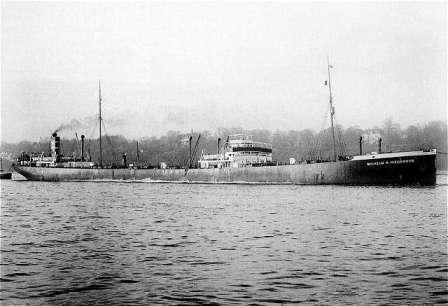
m.v. Wilhelm A Riedemann
13 October 1934 at Poti, Russia 1st Engineer Arthur Ivor Lewis discharged dead - pneumonia
15 October 1934 sailed Istanbul
6 November 1934 grounded at Cape Henry near Norfolk Virginia subsequently refloated
7 November 1934 the Lancashire Evening Post reported -
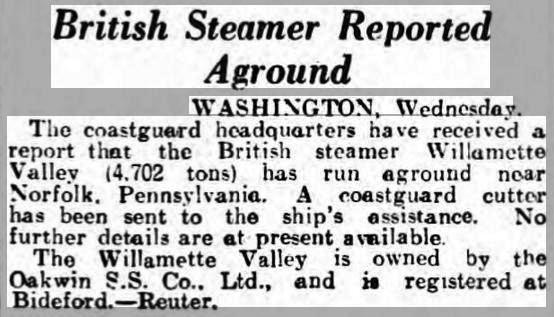
9 November 1934 arrived at Baltimore
21 November 1934 at Mobile
3 August 1935 sailed Los Angles
5 September 1935 berthed at West India Dock, London
12 September 1935 at West India Dock, London Apprentice Richard Chillingworth G Taylor discharged dead - accident
10 December 1935 at Portland, Oregon
17 December 1935 sailed San Francisco
14 May 1936 ay Hakodate, Hokkaido, Japan
31 May 1936 at Ilaio
22 July 1936 at Balboa, Republic of Panama
31 July 1936 berthed at Philadelphia
22 August 1936 at Balboa, Republic of Panama transitted the Panama Canal and cleared at Cristobal the same day
20 October 1936 at Cristobal, Republic of Panama transitted the Panama Canal and cleared at Balboa the same day
5 February 1937 at Rotterdam
2 March 1937 at Poti, Russia Ordinary Seaman George Ottosen discharged dead - accident
18 March 1937 sailed Algiers for Baltimore
17 May 1937 sailed Panama for Yokohama, Japan
22 June 1937 at Yokohama, Japan
29 September 1937 in collision with unknown vessel in dense fog while on passage from Rouen to Bristol
2 April 1938 at Jarrow on Tyne loading bunkers
7 September 1938 passed the Lloyds Signal Station on the Lizard sailing west bound
5 October 1938 arrived at Los Angeles, CA from Falmouth
12 October 1938 arrived at Vancouver, Canada from Los Angeles, CA
26 October 1938 sailed Crofton, British Columbia for Melbourne
24 February 1939 arrived at Sydney, NSW, Australia
10 March 1939 cleared to sail Sydney, NSW, Australia for Makatea
11 March 1939 sailed Sydney, NSW Australia
17 September 1939 requisitioned by the Admiralty for conversion into a Special Service Freighter at Chatham Dockyard
26 September 1939 commissioned as HMS WILLAMETTE VALLEY
29 November 1939 Chief Steward William Willard discharged dead - illness
January 1940 conversion completed. Cover name RFA EDGEHILL. Complement 89 under command of Commander. Robert .E.D. Ryder Royal Navy. Armed with 9 x single 4-inch guns, 1 x 12 pdr gun, 4 x Lewis machine guns, 4 x single 21-inch torpedo tubes, 100 x depth charges and was fitted with Asdic
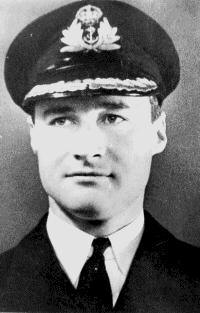
Commander Robert E D Ryder Royal Navy
29 June 1940 torpedoed by German submarine U51 in the North Atlantic at 49°27N, 15°25W and sunk - 67 (60 RN, RNR or RNVR and 7 Merchant Navy) of the crew were killed - all remembered with pride on the Chatham and Liverpool Naval memorials. There were 24 survivors.. It required 3 torpedoes to sink her.
The following members of the crew received the following awards: -
Posthumous Mention in Despatches
Lieutenant Edward Francis Michael Seymour Royal Navy
Mr Peter Richard Starkey, Assistant Radio Officer
Termporary Surgeon Lieutenant Hamish Alexander Wallace MRCS, LRCP, RNVR
Petty Officer Walter Alfred Keyse X6077 RNSBR
Mention in Despatches
MIdshipman Michael G A Whittle RNR
Stoker Petty Officer Eric N Lockwood KX/76797
Mr Thomas W Pearson, Chief Radio Officer
Notes:
- This ship was a Q ship - a commissioned Naval vessel which would assume its RFA name on entering harbour to hide its genuine identity. She never served as an RFA.
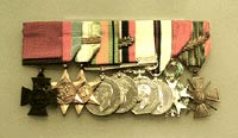
- Commander Robert E D Ryder Royal Navy was awarded the Victoria Cross. During 27-28 March 1942 he led the naval force in Operation Chariot, with the aim of wrecking the gates at the entrance to the huge dry dock at St Nazaire, the only one in western France capable of accommodating the German battleship Tirpitz. The force, commanded by Ryder in MGB 314, comprised sixteen motor launches, a motor torpedo boat, and the destroyer HMS Campbeltown which, loaded with explosives on a time fuse, was to ram the dock gates. It also included 257 commandos, who were to demolish dockside installations. Just before 1.30am on 28 March, Ryder’s force reached its objective, where the Campbeltown succeeded in ramming the dock gates. Ryder remained on the spot to conduct operations, going ashore at one stage to look around. Returning to MGB 314 - by then under intense close-range fire - he organised the evacuation of men from the Campbeltown and the rescue of as many commandos as possible. After being in action for well over an hour, MGB 314, still under fire and full of dead and wounded, at last withdrew and eventually reached England. The Victoria Cross awarded to Ryder was one of five won during the raid.
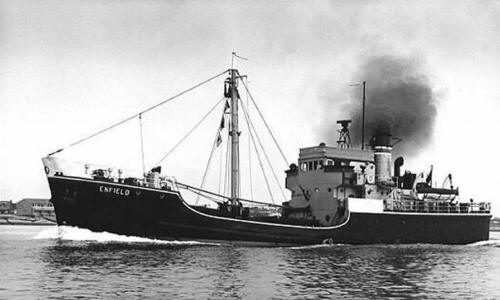
Previous name:
Subsequent name:
Official Number
Class: GATLING CLASS Armament Stores Carrier
Pennant No: A 395
Laid down: 1945
Builder: Lobnitz & Co Ltd, Renfrew
Launched: 5 September 1945
Into Service:
Out of service: 23 September 1969
Fate: Scrapped February 1970
Items of historic interest involving this ship: -
Background Information: - One of a group of five coasters which were not normally classed as RFA’s They are included here as the ancestors of the more modern ammunition ships These five ships were designed by the Director of Naval Construction to the requirements of the Naval Armament Department. They were designed for Pacific Operations to carry ammunition from larger ships offshore which were of too deep a draught to go close inshore to the coastal areas or small harbours and had their bottoms strengthened to permit grounding when loaded if required. This was a 1943 plan connected with a future invasion of Japan. As there was no requirement to carry large naval guns they were provided with two cargo holds. The order for them was placed in October 1944 and none of them was completed before the end of hostilities, which meant that only one of them (GATLING) was needed to proceed to the Far east to assist in the rehabilitation of Singapore. GATLING and NORDENFELT were completed to mercantile standards and were registered and classed with Lloyds Register and were run on National Maritime Board conditions, while the other three were on “Yard Craft” Dockyard agreements and were completed with naval style accommodation.
5 September 1945 launched by Lobnitz & Co Ltd, Renfrew as Yard Nr 1087 named ENFIELD
December 1945 completed with naval-type accommodation
8 March 1946 berthed at Dundee from Fort William
30 April 1946 berthed at Dundee from Crombie
12 May 1946 berthed at Dundee from Fort William
14 May 1946 sailed Dundee to Fort William
21 June 1946 sailed Dundee to Fort William
3 July 1946 berthed at Dundee from Corpach
4 July 1946 sailed Dundee to Corpach
17 July 1946 berthed at Dundee from Invergordon
1 August 1946 berthed at Dundee from Crombie
21 December 1948 while dumping old ammunition off May Island in the Forth some exploded causing slight damage to the ship
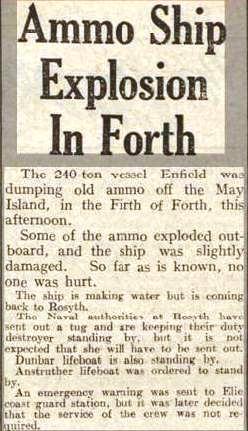
Press report from the Evening Telegraph of 21 December 1948
19 November 1949 passed the Lloyds Signal Station on the Lizard sailing east
12 July 1953 responded to an SOS and found the dismasted motor yacht Owen Roe in thick mist off the Mull of Kintyre. took the yacht in tow for 5.5 miles from the Mull to the Sound of Islay saving the crew
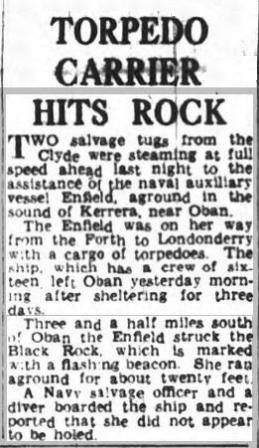
15 November 1963 sailed Oban for Londonderry
16 November 1963 the Aberdeen Press reported that ...
23 September 1969 sold for scrap
February 1970 arrived Inverkeithing for demolition by T.W. Ward Ltd
Notes:
- Based at Naval Armaments Depot, Crombie between 1946 to 1959

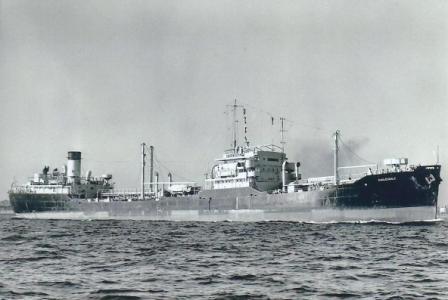
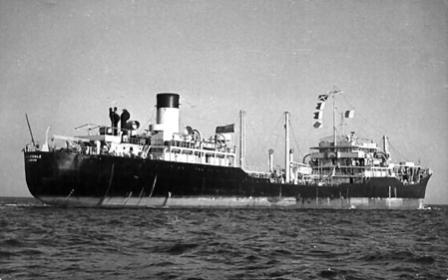
Previous name: Empire Metal
Subsequent name: N Tisar
Official Number: 168248
Class: 1st DALE CLASS Freighting Tanker
Pennant No: X104 / B 512 / A104
Laid down: 20 December 1940
Builder: Furness Shipbuilding, Haverton Hill
Launched: 18 November 1941
Into Service: 9 January 1942
Out of service: 21 July 1958 - laid up on the River Tyne
Fate: Broken up
Items of historic interest involving this ship: -
Background Data: Originally there were to have been nineteen ships in this Class. The first six were purchased off the stocks fro the British Tanker Co Ltd whilst building at the instigation of the then Director of Stores, Sir William Gick, who was concerned at the age of the RFA Fleet and ships that were approaching the end of their economic lives. A further two ships were purchased from Anglo Saxon Petroleum Co Ltd for evaluation purposes. At the outbreak of WW2, a further eleven ships were acquired from the MOWT war programme although one of these, to have been named EPPINGDALE, which had been registered in London as EMPIRE GOLD on 21/02/43 and intended for transfer to the Admiralty for manning and management as an RFA and despite five Officers being appointed to her, the intended transfer was cancelled the following day and she thus never entered RFA service. Three of this Class were converted into LSG’s and were then reconverted back into tankers at the end of the War
18 November 1941 launched by Furness Shipbuilding Co Ltd, Haverton-Hill as Yard Nr: 339 named EMPIRE METAL for the MoWT
28 November 1941 Mr Charles M Morgan RFA (Lieutenant Commander (E) RNR) appointed as Chief Engineer Officer
2 January 1942 at Middlesborough
9 January 1942 completed. Acquired by the Admiralty and renamed EAGLESDALE
19 January 1942 in collision with the British ss KINGSWOOD on the River Tees and was damaged above the waterline
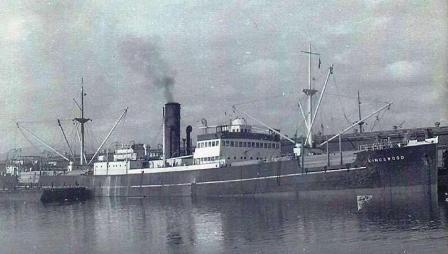
ss KINGSWOOD
22 January 1942 sailed Middlesborough to the Tyne arrived the same day
February 1942 fitted for OAS trials
12 February 1942 sailed the Tyne to Methil Roads arriving the next day - to anchor
16 February 1942 sailed Methil in convoy EN47 along with NAV BISON arrived the Clyde 19 February 1942
17 February 1942 passed Dunnet Head
19 February 1942 prepared for OAS trials in the Clyde area
20 February 1942 at Greenock
4 March 1942 having sailed Londonderry she commenced extensive OAS trials with German equipment from the captured supply ship GEDANIA fitted with rubber hoses and deck rollers.The success of these trials resulted in the general introduction of the rubber hose and deck rollers
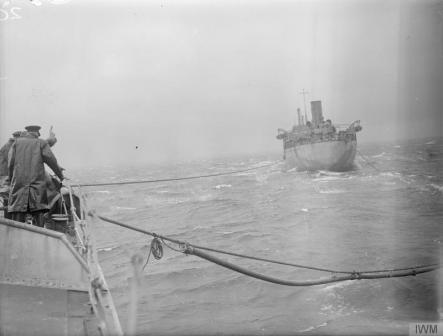

9 March 1942 at Londonderry
17 March 1942 at Greenock
18 March 1942 Captain Frank P Hennin RFA appointed as Master
25 March 1942 sailed River Clyde in ballast in convoy OS23 for Freetown and then Curaçao, Netherland Antilles arriving on 14 April 1942
22 April 1942 sailed Curaçao to Table Bay, South Africa due 19 May 1942
26 May 1942 sailed Capetown independently to Port Elizabeth arriving on 28 May 1942
30 May 1942 sailed Port Elizabeth independently to East London arriving 31 May 1942
12 June 1942 sailed East London independently to Durban arriving the next day
13 June 1942 sailed Durban independently to Mombasa arriving 22 June 1942
6 October 1942 sailed Diego Suarez independently to Mahe arriving on 10 October 1942
1 November 1942 Able Seaman Stephen Cavanagh, Fireman John Fish, Cook John Ireland, Steward Rex F Mitchell, Fireman John Morris, Ordinary Seaman William Mowbray, Ordinary Seaman Robert S Sanderson and Carpenter Harry Thompson all discharged dead - while being repatriated to the UK on s.s. Mendoza this ship was torpeoded and sunk in the Indian Ocean by German Submarine U-178 The survivors were picked up by the South African Naval whaler NIGEL and the American CAPE ALVA and were landed at Durban
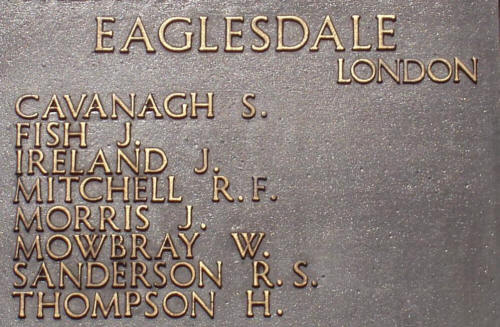
Those who were lost are recorded with pride on the Tower Hill Memorial
3 March 1943 at Kilindini with HMAS NIZAM alongside being refuelled
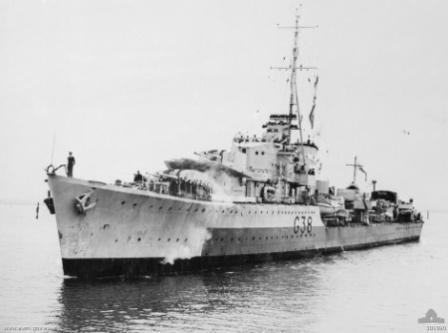
HMAS NIZAM
18 March 1943 at Kilindini with HMAS NIZAM alongside being refuelled
31 March 1943 carried out trials of the British system of OAS
1 April 1943 sailed Mombasa independently to Bombay arriving on 14 April 1943
22 April 1943 to 8 June 1943 undergoing repairs at Bombay
11 June 1943 sailed Bombay in convoy BP83 to Bandar Abbas arriving on the 16 June 1943
16 June 1943 sailed Bandar Abbas independently to Abadan arriving on 18 June 1943
20 June 1943 sailed Abadan independently to Bandar Abbas arriving 22 June 1943
26 June 1943 sailed Bandar Abbas in convoy PA43 to Aden arriving 3 July 1943
13 August 1943 Mr John B Russell RFA appointed as Chief Engineer Officer
26 October 1943 was at Mombasa
4 January 1944 sailed Seychelles independently to Colombo arriving 12 January 1944
26 January 1944 under going repairs at Colombo
3 February 1944 sailed Colombo in convoy CX17 to Addu Atoll arriving 6 February 1944
7 February 1944 sailed Addu Atoll independently to Colombo arriving 14 February 1944
11 March 1944 at Trincomalee with HMAS CESSNOCK alongside to refuel
24 March 1944 at 8.05S 81.48E RASed with HMS QUEEN ELIZABETH supplying her with 710 tons of FFO and together with RFA's ARNDALE and EASEDALE also RASed other RN warships
26 March 1944 RASed with HMAS NAPIER supplying 310 tons of FFO
9 April 1944 sailed Trincomalee independently to Colombo arriving 11 April 1944
26 April 1944 sailed Colombo in convoy JC 46 to Trincomalee along with RFA’s APPLELEAF(1) and ECHODALE arriving 28 April 1944
30 April 1944 sailed Trincomalee under escort. On this day TF 67, consisting of the oilers RFA's EAGLESDALE (as Force Commodore), ECHODALE, ARNDALE, APPLELEAF (1), PEARLEAF (1) and the distilling ship RFA BACCHUS (2), escorted by the heavy cruiser HMS's LONDON and SUFFOLK had sailed from Trincomalee Harbour on Operation TRANSOM. Off the Harbour entrance the frigate HMS FINDHORN joined TF 67. Course had then been set for Exmouth Gulf, Western Australia. TF 67 had arrived at Exmouth Gulf on 12/5/44
25 October 1944 sailed Bombay independently to Abadan arriving 31 October 1944
2 November 1944 sailed Abadan independently to Colombo arriving 11 November 1944
15 November 1944 sailed Colombo independently to Trincomalee 17 November 1944
13 January 1945 sailed Chittagong in convoy RK3A to Akyab, Burma arriving 14 January 1945
20 January 1945 off Akyab Harbour, Burma refuelled HMAS NAPIER
23 January 1945 off Akyab Harbour, Burma refuelled HMAS NORMAN
6 March 1945 sailed Trincomalee independently to Colombo arriving 8 March 1945
6 April 1945 sailed Trincomalee independently to Colombo and RASed with HMS/m SIRDAR and HMS MEADOWSWEET
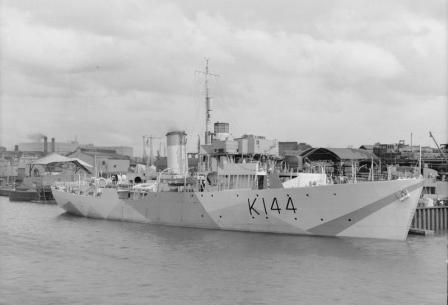
8 April 1945 arrived at Colombo
14 April 1945 sailed Colombo to Freemantle
April 1945 RASed HMS MEADOWSWEET which had sailed from Fremantle, Western Australia on 6 April 1945 while escorting HMS/m SIRDAR for Trincomalee, Ceylon and which arrived on 23 April 1945
27 April 1945 RASed tugs towing AFD 18 and 20 from Colombo
5 May 1945 arrived at Fremantle, Australia
15 May 1945 Mr Wilfred C Shortland RFA appointed as Chief Engineer Officer
17 May 1945 sailed Freemantle independently to Colombo arriving 1 June 1945
9 June 1945 sailed Colombo independently to Darwin arriving 26 June 1945
27 June 1945 sailed Darwin independently to Manus arriving 8 July 1945 joining RFA's GREEN RANGER, BACCHUS (2) and BROWN RANGER
12 July 1945 sailed Manus, Admiralty Islands
1 August 1945 at sea off Saipan in convoy with RFA CEDARDALE and escorted by HMAS LAUNCESTON
1 September 1945 at Manus, Admiralty Islands with RFA's BROWN RANGER, SERBOL and ss FORT LANGLEY later to become RFA FORT LANGLEY
9 September 1945 while at Manus refuelled HMAS NORMAN alongside
September 1945 spare propeller shafts for the ship and RFA EASEDALE supplied by Wm Beardmore & Co Ltd and despatched to Colombo (15.9.45) and to SNSO Rosyth ()
16 September 1945 at Seeadler Harbour, Admiralty Islands with HMAS HOBERT alongside being refuelled
21 October 1945 sailed Manus independently to Sydney, NSW arriving on 30 October 1945
27 December 1945 2nd Officer R C Rogers RFA and Miss Joyce Mills of Moree Station, Yass, NSW were married at St James' Church, Sydney NSW. The reception was held onboard.
12 February 1946 arrived at Sydney, NSW
19 April 1946 arrived River Tyne for refit from Sheerness
6 May 1946 berthed at Wallsend Slipway & Engineering, River Tyne
June 1946 Captain Henry F Colbourne RFA appointed as Master
4 July 1946 berthed at Newcastle Quay, River Tyne with HMS TURMOIL (later to become RFA TURMOIL)
12 July 1946 sailed the River Tyne
22 September 1946 arrived at Abadan
28 September 1946 sailed Abadan for Geraldton, Western Australia
12 November 1946 sailed Port Said for Abadan
27 November 1946 sailed Abadan for Port Said
27 January 1947 sailed Port Said for Abadan
2 February 1947 passed Aden
19 March 1947 while on passage from Abadan to LEFO passed Aden this day
18 June 1947 sailed Port Said
24 July 1947 Captain William R Parker RFA appointed as Master
13 October 1947 Mr Lionel W Pool RFA appointed as Chief Engineer Officer
19 November 1947 arrived at Trinidad from Barrow
26 November 1947 sailed from Trinidad
17 December 1947 Captain Raymond V Boodle RFA appointed as Master
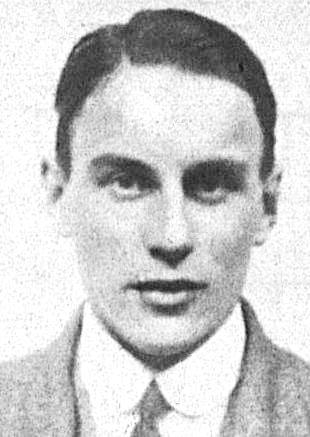
Captain Raymond V Boodle RFA
15 February 1948 sailed Aruba for the UK
4 March 1948 passed Lloyds Signal Station on the Lizard sailing east
6 March 1948 Mr Frederick O Brims RFA appointed as Chief Engineer Officer until 15 October 1950
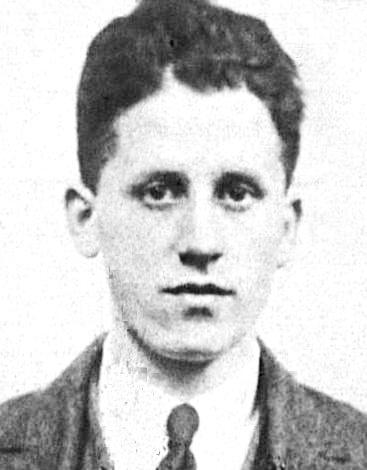
9 April 1948 arrived at Abadan from London
9 April 1948 the Hampshire Telegraph reported ...
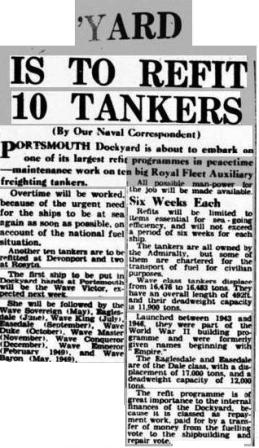
12 April 1948 sailed Abadan
16 May 1948 on passage from Abadan passed Aden
23 May 1948 sailed from Port Said
30 May 1948 passed Gibraltar sailing west
7 June 1948 berthed at Portsmouth Harbour
21 July 1948 sailed from Portsmouth Harbour
2 August 1948 arrived at Port Said from Portsmouth
20 August 1948 arrived at Abadan from Karachi
23 August 1948 sailed Abadan for Malta
5 September 1948 at Port Said
24 September 1948 at Port Said
29 September 1948 sailed Suez
22 October 1948 at Port Said
12 November 1948 at Port Said
31 January 1949 passed the Lloyds Signal Station on Flamorough Head sailing north bound
7 February 1949 to 17 February 1949 at Newcastle on Tyne
24 March 1949 at Bombay, India
17 April 1949 arrived at Macquarie Point Oil terminal, Hobart, Tasmania to discharge 10,000 tons of FFO. She had arrived from Abadan via Bombay where they had changed the crew
22 April 1949 due to sail from Hobart - delayed until the 23 April 1949
23 April 1949 sailed but had to return the same day when 100 miles out from Hobart with an engine defect
25 April 1949 sailed again from Hobart, Tasmania to Colombo for boiler cleaning
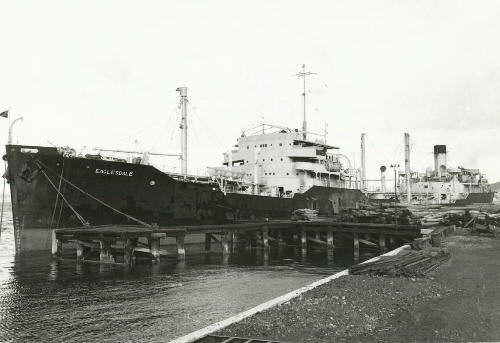 .
.
RFA Eaglesdale - Photograph Courtesy of the Mercury, Hobart, Tasmania
6 June 1949 at Abadan
2 July 1949 berthed at Gibraltar
11 July 1949 at Rosyth
19 July 1949 arrived Palmers, Hebburn on Tyne from Rosyth
31 August 1949 berthed at Palmers, Hebburn on Tyne together with RFA BROOMDALE
2 September 1949 Captain Douglas S Norrington RD RFA (Commander RNR) appointed as Master
24 September 1949 sailed Gibraltar for Abadan
1 October 1949 arrived at Port Said
3 October 1949 sailed Suez
18 October 1949 sailed Abadan for Colombo, Ceylon and Sydney, NSW, Australia
27 October 1949 berthed at Colombo, Ceylon
20 November 1949 arrived Sydney, NSW, Australia from Abadan
24 November 1949 sailed Sydney, NSW, Australia for Abadan
12 December 1949 arrived at Singapore
20 December 1949 sailed from Singapore
6 January 1950 sailed Abadan
15 February 1950 berthed at Abadan
17 February 1950 sailed Abadan for Trincomalee, Ceylon
27 February 1950 arrived at Trincomalee, Ceylon
25 March 1950 sailed Bombay
2 April 1950 sailed Abadan for Malta
16 April 1950 arrived at Suez
1 May 1950 sailed Port Said for Abadan
17 May 1950 sailed Abadan for Port Said
9 June 1950 passed Gibraltar when on passage from Abadan for Plymouth
21 June 1950 to 26 June 1950 at Plymouth
10 July 1950 Mr J Mel. Lumsden RFA appointed as Chief Engineer Officer
1 September 1950 at Devonport Engine Room Cassab Gooland Sarwar Hoosein discharged dead from natural causes
6 September 1950 passed Gibraltar sailing east bound
13 September 1950 arrived at Port Said
15 September 1950 while on passage from Plymouth to Abadan sailed Suez this day
26 September 1950 berthed at Abadan
28 September 1950 sailed Abadan
7 November 1950 passed Gibraltar sailing east bound
11 March 1951 sailed Malta for Abadan
14 March 1951 arrived at Port Said
23 March 1951 sailed Suez
7 June 1951 arrived at Hong Kong
21 July 1951 sailed Aden for the UK
6 August 1951 passed Gibraltar sailing west
30 October 1951 sailed Curaçao
18 November 1951 landed an injured seaman at Bighi Hospital, Malta following an accident on board when he crushed his fingers
19 November 1951 sailed Malta for Aden
30 November 1951 arrived at Aden
19 December 1951 sailed Mena Al Ahmadi for Gibraltar
1 January 1952 sailed Port Said
4 February 1952 Captain Thomas Elder DSC RFA appointed as Master
10 March 1952 sailed Gibraltar for Malta
22 May 1952 Mr S Turner RFA appointed as Chief Engineer Officer
30 September 1952 at 7°06N 82°0E Lascar Seaman Hussain Ali discharged dead - apparently through heart failure - buried at sea
16 February 1953 Mr Ciriaco G McFadzean RFA appointed as Chief Engineer Officer
24 July 1953 Captain D A C Butler RFA appointed as Master
5 April 1954 Captain James H Chant RFA appointed as Master until 13 April 1954
9 May 1954 before Wallsend Magistrates' Court Donkeyman Thambi Arputham Pillai from the ship pleaded Guilty to being drunk at Back Benton Way, Wallsend on 2 May 1954 - he was fined 10/-
1 October 1954 Captain Edward E A Le Sage RFA appointed as Master
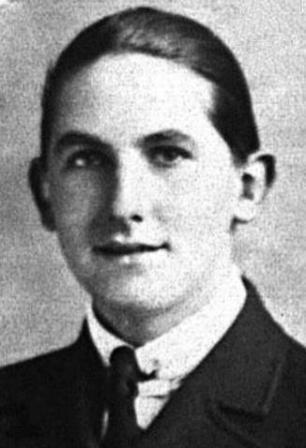
7 February 1956 at Mestre, Venice, Italy Seaman 1st Class Ismail Adam discharged dead from burns
1956 - One of 35 RFA's in Operation Musketeer
3 June 1956 Mr W C Shortland RFA appointed as Chief Engineer Officer
29 November 1956 Captain Leslie G Rowling DSC RFA appointed as Master
28 March 1957 Mr Frederick B Hobson RFA appointed as Chief Engineer Officer
4 June 1957 arrived at Baltimore
15 July 1957 sailed St Michaels for LEFO
27 July 1957 sailed N Waterweg
29 July 1957 arrived Leith
10 September 1957 Captain Edmund H Butterworth RFA appointed as Master
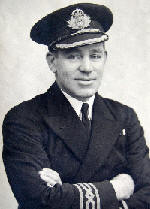
Captain Edmund H Butterworth RFA
21 July 1958 laid up on the River Tyne
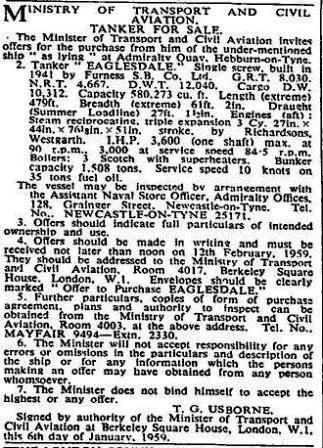
15 and 22 January 1959 offered for sale in The Times on these dates 'as lying' at Admirals Quay, Hebburn on Tyne
November 1959 sold to Soc Misr de Nav Maritime SAE, renamed as N Tisar and the registration changed to Egypt
26 November 1959 sailed in tow from the Tyne after sale for £65,000
29 November 1959 after resale, arrived Hamburg for breaking up by Eisen u.Metall KG Lehr & Co
Notes:
1. Served as a RAS oiler with the Eastern Fleet and at the Cape between 1943 and 1946.
2. Was part of the British Pacific Fleet Train - hence the B-pennant number