

Ships starting with L
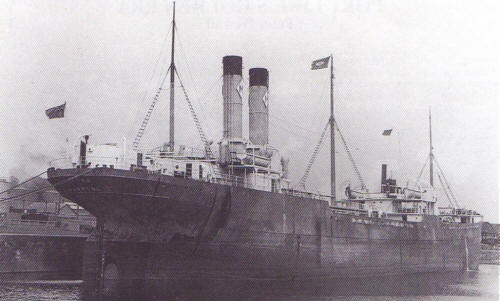
Lucigen before being purchased by the Admiralty
Subsequent name:
Official Number: 127965
Class: Tanker Depot Ship
Pennant No:
Laid down:
Builder: Armstrong Whitworth, Low Walker
Launched: 25 November 1908
Into Service: 1939
Out of service: 1946
Fate: Scuttled off Lagos
Items of historic interest involving this ship: -
Background Data: Around the outbreak of WW2, the Admiralty purchased 3 old tankers for depot ship and escort oiler work which were manned and managed by their former commercial owners although some RFA personnel were based onboard. None of them served in the post~War Fleet
Port of Registry Liverpool
25 November 1908 launched by Armstrong, Whitworth & Co Ltd, Low Walker, Newcastle as Yard Nr: 814 named LUCIGEN for Lucigen Steamship Co Ltd (H.E. Moss & Co, Managers) Liverpool.
February 1909 completed
6 March 1909 ran sea trials and was then laid up on the Tyne
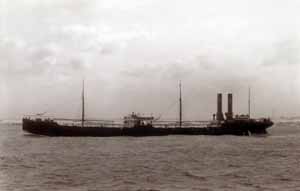
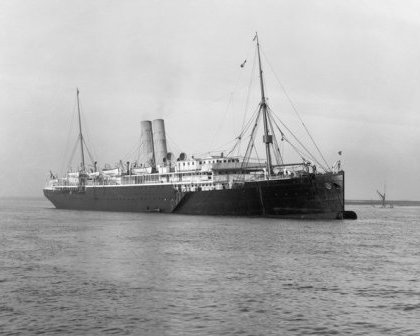
Lucigen on her sea trials
© Tyne & Wear Archives Service
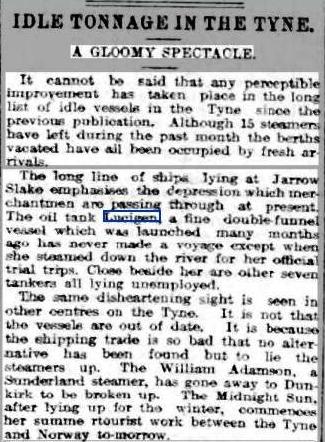
4 June 1910 the Shields Daily Gazette reported -
7 August 1910 in response to distress signals, she closed the Anglo Saxon Petroleum Ltd tanker Cardium in the Red Sea which had a serious stokehold fire and had lost all power. The Master sent a radio message on their behalf to request tug assistance and the tanker was later successfully towed to safety
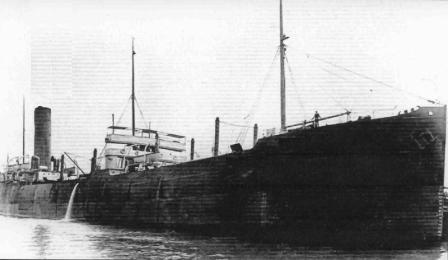
Anglo Saxon Petroleum Ltd. tanker Cardium
27 November 1910 sailed New York
26 February 1911 sailed the River Tyne for New York
14 March 1911 arrived at New York
20 March 1911 sailed New York for Hamburg
13 April 1911 sailed the River Tyne for New York
22 April 1911 reported that at 45°10N 47°15W she had sighted two very large icebergs
27 April 1911 arrived New York from the Tyne
7 June 1911 arrived at Philadephia from the River Tyne
20 July 1911 arrived at New York
12 August 1911 sailed Belfast for Philadelphia
30 December 1911 sailed New York for London
29 January 1912 sailed Savona
11 February 1912 sailed Novorossisk for Nordenham
4 March 1912 arrived at Nordenham
8 March 1912 sailed Bremen enroute to New York
24 March 1912 encountered heavy pack-ice in the North Atlantic and had to divert southwards for an hour to clear it
31 March 1912 finally arrived in New York from Nordenham
10 June 1912 passed Teneriffe
13 August 1912 arrived at Port Arthur, Texas from the River Tyne
2 December 1912 sailed New Orleans for Portland
23 May 1913 sailed Norfolk, VA for Portsmouth
6 June 1913 berthed at Portsmouth from Port Arthur, Texas
8 July 1913 arrived Port Arthur, Texas from Cardiff
17 July 1913 sailed Norfolk VA for Portsmouth arriving on 31 July 1913
25 August 1913 arrived at Port Arthur, Texas
22 September 1913 sailed Portsmouth
11 October 1913 sailed Portsmouth for Port Arthur, Texas
5 November 1913 berthed at Portsmouth from Port Arthur, Texas
15 December 1913 sailed Portsmouth Harbour
2 February 1914 sailed Portsmouth for Spithead
3 February 1914 passed the Lloyds Signal Station on the Lizard sailing west
6 February 1914 entered dry dock at Cardiff
23 February 1914 arrived at Malta while on passage from Cardiff
27 February 1914 arrived at Port Said
8 August 1914 stopped by HMS ODIN and allowed to proceed
7 October 1914 off New York HMS SUFFOLK spoke to Lucigen and allowed her to proceed
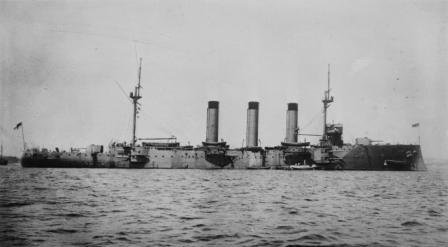
HMS SUFFOLK
1915 Captain George H Davidson listed as Master and 1st Engineer R W Ibbotson listed as Chief Engineer Officer in records in the National Maritime Museum
1 August 1915 off the coast of the United States Ordinary Seaman John M Stewart discharged dead - natural causes. Remembered with pride on the Stornoway Memorial, Isle of Lewis
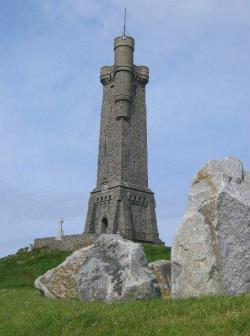
Stornoway Memorial, Isle of Lewis
30 September 1915 stopped by HMS OROTAVA, an Armed Merchant Cruiser, at 57°58N 11°30W and allowed to proceed
17 March 1916 at 58°25N 14°40W stopped by HMS GLOUCESTERSHIRE, an Armed Merchant Cruiser, and allowed to proceed
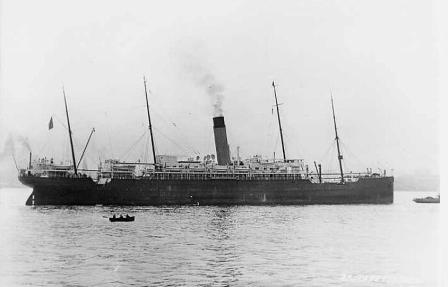
HMS Gloucestershire
15 April 1916 in dry dock on the River Tyne
21 April 1916 at North Shields 2nd Mate William Gilliland discharged dead from heart failure
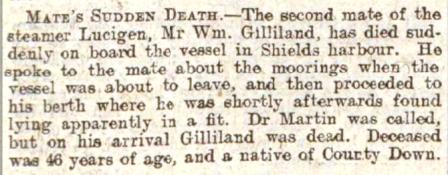
Press Cutting from Newcastle Journal of 24 April 1916
1 September 1916 at Abadan
24 October 1916 sailed Messina to Abadan arriving on 24 November 1916
8 May 1917 while on passage from Abadan to Aden was sighted by HMS BRAMBLE
28 June 1918 sighted by HMS PERTH which what was shown in her ships log as the Perim patrol
15 July 1918 while in a convoy from Milo to Corfu escorted by HMS COLNE parted company from the convoy and sailed direct to Corfu
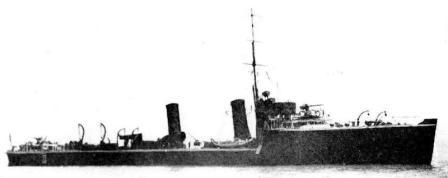
HMS COLNE
23 July 1919 berthed at Liverpool from New Orleans
10 August 1919 sailed Barry
25 August 1919 entered Norfolk - reported in the New York Tribune 26 August 1919
6 September 1919 sailed New Orleans
15 September 1919 cleared Norfolk for London - reported in the New York Tribune 16 September 1919
30 September 1919 passed the Lizard while on passage from New Orleans to London - reported in the New York Tribune of 2 October 1919
25 November 1919 arrived at Le Harve, France - reported in the New York Tribune 29 November 1919
22 March 1920 sailed Norfolk - reported in the New York Tribune 23 March 1920
19 April 1920 sailed New York for Portland - reported in the New York Tribune of 20 April 1920
21 May 1920 passed the Lloyds Signal Station on the Lizard sailing east
27 May 1920 berthed at Antwerp from New York - reported in the New York Tribune 28 May 1920
1 June 1920 sailed Hull for New York - reported in the New York Tribune 2 June 1920
18 June 1920 sailed Norfolk VA - reported in the New York Tribune 19 June 1920
29 June 1920 arriven Port Arthur, Texas from the River Tyne
31 August 1920 berthed at Port Eads - reported in the New York Tribune of 1 September 1920
5 September 1920 sailed Port Eads for Calais and Dunkirk via Norfolk - reported in the New York Tribune 6 September 1920
24 December 1920 entered dry dock at Millbay, Plymouth for refit
7 January 1921 sailed Plymouth for New York
26 January 1921 at 43°40N 64°15W Fireman Jesse Wonacott discharged dead from heart failure
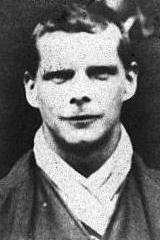
Fireman Jesse Wonacott
28 January 1921 arrived at New York from Plymouth
30 March 1921 sailed Port Eads to Le Harve - reported in the New York Tribune 31 March 1921
12 June 1921 arrived at Norfolk from Baton Rouge - reported in the New York Tribune 13 June 1921
28 June 1921 passed the Lloyds Signal Station on the Lizard sailing east
23 July 1921 arrived at Newport News from Rouen - - reported in the New York Tribune 24 July 1921
25 July 1921 sailed Newport News for New Orleans - reported in the New York Tribune 26 July 1921
4 August 1921 sailed New Orleans for Le Havre but returned
5 August 1921 sailed New Orleans for Le Havre
25 August 1921 passed the Lloyds Signal Station on the Lizard sailing east
14 April 1922 sailed Rotterdam for Baton Rouge
14 May 1922 sailed New Orleans for Cette
19 June 1922 passed Constantinople for Novorossisk
18 November 1922 at Swansea
28 June 1923 sailed Thames Haven for New York
11 October 1923 sailed the River Tyne for Beaumont, Texas
16 November 1923 sailed Beaumont, Texas for Amsterdam
21 March 1924 passed the Lloyds Signal Station on the Lizard sailing east
30 March 1924 passed the Lloyds Signal Station on the Lizard sailing west
22 April 1924 arrived New Orleans from Southampton
14 May 1924 passed the Lloyds Signal Station on the Lizard sailing east
8 June 1924 passed the Lloyds Signal Station on the Lizard sailing west
12 December 1924 passed the Lloyds Signal Station on the Lizard sailing east
12 January 1925 arrived at Halifax from the River Tyne
24 May 1925 at Constantinople Galley Boy William Thomas Welch discharged dead from natural causes
18 September 1926 when 96 nmiles west of the Isle of Wight radioed she was bound for Hull
28 September 1926 arrived at Granton from Hull
1 October 1926 sailed Granton for Rotterdam
23 March 1927 sailed Constantinople
2 December 1927 sailed Port Said for Constanza
2 February 1928 sailed from the Tyne in ballast for New York with a crew of 40 aboard. The Master was Captain W B Simpson
5 February 1928 lost her rudder in the Atlantic to the NW of Cape Wrath. Sent out radio messages reporting her predicament and giving her position. The crew set about rigging a sail, using the two funnels as a mizzen which allowed them to run before the wind for a while.
12 February 1928 the German tug Seefalke took her in tow. Still in atrocious weather conditions. The tow parted and three of the crew of the tanker were injured although not seriously. The ship drifted for 14 to 15 hours to within 18 miles of the Skerryvore Rocks before the tow was reconnectedand and the vessel made the Clyde
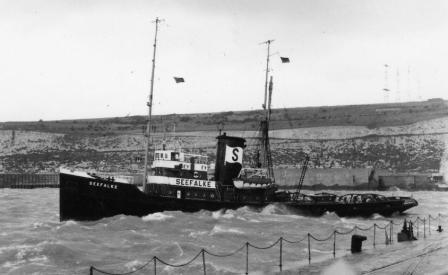
German tug Seefalke
16 February 1928 at 55°31N 6°39W Fireman & Trimmer William Drysdale discharged dead from natural causes
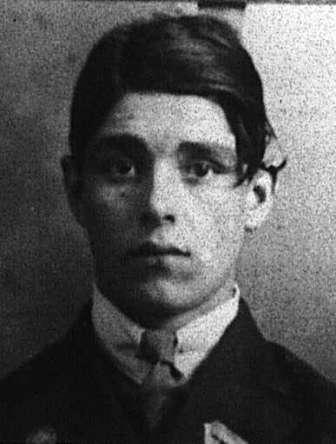
Fireman William Drysdale
17 February 1928 arrived at Greenock in tow of the German tug Seefalke and was berthed at Princess Pier with her ensign at half mast. The ship's rudder was broken
28 February 1928 towed to Harland & Wolff Ltd., Govan for a new stern post and rudder to be fitted
22 January 1929 arrived Falmouth having passed the Lloyds Signal Station on the Lizard
31 August 1929 while entering Cardiff Docks under tow of tugs Eagle and Falcon the tug Eagle was in collision with a steam collier Alice. The Eagle sank and the Alice was damaged. The Eagle subsequently raised. The collision was later subject to litigation in the Admiralty Division of the High Court on 21 January 1930 when it was found that the Alice was on the wrong side of the channel and was solely to blame - stated case ( Ll.L.Rep. 12 refers
13 April 1930 suffered storm damage while crossing the Atlantic from New Orleans to Le Havre - radio room washed away
29 April 1930 the Nottingham EVening Post reported -
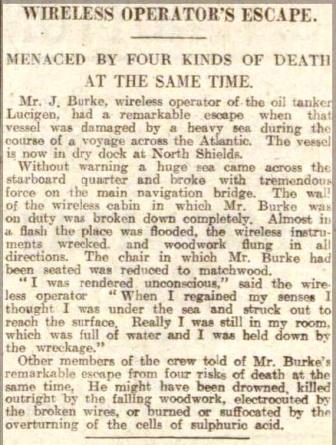
28 May 1930 sailed Tuapse for Le Havre
21 June 1930 sailed the River Tyne for Philadelphia
13 September 1930 laid up on the River Tyne
16 April 1937 loading Russian oil at Batum in the Black Sea for Avonmouth
29 April 1937 sailed Istanbul for Avonmouth
16 May 1937 berthed at Avonmouth
17 May 1937 sailed Avonmouth
16 January 1938 arrived at Killingholme, Hull discharging 3,500 tons of petrol from Aruba
26 January 1938 arrived at Sunderland South Docks to discharge 3000 tons of petrol from Aruba
30 January 1938 sailed Sunderland for the River Tyne
14 April 1938 arrived at Falmouth
7 July 1938 in refit at Wallsend Slipway, River Tyne at the same time and location as RFA WAR SIRDAR
17 June 1939 sailed the River Tyne
20 June 1939 at Greenock
September 1939 purchased by the Admiralty for service as a Depot Ship
17 October 1939 was scheduled to sail in Convoy 21 from the UK - did not sail
20 October 1939 the Liverpool Ech newspaper reported -
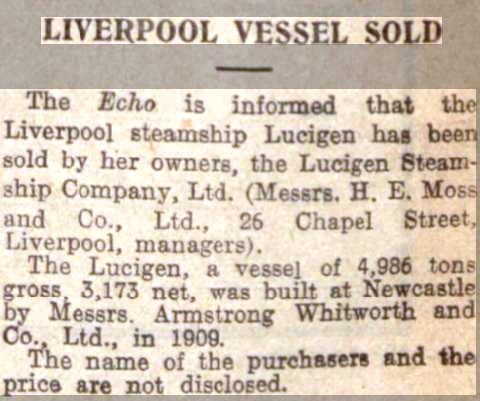
1 January 1940 sailed Harwich to Newcastle independently
3 January 1940 under repair at Newcastle
10 February 1940 and 12 February 1942 sailed the Tyne twice but returned the same day on each occasion
14 February 1940 sailed the Tyne in unescorted convoy FS96 to Southend arriving two days later
18 February 1940 sailed River Thames to Trinidad arrived 10 March 1940 to load
25 February 1940 Greaser John H Rivers discharged dead from injuries received during heavy weather. The location of this death is recorded in the Register of Deaths of Seaman as 'At Sea'
17 March 1940 sailed Trinidad to Freetown arrived 2 April 1940
8 April 1940 sailed Freetown to Trinidad arrived 20 April 1940 to load
1 May 1940 Trinidad - engines defective
29 May 1940 sailed Trinidad to Freetown due to arrive 11 June but eventually entered Freetown on 18 June 1940 with engine defects
27 June 1940 sailed Freetown to Lagos arriving 3 July 1940
17 October 1940 at Lagos with HMS DEVONSHIRE alongside to refuel
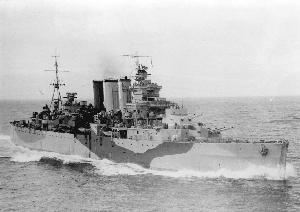
HMS DEVONSHIRE
July 1941 Engines not very effective. Spent the remainder of WW2 at Lagos, Nigeria as a stationary fuelling hulk.
1946 was stripped of all useable equipment as she was now unseaworthy
June 1946 was towed out to sea by the Nigerian Marine tug ATLAS and was expended as a target by explosives and gunfire
Notes:
Was a sister to RFA DELPHINULA

HMS Botlea before being commissioned and under her former name of African Prince
True name: HMS Botlea
Previous name: Glennevis African Prince Pentridge Hill
Subsequent name:
Official Number: 137842
Class: Special Service Freighter - Q ship
Pennant No: X15 - F113
Laid down:
Builder: Ayrshire Dockyard Company, Irvine, Scotland
Launched: 1917
Into Service: 1939
Out of service: March 1941
Fate: Scuttled 30 December 1945
Items of historic interest involving this ship: -
Background Data: In 1939 Winston Churchill gave authority for a number of merchantmen to be requisitioned for service as Q-ships, although for security purposes they were referred to as Special Service Freighters. A fleet of 9 small mainly coal-burning vessels were acquired , 6 for deep-sea work and 3 for coastal work. All were commissioned as HM ships under their original names but were given RFA cover names and on entering harbour and while in harbour they flew the Blue Ensign, behaved as RFA’s and adopted the RFA commercial practices. None of them was really suitable for their intended roles and met with a complete lack of success. Their Q-ship service officially ended on 2 March 1941
1917 launched by Ayrshire Dockyard Co Ltd, Irvine as Yard Nr: 445 named GLENNEVIS for African Steam Ship Co Ltd (J. Gardiner & Co, Managers) Glasgow .
May 1917 completed for the Rio Cape Line (Furness, Withy & Co, Managers) London
15 February 1920 sailed Buenos Aires for Liverpool
23 April 1920 sailed London for Rosario
19 May 1920 arrived at Monte Video from London
31 August 1920 sailed St Vincent, Cape Verde Islands
3 September 1920 sailed Porto Alejandro for Liverpool
11 September 1920 arrived at Liverpool
22 September 1920 sailed Liverpool for New York
28 October 1920 sailed New York to Buenos Ayres
1 March 1921 berthed at Liverpool from Buenos Ayres with three passengers. Captain W M Higgins was Master
19 March 1921 passed the Lloyds Signal Station on the Lizard sailing east
1922 renamed AFRICAN PRINCE by her owners
20 May 1922 sailed Hull in ballast
4 June 1922 arrived at New York from Hull
12 July 1922 sailed the River Tees for Dundee
13 July 1922 at Dundee loading cargo for New York
17 July 1922 at Leith
21July 1922 sailed Dundee for New York
5 August 1922 at New York
29 September 1922 berthed at Dundee
15 October 1922 berthed at New York having sailed from Dundee
23 November 1922 sailed Newport News
25 December 1922 arrived at Santos from New York
6 January 1923 arrived at Rio Grande when on passage from Philadelphia to Buenos Ayres
12 February 1923 sailed Rio de Janerio
7 March 1923 arrived at New York
15 March 1923 arrived at Philadelphia
10 May 1923 at Santos
26 July 1923 sailed Trinidad when on passage from Rosaio to New York
7 August 1923 arrived at Philadelphia from the River Plate
31 August 1923 sailed New York
11 October 1923 sailed East London
23 October 1923 arrived at Beria
27 November 1923 sailed Port Elizabeth, South Africa
19 December 1923 sailed St Vincent CV
8 January 1924 at New York
16 January 1924 arrived Baltimore
20 April 1924 sailed Durban
30 April 1924 at the Government Hospital, Durban Fireman & Trimmer Antonio Pais discharged dead with malaria
21 September 1924 arrived at Victoria from Rio de Janerio
19 December 1924 sailed St Vincent CV
11 July 1925 sailed Santos for New Orleans
5 November 1925 sailed Bahia for New Orleans
13 January 1926 arrived Rio de Janerio from New York
21 June 1926 sailed St Vincent, Cape Verde Islands for London
17 September 1926 arrived Santos
3 January 1927 sailed Newport News
22 May 1927 at Sanatorio Rio, Rio de Janerio Fireman & Trimmer Jospeh Lima discharged dead from a fractured pevis due to a fall
5 November 1927 at Rio de Janerio Sailor Paul Luszeck discharged dead having been killed by a locomotive
8 November 1927 berthed Santos from Rio de Janerio
15 December 1927 arrived the River Plate
16 September 1928 sailed River Mersey for Tunis
1930 laid up Rothesay Bay during the Depression
18 June 1930 sailed West Hartlepool for Antwerp
12 May 1932 at Rosella Hospital, Geralton, Western Australia Chief Engineer Officer William W Sinclair discharged dead suffering from acute pyclities
30 June 1932 berthed at Barry Docks from St. Vincent, Cape Verde Islands with 1 passenger and 1 DBS. Captain William R Harries was Master
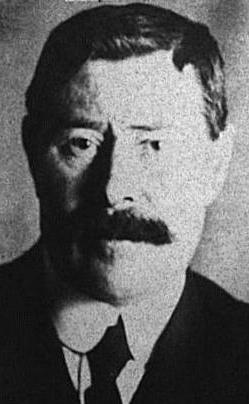
Captain William R Harries
14 November 1935 arrived at Greenock from Rothesay Bay
24 January 1936 sailed Cape Town for Port Elizabeth
28 January 1936 sailed East London for Durban
31 January 1936 sailed Durban for Lorenzo Marques
1 February 1936 arrived at Lorenzo Marques from Durban
5 February 1936 sailed Lorenzo Marques for Madagascar
13 February 1936 sailed Majunga for Diego Suarez
19 February 1936 sailed Tamatave for Reunion
26 March 1936 sailed Rangoon
18 April 1936 sailed Port Said
6 May 1936 sailed from the Keil Canal to Gdynia
11 May 1936 arrived at Gdynia from Rangoon
20 May 1936 sailed Gdynia for the Tyne
1936 purchased by Dorset Steamship Co Ltd, London and renamed PENTRIDGE HILL
15 September 1937 sailed the River Tyne to Hull in ballast
16 September 1937 berthed at Middle Dock, Hull
28 March 1938 arrived at Piraeus
8 May 1938 sailed Istanbul
4 August 1938 at Marseilles 2nd Mate Francis A Evans discharged dead with blood poisoning
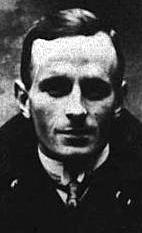
2nd Mate Francis A Evans
14 February 1939 arrived at Buenos Ayres
1939 acquired by the Board of Trade (later MoS and MoWT) and renamed BOTLEA under management of Sir William Reardon Smith & Sons Ltd, Cardiff
14 September 1939 Lieutenant Commander Thomas B Bruton Royal Naval appointed in command.
16 September 1939 commissioned as HMS BOTLEA
14 December 1939 conversion completed. Cover name RFA LAMBRIDGE. Complement 84 under the command of Commander Thomas B. Brunton Royal Navy. Armed with 7 x single 4-inch guns, 4 x Lewis machine guns, 4 x single 21-inch torpedo tubes and 100 depth charges
22 December 1939 sailed Chatham for Sheerness then to the Solent area for work-up
3 January 1940 sailed from the Solent area on her first cruise and operated in the North Atlantic for the remainder of that year
8 January 1940 stopped off Dakar by HMS NEPTUNE while in the Lambridge disguise - she was not detected as a 'Q' ship
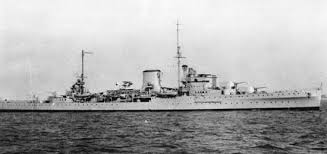
HMS NEPTUNE
19 February 1940 Able Seaman John Page C/J 22317 discharged dead. Drowned. Remembered with pride on the Chatham Naval Memorial
March 1940 at Gibraltar
April 1940 at Bermuda
28 August 1940 sailed Bermuda in convoy HX69 to Methil arriving 13 September 1940 - on convoy papers listed as RFA Lambridge thus maintaing her cover as a Q ship
27 January 1941 berthed at Simonstown Dockyard, South Africa for boiler cleaning a repairs to minor defects
6 February 1941 sailed from Simonstown Dockyard, South Africa
5 March 1941 at Colombo she hoisted the White Ensign for service as an Armed Merchant Cruiser with Pennant Number F 113
20 May 1941 arrived at Bombay escorting HMS CAPETOWN which was under tow of the tug TAIKOO for repairs
22 June 1941 sailed Aden under the command of Commander T I Scott-Bell DSC Royal Navy (Retd)
31 July 1941 berthed at Simonstown Dockyard, South Africa from Aden to be de stored and de ammunitioned in order to revert service as a merchant cargo ship
12 August 1941 sailed from Simonstown Dockyard, South Africa
1 October 1941 transferred to MoWT control
16 January 1942 sailed Cape Town independently to Lourenco Marques arriving 23 January 1942
7 February 1942 sailed Lourenco Marques independently to Cape Town arriving 13 February 1942
29 August 1942 sailed from Liverpool to New York arriving on the 18 September 1942
24 December 1942 sailed from Liverpool in convoy ON(S)156 to New York arrived 17 January 1943
22 April 1943 arrived at Cape Henry
4 June 1943 Bosun Robert Fraser awarded the British Empire Medal (Civil Division) in the Birthday Honours List 1943 - details published in the London Gazette of this day
8 August 1943 sailed Liverpool to Freetown in convoy OS53 arrived on 27 August 1943
15 June 1944 sailed Cape Town to Durban in convoy CD43 arrived on the 19 June 1944
10 August 1944 sailed Durban independently to Mombassa arriving on 21 August 1944
29 August 1944 sailed Mombassa independently to Durban arriving on 9 September 1944
22 September 1944 sailed Durban independently to Lourenco Marques arriving 24 September 1944
4 October 1944 sailed Lourenco Marques independently to Mombasa arriving 13 October 1944
23 May 1945 sailed Bone independently to Gibraltar arriving 26 May 1945
29 May 1945 sailed Gibraltar independently to Middlesborough arriving 7 June 1945
17 June 1945 sailed Middlesborough to the Tyne arriving the same day
30 December 1945 considered to have no further commercial use so was scuttled in position 55.30 N 11..00 W loaded with a cargo of poison gas shells as part of Phase 1 of Operation Sandcastle
Notes:
- RFA Lambridge was a cover name for the 'Q' Ship HMS Botlea. The name Lambridge was used when the ship was in port so her true identity was not disclosed. She never sailed as an RFA.
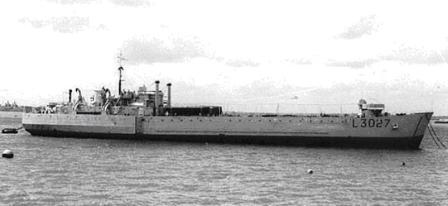
Previous name: L 3027
Subsequent name: HMS LOFOTEN
Official Number:
Class: LST (3) / Accommodation Ship / Helicopter Support Ship /Accommodation Ship
Pennant No: L 3027 / K 07
Laid down: 30 May 1944
Builder: Blyth Drydock & Shipbuilding Co., Cowpen Quay, Blyth
Launched: 26 January 1945
Into Service: 24 October 1945
Out of service: 1991
Fate: Broken up October 1993