

Ships starting with D
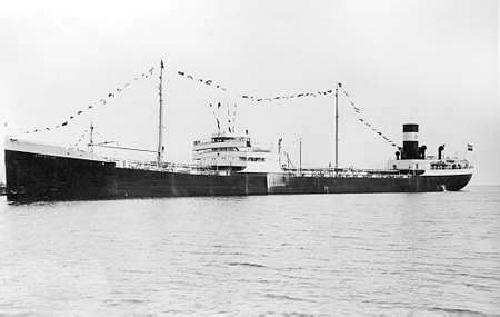
© Handels – og Søfartsmuseet, Danmark
Subsequent name: Shelfoil
Official Number: 168340
Class: Oil Fuel Hulk
Pennant No: X128
Laid down:
Builder: Burmeister & Wain, Denmark
Launched: 15 August 1931
Into Service: October 1942
Out of service:
Fate: Broken up
Items of historic interest involving this ship: -
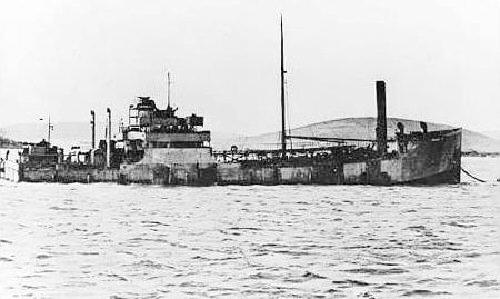
Background Data: In her day, at 10,517 grt, this ship had been one of the largest tankers afloat, her owners being a subsidiary of the Standard Oil Company of New Jersey. For a time during WW2, the RFA were operators of half a ship, this fuelling hulk based at Scapa Flow until the base there was closed at the end of the War, when she was sold for commercial bunkering purposes
15 August 1931 launched by Burmeister & Wain Maskin Og Skipsbyggeri Aktieselskabet, Copenhagen as Yard Nr: 348 named DANMARK for D/S A/S “Myren” (Holm & Wonsild, Managers) Copenhagen
October 1931 completed
4 November 1931 passed Gibraltar west bound
2 December 1931 while on passage from Baton Rouge to Nyborg loaded with 16,000 tons of oil grounded at Knudshead. Reported in Lloyds casualty reports
11 January 1932 arrived at Port Said
29 January 1932 arrived at Singapore
4 February 1932 arrived at Iloilo
5 February 1932 sailed Iloilo for Hong Kong
8 August 1932 arrived at Singapore from Yokohama, Japan
25 August 1932 sailed Penang for Aden
20 November 1932 arrived New Orleans from Copenhagen
19 December 1932 passed St Catherines Point sailing east bound
27 December 1932 arrived Tientsin from Copenhagen
13 March 1933 sailed London for Port Arthur
16 May 1933 arrived Yokohama, Japan from Gothenburg
16 June 1933 sailed Penang for Aden
12 November 1933 arrived at Suez when on passage to Hamburg
11 December 1933 passed the Lloyds Signal Station on the Lizard sailing east
14 June 1934 arrived Houston from Gothenburg
1934 purchased by Det Danske Petroleum A/S (C.F. Holm, Managers) Copenhagen name unchanged
2 October 1934 berthed at Smith's Dock, River Tyne
11 October 1934 sailed the River Tyne for Baton Rouge
1935 managers became F.W. Kraft, Copenhagen
16 August 1935 berthed at Avonmouth from Aruba
22 August 1935 berthed Shields, River Tyne
23 August 1935 in No 6 Dock, Smith Dock Company, River Tyne for collision repairs
31 August 1935 sailed Shields, River Tyne
18 September 1935 arrived at Cristobal from the River Tyne
7 January 1936 berthed at Avonmouth from Aruba
19 May 1936 berthed at Avonmouth from Aruba
9 May 1937 berthed at Avonmouth from Aruba
26 November 1937 sailed from Aruba for Avonmouth
14 January 1938 sailed New Orleans
8 February 1938 sailed Avonmouth
22 March 1938 passed Gibraltar sailing east bound
26 March 1938 berthed at Avonmouth from Aruba
24 April 1939 berthed at Avonmouth Oil Berth from Baytown
25 April 1939 sailed from Avonmouth for Aruba
19 August 1939 while on passage from Dairen for Rotterdam and Copenhagen arrived at Suez with defective machinery, cylinder cover broken. Reported in Lloyds casualty reports
25 December 1939 sailed Aruba independently
12 January 1940 while on passage from Aruba to Nyborg with a cargo of 8,200t of refined petrol and 5,760t of kerosene, she was ordered to divert to Kirkwall for clearance by Contraband Control. She anchored in Inganess Bay just to the east of Kirkwall. Here she was torpedoed by the German Submarine U-23 (Kapitänleutnant Otto Kretschmer) in position 58°59 N 02°53 W and a huge hole was blown in her side. Her crew of 40 escaped safely but the 14,000 tons of fuel destined for the Allied war effort were lost
22 January 1940 back broken, after part sank, foward section beached
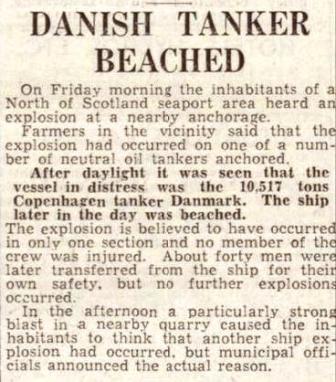
Press Report Aberdeen Journal of the 15 January 1940
6 February 1940 the after part's position was given as 58°58 48N, 02°53 05W, or bearing 164.5 degrees, 2.34 miles from Hellier light. - Report by Naval Officer in Charge, Kirkwall. Notice to Mariners 329/40 issued.
July 1940 1,924 tons of her cargo of kerosene was salvaged
March 1941 forward section broke off allowing it to be refloated and beached nearby where it lay for some months before being refloated and towed to Inverkeithing, probably originally for demolition
7 June 1941 forward section towed to Grangemouth for conversation into stationary fuel hulk by Grangemouth Dockyard Co Ltd.
5 September 1941 sailed under tow from Kirwall to Scapa Flow arriving 13 September 1941
17 September 1941 sailed under tow from Scapa Flow to Inverkeithing arriving 25 September 1941
September 1942 conversion completed
22 October 1942 Mr F Clarke RFA appointed as Chief Engineer Officer
27 October 1942 towed to Scapa Flow where she was used to bunker light cruisers and destroyers, being herself refilled by other tankers as required. She had an RFA Chief Officer, Third Officer, Chief Engineer and Third Engineer as part of her crew
18 December 1942 Chief Officer B Smith RFA appointed as Chief Officer-in-Charge
February 1943 HMCS ATHABASKAN while berthing alongside RFA Danmark suffered structural damage which required the destroyer to be taken in hand for repairs at Greenock commencing 11 March 1943
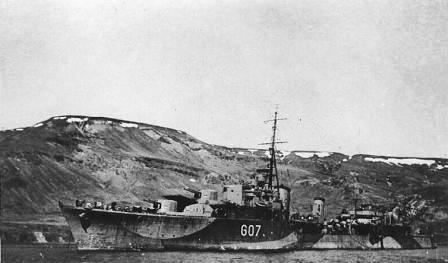
HMCS ATHABASKAN
25 May 1943 at Scapa Flow USS Ellyson (DD454) alongside to refuel
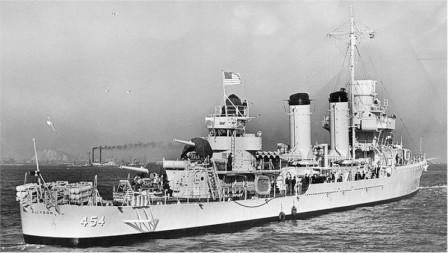
USS Ellyson (DD454)
21 June 1943 at Scapa Flow USS Ellyson (DD454) alongside to refuel
23 August 1943 at Scapa Flow USS Forrest (DD-461) alongside to refuel - received 13,810 gallons
31 August 1943 at Scapa Flow USS Corry (DD-463) alongside to refuel - received 14,475 gallons of FFO and 6,277 gallons of diesel
19 September 1943 at Scapa Flow USS Forrest (DD-461) alongside to refuel - received 68,800 gallons
22 September 1943 at Scapa Flow USS Hobson (DD-464) alongside to refuel
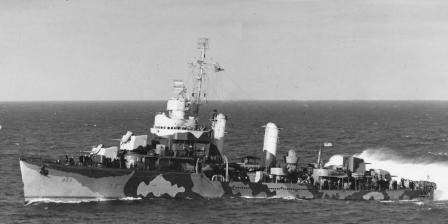
USS Hobson (DD-464)
29 September 1943 at Scapa Flow USS Corry (DD-463) alongside to refuel - received 25,745 gallons
8 November 1943 at Scapa Flow USS Hobson (DD-464) alongside to refuel
14 December 1943 Chief Officer A J McKenzie RFA appointed as Chief Officer-in-Charge
17 February 1945 at Scapa Flow HMCS Saint John alongside to refuel
21 March 1945 at Scapa Flow HMCS Saint John alongside to refuel
28 June 1945 a buoy was laid on a bearing 043.5 degrees and 121 metres from the wrecked after part. Report by Northern Lighthouse Board, Notice to Mariners 10/46 issued.
3 October 1945 towed to the Clyde and laid up off Kilcreggan
July 1947 moved to lay-up in Loch Long
1948 purchased by Shell-Mex & B.P. Ltd, London who proposed to return her to service as an oil storage depot at Dublin
February 1948 arrived Dublin in tow of the tug METINDA 1V and was subsequently renamed SHELFOIL and remained here for a number of years
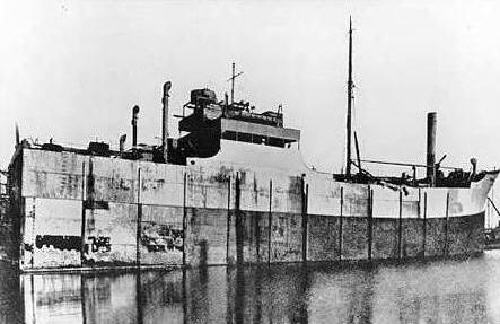
23 December 1951 while berthed at the North Wall Extention, Dublin Harbour fire broke out in the engine room
26 December 1951 the Weekly Irish Times reported that -
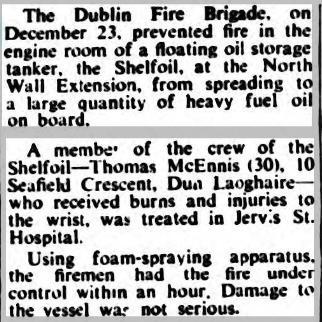
25 March 1953 hulk arrived Faslane to be broken up after completion of new oil installations at Dublin.
2 December 1957 the after part wreck dries to reveal 1 metre. Report taken from Diver Report 1957 Docket 28 Augst 1957
18 August 1961 the wreck has been totally dispersed to seabed level and the buoy has been removed. The position is considered to be foul. Report by Northern Lighthouse Board.
Notes:
After she had been torpedoed, all amidships accommodation was still more or less intact, as were the pipelines in the cargo tanks and on deck, but a steam supply was required to operate the cargo pumps. As usual, a dry cargo hold existed abaft the forepeak tank and this space was arranged as an engine / boiler room. Uptakes from the boilers were led into a single tubular funnel which led to atmosphere through the forecastle deck. Vertical elm belting was fitted to protect the hull so that ships of all sizes were able to moor alongside whilst refuelling
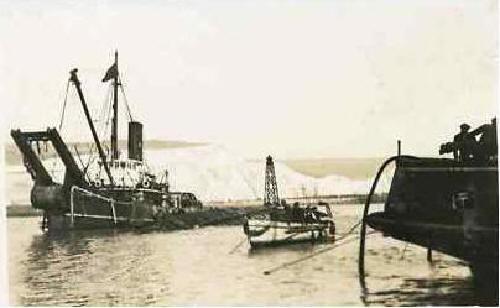

Previous name: Chapman
Official Number: 149161
Class: Salvage Vessel
Pennant No: X30 / X19
Laid down:
Builder: New York Shipbuilding
Launched: 1915
Into Service: 1915
Out of service: March 1923
Fate: Broken up
Items of historic interest involving this ship: -
Background Data: In some old ledgers in the possession of the Admiralty and marked “ lists of RFA’s”, a number of vessels are shown as having spent some time as RFA’s during WW1. Some of these vessels were Yard Craft, partially or wholly Dockyard-manned, partly by RNR or Reserve Fleet personnel. The Director of Stores Dept was concerned with their manning and operation for a while
1915 launched by New York Shipbuilding Corp, Camden, New York as Yard Nr ? named CHAPMAN for the Dover Harbour Board, Dover
November 1915 completed
1915 requisitioned by the Admiralty and renamed DAPPER. Was subsequently purchased by them for use as a Salvage Vessel
22 November 1915 Lieutenant Philip N Edmonds RNR appointed in command
5 October 1916 Diver William Henry Foreman, aged 46, discharged dead at Edinburgh, Scotland from disease. He was buried in Dover (Buckland) Cemetery, Dover, Kent in grave D 2196
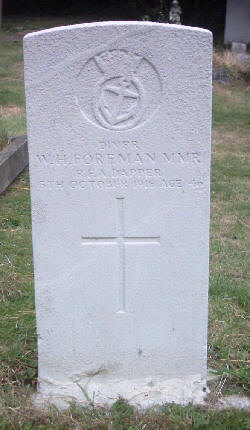
Courtesy and © of The War Graves Photographic Project
March 1917 and other dates over a number of years assisted RFA RACER to recover gold in the HMS LAURENTIC which had been mined and sunk while off Lough Swilly, County Donegal, Ireland
30 April 1918 Able Seaman William Stanley Sheriff, aged 19, discharged dead. He was buried in Lower Fahan (Christ Church) Churchyard, Buncrana, County Donegal, Republic of Ireland in a grave in the south east part of the cemetery
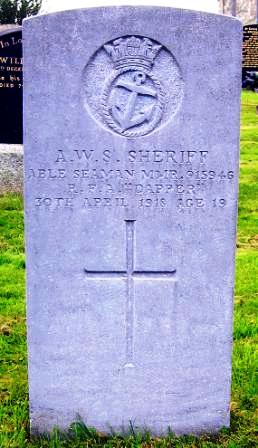
Courtesy and © of The War Graves Photographic Project
9 May 1918 Engineer Lieutenant Frederick C Reynolds RNR appointed as Chief Engineer Officer
May 1918 together with H.M. Tugs Sonia, Flying Foam, Milewater, Heathercock and Flying Cormorant together with a party from H M Dockyard Haulbowline involved in the salvage of ss Manora, Aeneas and Oriana
12 August 1918 Engineer Lieutenant Andrew Powrie RNR appointed as Chief Engineer Officer
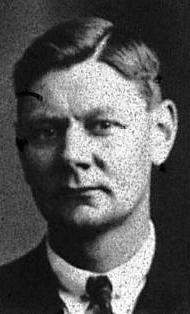
Engineer Lieutenant Andrew Powrie RNR
8 May 1919 Engineer Lieutenant Thomas C Furness RNR appointed as Chief Engineer Officer
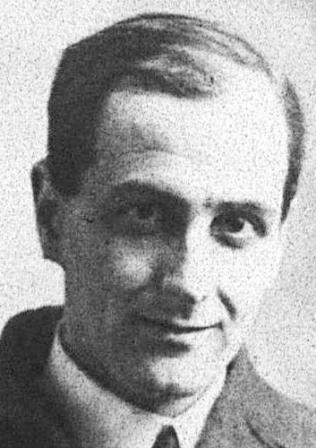
Engineer Lieutenant Thomas C Furness RNR
18 August 1919 the Scotsman newspaper reported -
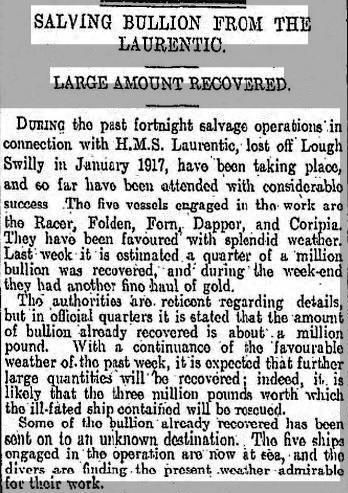
9 September 1919 involved in the salvage of the schooner Markussund.
28 January 1921 applications for salvage money published in the London Gazette of 28 January 1921 on page 780
22 November 1921 sailed Queenstown to Devonport prior to being laid up
28 November 1921 arrived at Devonport from Queenstown escorted by RFA BELGOL
March 1923 sold to the Dover Harbour Board
29 March 1924 salvage money was paid to the crews of RFA Dapper and H.M. Tugs Sonia, Flying Foam, Milewater, Heathercock and Flying Cormorant together with a party from H M Dockyard Haulbowline who were involved in the salvage of ss Manora, ss Aeneas and ss Oriana - details published in the London Gazette of 28 March 1924 on page 2607
18 July 1924 at Dover Police Court Cook John Leady appeared charged with the stealing a gold ring from a cabin onboard. He pleaded Not Guily but was convicted and fined 10/-
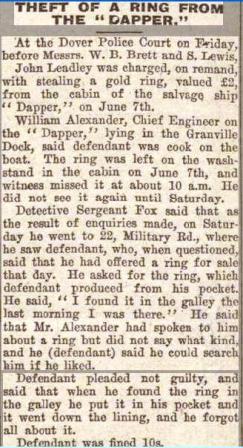
Press report from Dover Express dated 18 July 1924
24 October 1924 the Dover Express reported
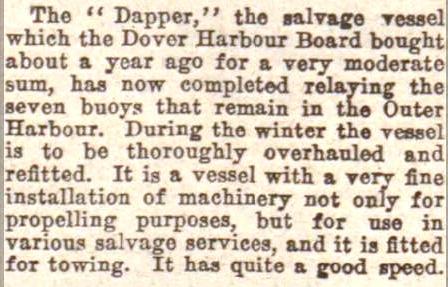
1926 involved in the attempts to salavge HMS GLATTON which had exploded and later sank in Dover Harbour on 16 September 1918. The Glatton was moved where she had sunk and which caused obstruction to ship movements in the Harbour to a deeper part of the harbour. This was then filled in and the car terminal (as it is now) was built over the ship
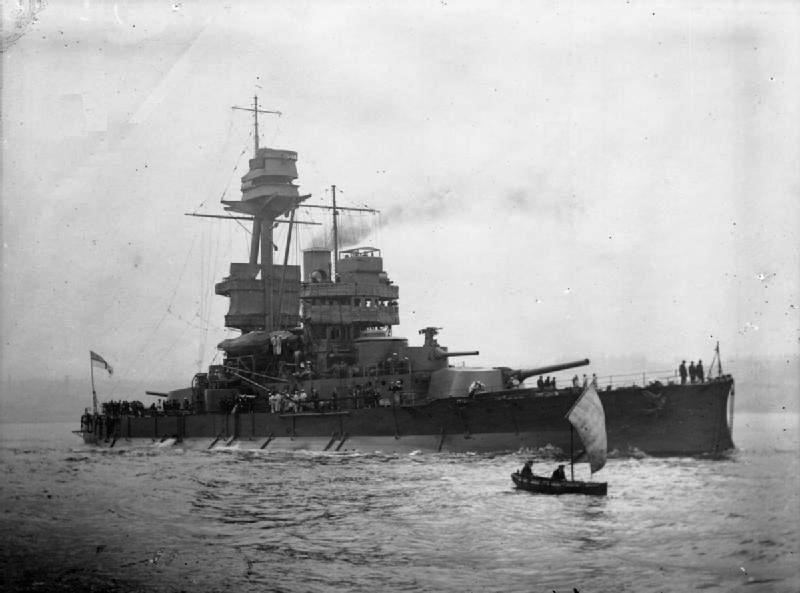
HMS GLATTON
15 January 1926 the Dover Express reported ....
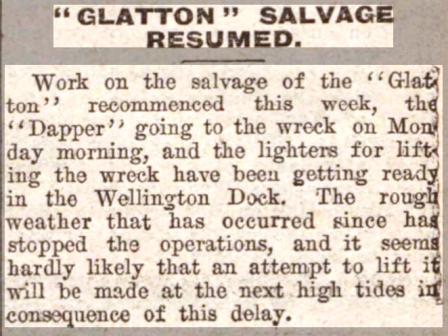
25 February 1926 HMS GLATTON moved to about 100 feet off the Camber Wall
16 March 1926 HMS GLATTON moved to alongside the Camber Wall
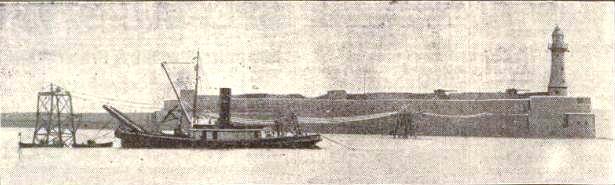
RFA Dapper at work in Dover Harbour in 1927
27 April 1927 at Dover commenced salvage work on raising the two block ship - ss Livonian and ss Spanish Prince - sunk in the western entrance of the harbour during World War 1
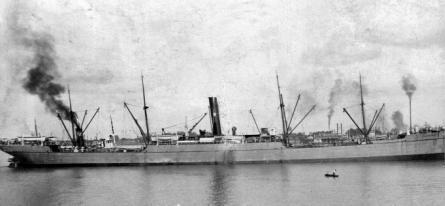
Block Ship Spanish Prince
21 September 1928 at Dover involved in replacing of the gates to Wellington Dock which had been removed on 18 June 1928 for repairs
11 January 1929 at Dover raised the barge "Eileen" which had broken adrift during gales and sunk
20 February 1929 off the port of Dover together with the tugs Lady Brassey and Lady Duncannon salvaged the Belgian steamer Ville de Leige. The Belgian ship was towed into Dover Harbour for repairs
12 November 1929 off Peacehaven near Beachy Head together with the tugs Lady Brassey and Lady Duncannon salvaged the Italian steamship Nimbo (3,870 tons) which had gone aground. Having been refloated the Italian ship was towed to Southampton for repairs
20 December 1929 sailed from Dover to the Downs taking coal to the Spanish steamer Mari which had run out of bunkers to allow her to reach Dover. On reaching Dover the Mari loaded 130 tons of bunker coal
4 April 1930 sailed Dover in company of the Dover Harbour Board tug Lady Duncan
11 April 1930 at the Elbow Buoy, off Ramsgate attended the German tanker Nord Atlantic which had been damaged amidships in a collision with the Tilbury to Dunkirk steamer Picardy
15 April 1930 proceedings in the Admiralty Division of the High Court by the Dover Harbour Board following the salvaging of the Italian steamship Nimbo (see above) resulted in judgement by default being granted to the Dover Harbour Board
5 January 1931 sailed Dover to the ss Nurtureton aground on her maiden voyage 1 mile east of Dungeness. With 55 men from Dover to jettison her cargo of coal attempts were made to refloat the vessel
3 September 1932 at Dover Harbour assisted in the raising of part of the ss Livonian a World War One blockship which had previously been cut in four by divers
4 May 1939 engaged in the raising at Dover of the Royal Artillery Yacht Club's dragon 'Bess' - raised and towed to the Camber
16 April 1940 Panamanian steamer ALBA (3444grt) ran aground on the Goodwins, 3½ miles 55° from Deal Coast Guard Station. Tug LADY BRASSEY and salvage vessel DAPPER sailed from Dover to assist. After jettisoning cargo and the efforts of seven tugs, she was finally refloated at 1830/17th, brought to the Downs and anchored.
20 March 1940 Steamer BARN HILL (5439grt), formerly of convoy HX.25A, was badly damaged by German bombers of KG26, three miles SSW of Beachy Head, in 50°34N, 0°02W. Five crew were lost, and the steamer was towed towards shore and beached three hundred yards southeast of Langney Point on the 21st. Salvage vessel DAPPER sailed to the scene at daylight on the 25th and remained there until the fire was extinguished. The steamer's back broke on the 26th and she was declared a total loss.
24 May 1940 sailed from Dover to assist the British ss Bhutan which had been badly damaged in a collision
30 May 1940 sailed from Dover to assist the Mine Destructor Ship HMS CORFIELD which had been damaged by mining and a fire
25 September 1940 requisitioned by the Admiralty
28 October 1940 Able Seaman Ivor Leon Rogers awarded a Commendation - details were published in the London Gazette of this date
20 January 1942 Chief Engineer Daniel J Thomas RFA appointed a Member of the Order of the British Empire (Civil Division) - MBE and Leading Salvage Hand William Webb awarded the British Empire Medal (Civil Division) - BEM for fire fighting in a bombed ship - details were published in the London Gazette of this date. Chief Engineer Daniel J Thomas was also awarded the Lloyds Bravery Medal
9 February 1942 H M Fort 'Roughs Tower' left Tilbury, Dapper towing ahead, Lady Brassey stern tug and Crested Cock and King Lear (Gamecock's salvage vessel) lashed alongside.
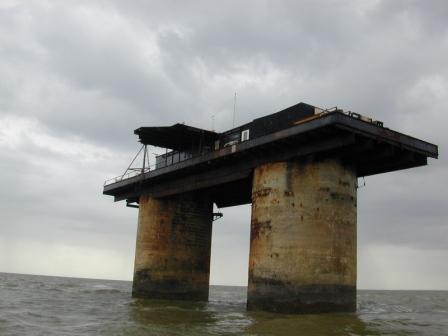
What remains of H M Fort 'Roughs Tower'
11 February the fort was in position 51°33.66N 1°28.93E, 7 miles SE of Lowestoft. [This first tow, taking three days, was apparently fraught with problems, including hitting a light vessel moored off Gravesend, colliding with three buoys, R1, Mucking 1 and Mucking 2 and weather problems.
20 April 1942 assisted HMS COTSWOLD which had been mined in the North Sea to Shotley Spit off Parkstone where she was beached
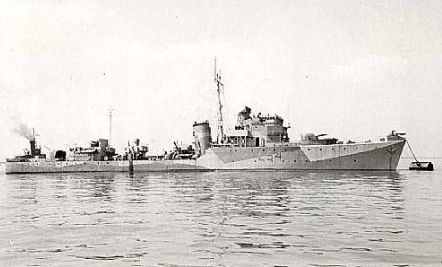
HMS COTSWOLD
4 May 1942 HMS COTSWOLD towed by Dapper to Chatham
5 October 1942 berthed at Great Yarmouth with HMS SHEARWATER - source Admiralty War Diary
5 July 1943 sailed to Yarmouth Roads to assist the American Freighter Oremar which had fouled No 59 buoy and was in tow by HM Tug St Mellons to Great Yarmouth - source Admiralty War Diary
25 December 1943 sailed Great Yarmouth together with HMS WORCESTER which was being towed by the tugs Champion and Krooman all escorted by HMS WIDGEON - source Admiralty War Diary
2 October 1943 at Dover Cook/Steward Reginald Howard discharged dead - apparent suicide. He is buried in Charlton Cemetery, Dover
13 July 1944 ordered by signal from C in C Portsmouth to sail as soon as possible to HMS LST 359 which had been mined in area 16 east of Calshot and was in danager of sinking
20 October 1944 Fireman Charles Edward Lewry discharged dead - heart failure. He is buried in St Mary's Cemetery, Dover
11 April 1945 towing to the Downs the ss Lady Brassey under the escort of HMS GREY GOOSE - souce Admiralty War Diary reporting a signal from Dapper to the Admiral commanding Dover
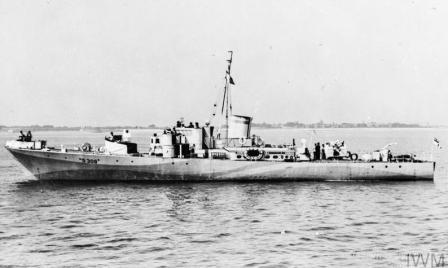
HMS Grey Goose
7 December 1945 at the South Goodwins attended the US steamship USO and the French vessel Andre Thome both of which had grounded on the sand banks. The USO was refloated. The Andre Thome having been refloated grounded herself again
29 June 1946 returned to owners
1 November 1946 the Dover Express reported -
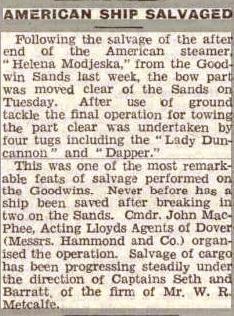
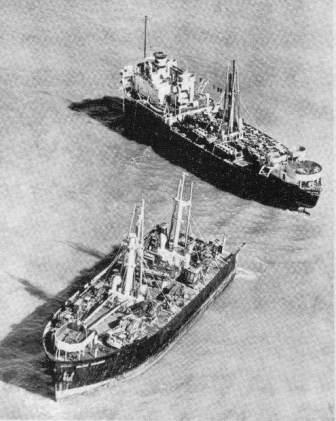
ss Helena Modjeska
January 1951 broken up at Dover
1 May 1951 Certificate cancelled and Registry entry closed - ship broken up
Notes:
Was managed by Risdon Beazeley Ltd, Southampton during WW2
Ships of the same name
Dapper. A gun-brig of 12 guns, 185 bm, 85 x 22.5 feet. Launched by Adams, Chapel in December 1805. Sold on the 29 September 1814.
Dapper. A wood screw gunboat of the “Dapper” class launched by Green of Blackwall on the 31 March 1855, reduced to a training hulk in 1885, then a cooking depot in 1897 and given the pennant number YC 37 in 1909. Sold to a Mr Perry on the 10 May 1922.
Battle Honours for this Vessel: BALTIC 1855.
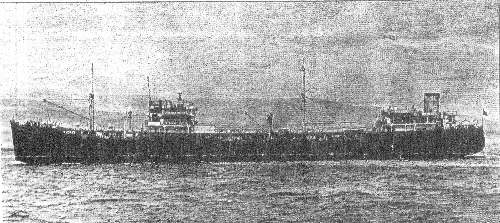
Previous name: Empire Oil
Offical Number: 165991
Class: 1st DALE CLASS Freighting Tanker
Pennant No:
Laid down: October 1939
Builder: Blythswood Shipbuilding Co Ltd., Glasgow
Launched: 23 July 1940
Into Service: November 1940
Out of service: 22 October 1941
Fate: Sunk off Jamestown, St. Helena, South Atlantic Ocean.
Items of historic interest involving this ship: -
Background Data: Originally there were to have been 19 ships in this Class. The first 6 were purchased off the stocks fro the British Tanker Co Ltd whilst building at the instigation of the then Director of Stores, Sir William Gick, who was concerned at the age of the RFA Fleet and ships that were approaching the end of their economic lives. A further 2 ships were purchased from Anglo Saxon Petroleum Co Ltd for evaluation purposes. At the outbreak of WW2, a further 11 ships were acquired from the MoWT war programme although one of these, to have been named EPPINGDALE, which had been registered in London as EMPIRE GOLD on 21/02/43 and intended for transfer to the Admiralty for manning and management as an RFA and despite 5 Officers being appointed to her, the intended transfer was cancelled the following day and she thus never entered RFA service. 3 of this Class were converted into LSG’s and were then reconverted back into tankers at the end of the War
23 July 1940 launched by Blythswood Shipbuilding Co Ltd, Scotstoun as Yard Nr: 61 named EMPIRE OIL for the MoWT and originally intended for management by Eagle Oil Transport Co Ltd, London
5 October 1940 Captain Thomas H Card RFA appointed as Master and Mr Alexander B McIntyre RD RFA (Lieutenant Commander (E) RNR (Ret)) appointed as Chief Engineer Officer
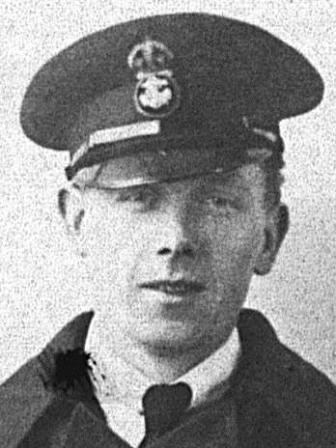
Chief Engineer Officer Alexander B McIntyre RD RFA
14 November 1940 sailed on trials from Tail of the Bank
15 November 1940 completed. Acquired by the Admiralty and renamed DARKDALE
19 November 1940 damage sustained by the British trawler s.s. OTTERHOUND whilst alongside
21 November 1940 sailed the Clyde in Liverpool escorted convoy OB246 under charter to Anglo Saxon Co Ltd to Curaçao to load gasoline - single voyage. Arriving 11 December 1940.
14 December 1940 sailed Curaçao independently to Bermuda.
21 January 1941 sailed Bermuda in escorted convoy BHX104 which also contained RFA DELPHINULA to Belfast Lough arriving on 8 February 1941
13 February 1941 sailed Belfast Lough to Greenock arriving 14 February 1941. To drydock for unspecified repairs
28 February 1941 caused damage to the British tanker s.s. PETROPHALT in Loch Long
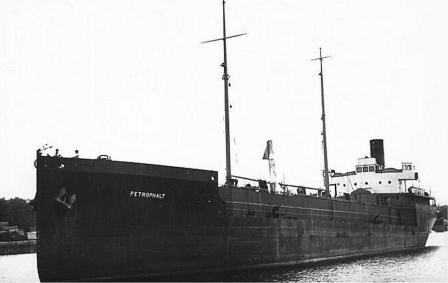
s.s. PETROPHALT
7 March 1941 sailed the Clyde independently to Oban
5 May 1941 sailed Oban independently to the Clyde arriving the next day
21 June 1941 sailed in Liverpool escorted convoy OB 338 dispersing on 3 July 1941 to sail independently to Curaçao arriving 12 July 1941
15 July 1941 sailed Curaçao independently to off Jamestown, St. Helena
4 August 1941 arrived off Jamestown, St Helena to act as Fleet Oiler there, carrying 3000 tons of fuel oil, 850 tons of aviation spirit, 500 tons of diesel oil and also some lubricating oil. Caused slight damage to the Norwegian tanker m.v. Nyholm prior to arrival
7 August 1941 refuelled HMS ORION alongside
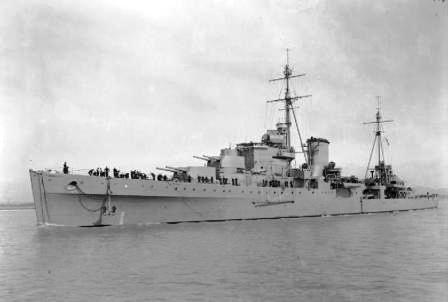
HMS ORION
21 August 1941 refuelled alongside HMS ALBATROSS
25 August 1941 refuelled alongside the Armed Merchant Cruiser HMS CILICIA
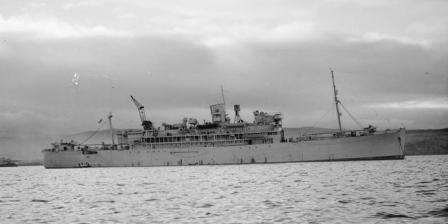
26 August 1941 refuelled alongside HMS JUPITER
30 August 1941 refuelled alongside HMS AVON VALE
31 August 1941 refuelled alongside HMS ERIDGE
17 September 1941 refuelled alongside with the aircraft carrier HMS EAGLE (part of Force F) - damage was caused by the tanker to HMS EAGLE during the night when fenders were smashed and jump nets and a ladder leading to the flight deck carried away due to the prevailing swell
18 September 1941 refuelled alongside HMS DORSETSHIRE (also Part of Force F)
23 September 1941 refuelled alongside HMS ENCOUNTER and HMIS SUTLEJ
24 September 1941 refuelled alongside HMS Repulse
Between 25 September 1941 and 27 September 1941 loaded fuel from the Norwegian tanker Egero on three occasions supply about 8,000 tons of fuel oil
22 October 1941 whilst anchored in position 15°55.03 S 05°42.15 W off Jamestown Harbour torpedoed by German submarine U68 (Kapt Karl-Freidrich Merten) - reported that Darkdale exploded and turned over and sank. The U-boat fired four torpedoes of which one apparently did not hit the tanker and the Jamestown Harbour Master reported hearing only three explosions.
41 crew members were killed - for details of their names see the Roll of Honour [1941]. The Captain & Chief Engineer were ashore
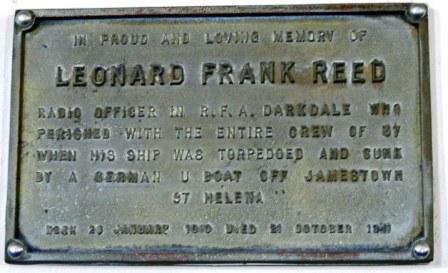
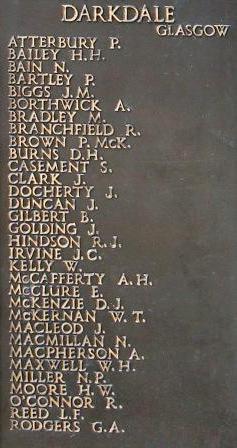
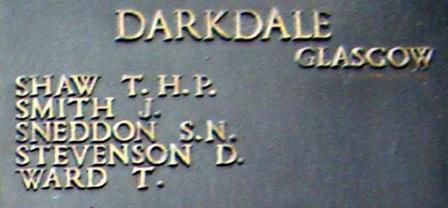
The crew who were lost are also remembered with pride on the Tower Hill Memorial, London
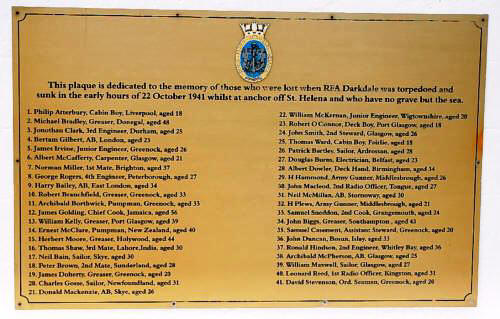
and on the Cenotaph on the sea front at Jamestown, St. Helena within sight of where the ship was sunk and where they died
4th Engineer Officer George Andrew Rodgers RFA is also commemorated in the Book of Remembrance at Peterborough Cathedral
23 October 1941divers examined the wreck and shipping was diverted clear of St Helena
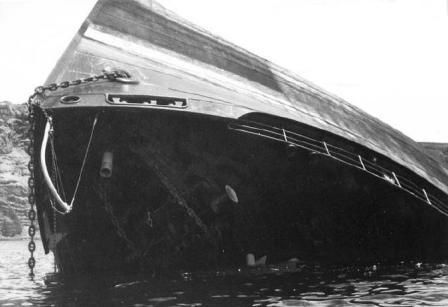
courtesy of the Major Moss album and with grateful thanks to the St Helena Museum
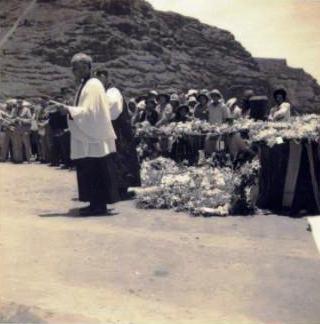
25 October 1941 a memorial Service was held on the Wharf overlooking the spot where she had exploded and sunk
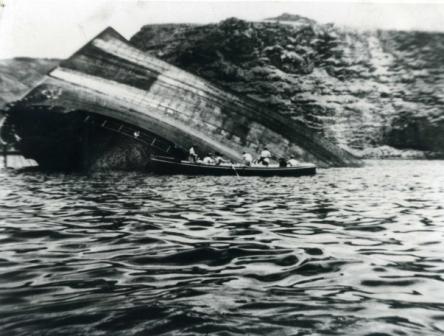
courtesy of and with grateful thanks to the St Helena Museum
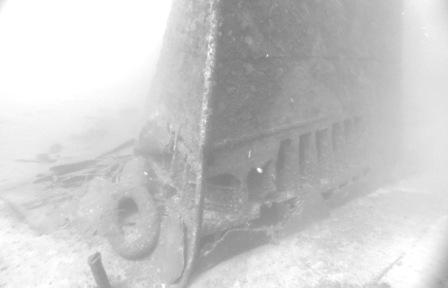
RFA Darkdale's bow
29 April 2009 during a visit to St Helena by RFA GOLD ROVER a memorial service was held at the Jamestown Cenotaph and wreaths were laid
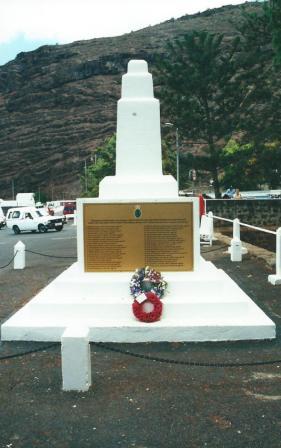
RFA Darkdale Memorial in Jamestown, St. Helena
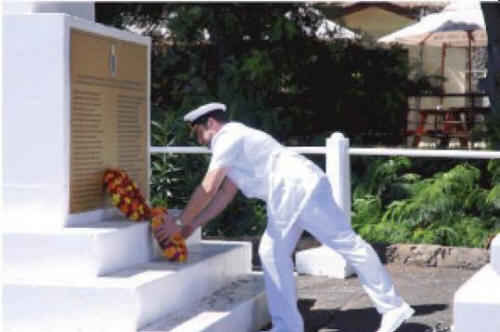
Captain Paul Minter RFA, Commanding Officer, RFA Gold Rover lays his wreath at the RFA Darkdale memorial in Jamestown, St. Helena
© The St. Helena Independent acknowledged
November 2012 HMS PROTECTOR visited St. Helena during a South Atlantic deployment and took multibeam images of the wreck of RFA DARKDALE
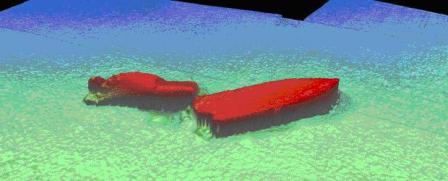
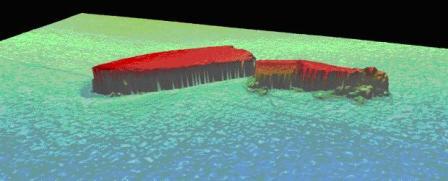
These multibeam images are © Crown copyright 2012 produced by the MOD and are reproduced on the Historical RFA website with the permission of Defence Intellectual Property Rights
5 December 2013 a highly detailed report on the RFA Darkdale was published this day after the ship had been examined by the Salvage and Marine Operations Department of the Ministry of Defence. This reported that the wreck lies broken in two sections some 600m offshore of Jamestown. The bow section lies in approximately 30 m of water on a heading of 035 degrees and is inverted with the deck lying very slighly angled to starboard. The stern lies on its port side on a heading of 056 degrees approximately 8 m from the bow section in 40m of water
21 February 2014 the MOD's Salvage & Marine Operations Department has this day invited tenders for the removal of the oil on RFA Darkdale. The date for submission of tenders is given as 17 March 2014
2 July 2015 the lead ship Pacific Dolphin arrived in Jamestown Bay from Cape Town to commence removal of oil from RFA Darkdale
Between 2 July 2015 and 7 July 2015 divers working for the Ministry of Defence have removed 38 high explosive shells from the wreck of RFA Darkdale off Jamestown, St Helena and these have been dumped in deep water (over 1,000 m deep) some 2 miles off the coast
8 July 2015 the second ship under contract to the MOD's Salvage & Marine Operations Department, the Pacific Supporter, arrived in Jamestown Bay to join in the work in the removal of oil from RFA Darkdale. She carried moorings and oil spill equipment
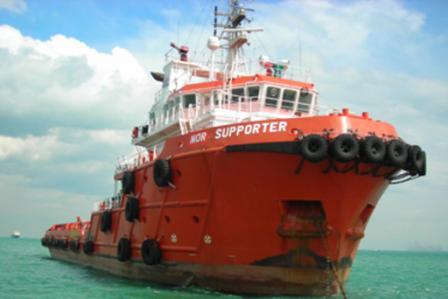
Pacific Supporter when using a previous name
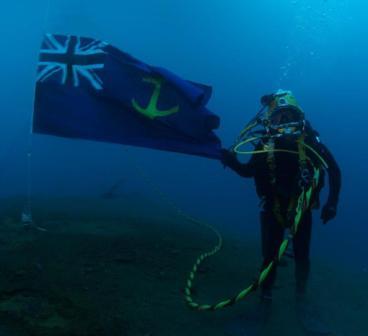
13 August 2015 the MOD team completed the removal of all the oil in Darkdale's tanks into the tanker Golden Oak and as a final act of rememberance of those who were killed when the ship was sunk flew the RFA Ensign on the ship
Notes:
On the previous morning a resident of the Island who lived in a cottage along the cliff tops above James Bay, rushed into town to report that he had spotted a submarine. He was not taken seriously and his claim was not relayed to the Master of DARKDALE. He had in fact spotted U-68, one of the first German submarines to venture to the South Atlantic. On the evening in question, the Master, Chief Engineer and Purser were dining with the Garrison Commander in the military barracks above Jamestown, 2 Ratings lay in Jamestown Hospital and a further 2 Ratings were on a run ashore, trying to get back to their ship when the torpedoes struck at approx 00.15. Only 37 names are inscribed on the Tower Hill Memorial.
The first British ship sunk south of the Equator during World War 2.