

Ships starting with U

Class: Armament Stores Carrier
Pennant No: Y 2.3
Laid down:
Builder: J.McArthur & Co., Paisley
Launched: 30 March 1899
Into Service:
Out of service: Sold out of service 5 September 1951
Fate:
Items of historic interest involving this ship: -
Background Data: One of a group of nine coasters which were not normally classed as RFA’s although some, on making deep sea passages, had a proportion of RFA Officers among their complement. They are included here as the ancestors of the more modern ammunition ships
30 March 1899 Launched by J.McArthur & Co., Paisley as Yard Nr: 125 named UPNOR. Named after Upnor Castle on the Medway near Rochester
28 June 1899 completed
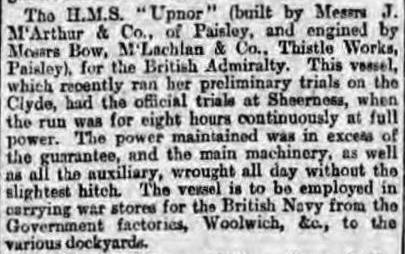
Press report from the Glasgow Herald of 28 June 1899
25 November 1901 berthed at Dunston
26 November 1901 sailed the Tyne for Woolwich
7 December 1901 sailed the Tyne for Woolwich
19 December 1901 sailed the Tyne for Woolwich
17 June 1902 passed Prawle Point
8 March 1904 arrived the Tyne from Woolwich
23 October 1905 arrived the Tyne from Plymouth
25 October 1905 sailed the Tyne for Woolwich
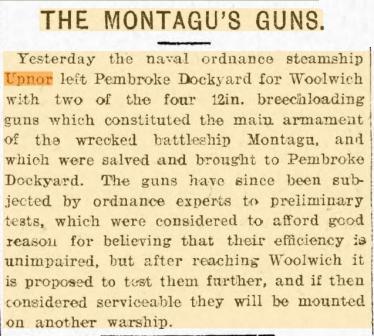
29 October 1906 sailed Pembroke Dock for Woolwich
30 October 1906 the Evening Express (a Welsh newspaper) reported -
14 March 1910 arrived on the River Tyne from Portsmouth
16 March 1910 sailed the River Tyne for Woolwich
20 June 1910 arrived on the River Tyne from Woolwich
17 September 1910 arrived on the River Tyne from Woolwich
10 June 1911 sailed the River Tyne for Woolwich
30 July 1912 arrived at Portsmouth Harbour and berthed in No: 3 Basin
21 May 1914 at Portsmouth Harbour
19 March 1917 at Scapa Flow alongside HMS ACHILLES ammunitioning ship
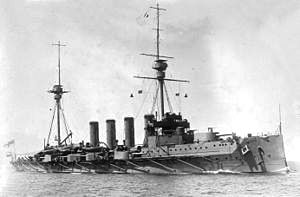
HMS ACHILLES
1918 Captain E A Mathews was Master
4 May 1919 arrived at Leith Docks from Inverness
27 May 1919 sailed Leith Docks for Inverness
8 October 1920 arrived at Grangemouth from Crombie
11 October 1920 sailed Grangemouth for Woolwich with a cargo of munitions
3 November 1920 arrived at Grangemouth from Crombie
8 November 1920 sailed Grangemouth to Woolwich
24 November 1920 arrived at Grangemouth from Crombie
15 July 1921 loaded a cargo of cordite from the Explosive Works at Hayle and sailed for Devonport
2 April 1922 while on passage from Haul-bowline Dockyard, Ireland to Devonport was seized by armed dissident members of Irish Republican Army who managed to get on board by trick when she was 35 miles off Cork Harbour. Diverted to Ballycottin Bay which had been barricaded. 381 rifles, 727 revolvers, 33 Lewis machine guns, 6 Maxim guns and 25,000 rounds of ammunition and a small quantity of explosives were stolen. The ship was then released with her crew proceeding to sea and their subsequent recapture by the naval sloop HMS HEATHER
8 April 1922 arrived at Devonport from Queenstown
12 May 1922 arrived at Plymouth from Chatham
9 December 1922 sailed Plymouth for Portsmouth
26 August 1923 berthed at Devonport
5 October 1923 sailed Devonport for Portsmouth
1 November 1923 arrived at Devonport
5 November 1923 sailed Devonport
20 March 1924 sailed Devonport for Portsmouth
15 July 1924 berthed at Priddy's Hard, Portsmouth Harbour along with NAV's BISON and ISLEFORD
16 August 1924 berthed at Priddy's Hard, Portsmouth Harbour
12 October 1924 arrived at Devonport from Portsmouth
14 January 1925 moored at Portsmouth Harbour on buoy 2
19 August 1925 arrived at Devonport from Portsmouth
14 October 1925 berthed at Priddy's Hard, Portsmouth Harbour together with NAV ISLEFORD
20 January 1926 arrived at Devonport
31 July 1926 berthed at Priddy's Hard, Portsmouth Harbour
30 December 1926 arrived at Devonport from Portsmouth
27 January 1927 sailed Grangemouth for Crombie
30 September 1927 sailed Devonport for Portsmouth
23 December 1927 sailed Devonport for Portsmouth
9 September 1928 arrived at Devonport from Woolwich
31 October 1928 Captain W Fisher appointed in command
23 January 1929 berthed at Priddy's Hard, Portsmouth Harbour
9 April 1929 berthed at Priddy's Hard, Portsmouth Harbour
3 June 1929 arrived at Devonport from Portsmouth
28 November 1929 berthed in No: 3 Basin, Portsmouth Harbour
30 May 1930 berthed in the Tidal Basin of Portsmouth Dockyard
22 August 1930 sailed Devonport for Portsmouth
1 January 1931 detailed in a published list of RFA's in Portsmouth Harbour together with RFA's KIMMEROL, EBONOL, PETRONEL, ORANGELEAF (1), WAR AFRIDI, PRESTOL, BRITISH LANTERN, LIMOL, NORA and NAV ISLEFORD
16 March 1931 berthed at Priddy's Hard, Portsmouth Harbour together with NAV ISLEFORD
18 April 1931 arrived at Devonport from Greenock
21 November 1931 sailed Devonport
10 May 1932 berthed at Dock Wall, River Tyne
13 May 1932 berthed at Alexandra Dock, Hull
24 July 1932 sailed Bulls Point NAD, Devonport for Portsmouth
31 December 1932 berthed at Priddy's Hard, Portsmouth together with NAV ISLEFORD
5 January 1933 berthed in No: 1 Basin, Portsmouth Harbour
18 April 1933 berthed on North Corner Jetty, Portsmouth Harbour
29 May 1933 berthed at Priddy's Hard, Portsmouth Harbour
16 August 1933 Captain W E Truscott appointed in command
4 October 1933 berthed at Grangemouth from Rosyth Dockyard sailing to the same day for Chatham Dockyard via Rosyth
18 October 1933 berthed at Priddy's Hard, Portsmouth Harbour together with NAV BISON
27 November 1933 berthed at Alexandra Dock, Hull from Rosyth Dockyard
28 November 1933 sailed Hull for Chatham
22 October 1937 arrived at Devonport
24 January 1939 sailed Plymouth for Portsmouth
1 August 1938 Captain T C Deans appointed Master relieving Captain F S H Trapp who took command of NAV BISON
11 October 1938 Captain W B Hogan was appointed Master
22 March 1939 berthed at No: 1 Willington Quay, River Tyne
3 May 1939 passed Lloyds Signal Station on the Lizard sailing east bound
4 May 1939 arrived at Plymouth from Milford Haven
4 June 1939 arrived at Plymouth from Woolwich
2 July 1939 sailed Plymouth for Portsmouth
21 December 1942 sailed Lyness
6 February 1943 Captain W H Prail appointed in command
3 July 1945 sailed Milford Haven for Plymouth
5 September 1951 purchased by Dashwood & Cartner Ltd.
1952 deleted from the Register
Notes:
Was replaced by NAV KINTERBURY


Subsequent name:
Class: KIN CLASS Coastal Salvage Vessel
Pennant No: W06 / A507
Laid down: 13 March 1943
Builder: Smith's Dock, South Bank, Middlesborough
Launched: 29 November 1943
Into Service: 6 April 1944
Out of service: 1977
Fate: Broken up
Items of historic interest involving this ship: -
Background Data: Originally a class of 11 ships was planned but two were cancelled and of the remaining nine, seven saw brief service as RFA’s. They were re-rated as Mooring, Salvage and Boom Vessels in 1971. All were equipped with lifting horns and heavy rollers forward which enabled them to lift 200 tons dead-weight over the bows. In wartime they were armed with 2 x 20 mm AA guns and had a complement of 34
Uplifter has served at differing times as an Naval Salvage vessel (HMS) and a Royal Fleet Auxiliary Salvage vessel (RFA)
Managed initally by Metal Industries as a merchant navy manned costal salvage vessel.
13 August 1942 ordered
13 March 1943 laid down
29 November 1943 launched by Smith’s Dock Co Ltd, South Bank, Middlesbrough as Yard Nr: 1121 named HMS UPLIFTER
6 April 1944 completed
20 May 1944 arrived in the Thames from Harwich for operation OVERLORD. Given the funnel marking ‘S’ to identify Allied salvage vessels working in the Normandy assault beaches area
Captain Lt Cdr Victor Campbell RNVR. Chief Officer George Norman Elliott MBE. Salvaged 3 HM Ships, 3 Merchant Vessels, a large number of Landing Craft and 3 German TLC MK 111 in Port-en-Bassin harbour.Period includes the gales of 19-21 June which caused some 800 vessels to drift ashore and had to be recovered. Prime Minister Winston Churchill described Port-en-Bassin as ‘a most valuable acquisition’ and it was developed as the main supply port for petrol until the PLUTO pipeline was on stream. Captain appointed an MBE for the ship’s achievements. The citation read ‘the work of the personnel engaged on salvage or repair operations was outstanding and the large number of ships and craft, some seriously damaged, salved and repaired are evidence of the skill, resourcefulness and endeavour of the Officers and men concerned’. Diver Hugh Ross Allan was awarded the British Empire Medal for work at Port-en-Bassin in mined waters. The ship subsequently involved in salvage operations, with two other salvage ships, at the port of Flushing.
21 August 1944 sailed Seine Bay in convoy FTC 74 to Southampton arriving the next day
8 May 1945 Diver Hugh Ross Allan awarded the British Empire Medal for work during Operation Overloard
29 January 1946 arrived at Aberdeen
16 February 1946 at Montrose sands the diesel barge Peterborough Merchant was raised by RFA Uplifter having ran aground with a cargo of zinc while on passage from Greenock to the River Tyne
September 1947 to December 1947 involved in surveying the wreck of the 1897 battleship Bulwark which had been lost in an internal explosion off Sheerness in November 1914.
5 December 1947 rescued the crew of the Tongue Fort in the Thames Estuary after it suffered structural failure
4 March 1948 arrived Kames Bay, near Rothesay, to assist her sister RFA SUCCOUR in refloating the trials cruiser HMS EMERALD which took three months to accomplish
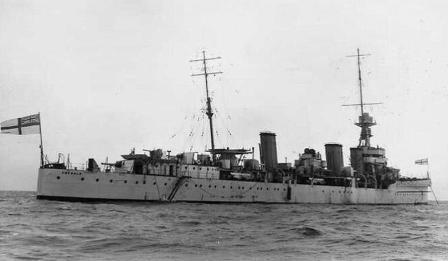
HMS EMERALD
December 1949 in refit at Sheerness
8 November 1950 arrived at Portsmouth and the Portsmouth Evening News reported -
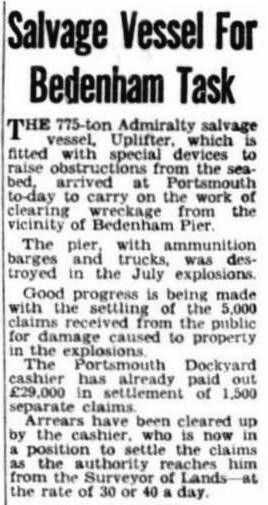
18 April 1951 involved with RFA KINBRACE and RN ships in trying to locate HMS/m AFFRAY
1 May 1952 at Dungeness
18 June 1952 involved with RFA KINBRACE and another tug and succeeded in getting the British steamer Baron Douglas which had run aground near Hastings refloated after a collision with a Yugoslav ship Korenica
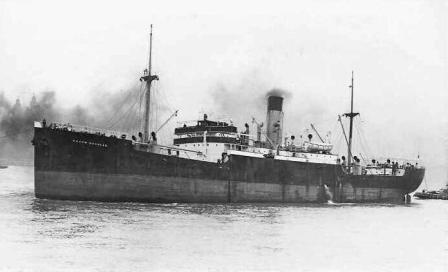
ss Baron Douglas
July 1952 in refit at Sheerness
21 August 1952 sent with two tugs to an American Liberty ship 'Western Farmer' (7,239 tons) which was badly holed in a collision with a Norwegian tanker Bjorgholm (11,732 tons) 18 miles ESE of Ramsgate and which broke in half and her bows sank
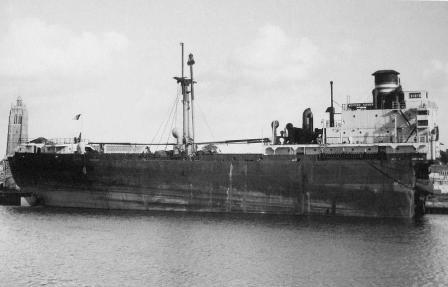
The after part of the ss Western Farmer
22 August 1952 The Times newspaper reported ...
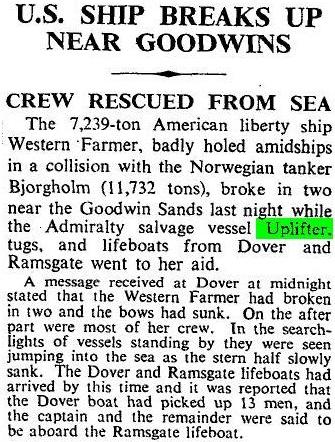
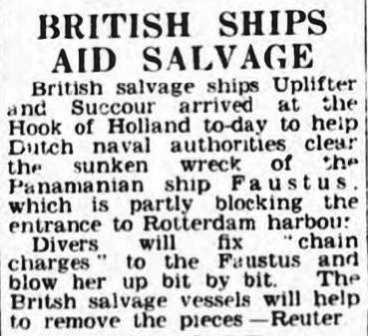
10 November 1952 along with her sister SUCCOUR she sailed Dover to assist in wreck clearing operations in the New Waterweg, Hook of Holland after the Panamanian freighter FAUSTUS had breached the North Pier there before sinking 3 days earlier and partially blocking the entrance
12 November 1952 the Portsmouth Evening News reported ...
1 February 1953 in dry dock at Sheerness when water poured into the dock and entered the engine room through several openings which could not be closed. All hands were ordered ashore and as the last man got ashore the brow collapsed. Petty Officer Samuel John Horlick C.JX 154853 from HMS BARSOUND organised a party of five ratings to make Uplifter as watertight as possible. For his efforts the Petty Officer was awarded the British Empire Medal (Military Division) for gallantry.
15 June 1953 took part in the Queen Elizabeth II Coronation Fleet Review at Spithead along with 7 other RFA’s.
30 January 1954 at Portsmouth and recovery work began on LCT 1048 which had been beached in Stokes Bay, off Gosport, during 1949 after which she had been used as a target
1 June 1954 notice was given in the London Gazette that the Admiralty was paying Salvage money to those involved from RFA UPLIFTER and RFA KINBRACE in the salvage of the ss Baron Douglas on the 18 June 1952. Special payments of an additional £25.00 were made to W. Brown and J. Turvey of RFA Uplifter
1 March 1955 assisted in the recovery of RFA EDDYREEF which had flooded at Shotley due to a failed circulation pump.
1955 involved in secret bomb recovery from Orford Ness
July 1955 a Bosun and two men with a boat from UPLIFTER allocated to accompany the American swimmer Florence Chadwick during an attempted non-stop swim across the English Channel and return.
July 1955 placed in reserve at Chatham Dockyard.
12 November 1956 commissioned at Chatham for service during Operation Musketeer - the Suez Crisis - which also involved 34 other RFA‘s
10 December 1956 arrived Port Said to assist in wreck clearance operations. RFA’s SALVESTOR and SEA SALVOR were also engaged in this task
18 December 1956 raised the hopper Neptune at Port Said
25 January 1957 berthed at Malta together with RFA DISPENSER
9 February 1957 at Gozo together with the harbour tug Tanac refloated the Malta Gozo Ferry Bancinu after she broke adrift from moorings in Mgarr harbour during the night of 23 January 1957. The Bancinu was holed for'ard and pumps had to be used to keep her afloat
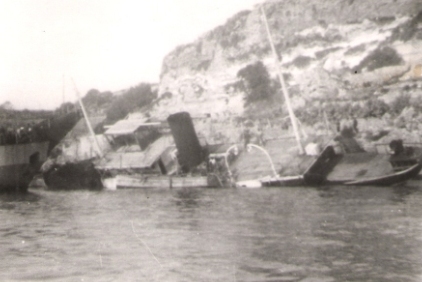
The Malta to Gozo ferry Bancinu on the rocks in Gozo Harbour with HMS Uplifter (just visible) salvaging her
7 March 1957 returned to Chatham and reserve at Sheerness
February 1959 underwent refit and preservation at Sheerness
1959 in reserve at Pembroke Dock.
6 May 1963 Admiralty Board approval was obtained to convert her and her sisters KINBRACE and KINGARTH into Salvage, Mooring and Boom Vessels
6 June 1964 arrived Liverpool to transfer her redundant boiler to her sister DISPENSER
19 June 1964 boiler removed and installed in her sister
7 July 1964 was towed back to Pembroke Dock to await conversion
2 June 1966 arrived at St Andrews Dock, Hull
16 June 1966 conversion began to re-engine her by St Andrews Engineering at Hull with 1 x British Polar Atlas diesel engine. 630 bhp. 9 knots. Single screw
17 May 1967 conversion completed at a cost of £173,400
27 June 1967 was accepted after conversion and was now in grey livery
24 March 1968 Aer Lingus Vickers Vicount EI-AOM crashed off County Wexford near the Tuskar Rock Lighthouse. Sixty one passengers and crew of the aircraft were killed.
30 March 1968 at Milford Haven put on notice to sail to the scene of the aircrash to join various RN units including the deep diving vessel HMS RECLAIM
20 May 1968 arrived on scene with divers to replace HMS CLARBESTON
29 May 1968 returned to Milford Haven
13 June 1968 back on scene preparing moorings and positioning of HMS RECLAIM
16 June 1968 provided assistance to HMS RECLAIM
21 June 1968 landed some of the recovered wreckage
22 June 1968 left from the scene having been stood down operations – the tides were too strong
14 July 1968 with HMS RECLAIM and HMS SHOULTON returned to the search area
23 July 1968 off loaded wreckage recovered during previous 10 days – 2.5 tons approx. mostly engines at Rosslare Harbour
24 July 1968 stood down again due to strong tides
13 August 1968 returned to the search area with HMS RECLAIM with Irish ship CLIONA
20 August 1968 decision taken by C in C Plymouth to withdrawl from the scene on 21 August 1968. UPLIFTER required to recover all moorings before departure
21 August 1968 to Milford Haven
29 August 1968 lifted all moorings and anchors, leaving area clear. Irish shipping continued the search for wreckage through September and ended on 4 October 1968.
1970 transferred to RMAS
31 July 1977 to Rosyth
5 to the 10 May 1979 used to ascertain clearance over the wreck of HMS NATAL in Nigg Bay, the Cromarty Firth which sank after an internal explosion on 30 December 1915
1985 in reserve and put up for disposal
September 1985 was used as a bombing target off Fraserburgh during which she was holed after grounding on an old target and was taken back to Rosyth for lay-up pending disposal..
27 June 1986 sold for demolition by Jas A. White at Inverkeithing. Demolition lasted for a couple of years
June 1986 broken up at Inverkeithing
Notes:
Was managed by Metal Industries Ltd during WW2.
She was the longest-serving of the KIN CLASS under the White Ensign