

RFA Operations since 1905
 The British Campaign in the Baltic 1918-19 was a part of the Allied intervention in the Russian Civil War. The intervention played a key role in enabling the establishment of the independent states of Estonia and Latvia but failed to secure the control of Petrograd by Russian White forces, one of the main goals of the campaign
On 22 April 1928 19:59 UTC, at 38 N, 23.5 E, depth 29 km, with a magnitude of 5.25, Aegean Sea, near the eastern shore of Greece. A catastrophic earthquake preceded by a strong shock an hour earlier, took place on the Isthmus of Corinth. 3,000 houses were destroyed and 20 people were killed in Corinth and Loutraki (not a single building remained intact in the latter). 15,000 inhabitants were left homeless.
Planned Operations Against the Atlantic Islands in WW2
Early in WW2 Adolf Hitler conceived plans known as Operation Felix to seize Gibraltar and the Azores, Canary and Cape Verde Islands in the Atlantic, but fortunately was dissuaded from this by his Naval Staff who quickly realised that while Germany might be able to take the Islands, she did not have the necessary naval strength to supply and hold them.
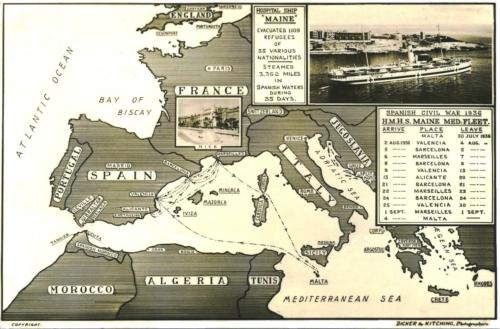 The Spanish Civil War was a major conflict that devastated Spain from 17 July 1936 to 1 April 1939. It began after an attempted coup d'état against the government of the Second Spanish Republic, then under the leadership of president Manuel Azaña, by a group of Spanish Army generals. The nationalist insurgency was supported by the conservative Spanish Confederation of the Autonomous Right (Confederación Española de Derechas Autónomas, or C.E.D.A), Carlist groups, and the Fascistic Falange (Falange Española de las J.O.N.S.). The war ended with the victory of the rebel forces, the overthrow of the Republican government, and the founding of a dictatorship led by General Francisco Franco.
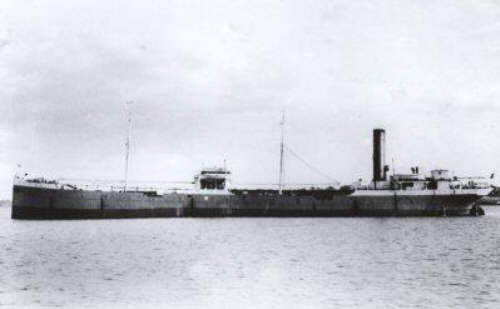 The 1923 Great Kanto earthquake struck the Kanto plain on the Japanese main island of Honshu at 11:58:44 am JST on September 1, 1923. Varied accounts hold that the duration of the earthquake was between 4 and 10 minutes.
Planned Operations Against the Atlantic Islands in WW2
Early in WW2 Adolf Hitler conceived plans known as Operation Felix to seize Gibraltar and the Azores, Canary and Cape Verde Islands in the Atlantic, but fortunately was dissuaded from this by his Naval Staff who quickly realised that while Germany might be able to take the Islands, she did not have the necessary naval strength to supply and hold them.
Planned Operations Against the Atlantic Islands in WW2
Early in WW2 Adolf Hitler conceived plans known as Operation Felix to seize Gibraltar and the Azores, Canary and Cape Verde Islands in the Atlantic, but fortunately was dissuaded from this by his Naval Staff who quickly realised that while Germany might be able to take the Islands, she did not have the necessary naval strength to supply and hold them.
Planned Operations Against the Atlantic Islands in WW2
Early in WW2 Adolf Hitler conceived plans known as Operation Felix to seize Gibraltar and the Azores, Canary and Cape Verde Islands in the Atlantic, but fortunately was dissuaded from this by his Naval Staff who quickly realised that while Germany might be able to take the Islands, she did not have the necessary naval strength to supply and hold them.
Planned Operations Against the Atlantic Islands in WW2
Early in WW2 Adolf Hitler conceived plans known as Operation Felix to seize Gibraltar and the Azores, Canary and Cape Verde Islands in the Atlantic, but fortunately was dissuaded from this by his Naval Staff who quickly realised that while Germany might be able to take the Islands, she did not have the necessary naval strength to supply and hold them.
Planned Operations Against the Atlantic Islands in WW2
Early in WW2 Adolf Hitler conceived plans known as Operation Felix to seize Gibraltar and the Azores, Canary and Cape Verde Islands in the Atlantic, but fortunately was dissuaded from this by his Naval Staff who quickly realised that while Germany might be able to take the Islands, she did not have the necessary naval strength to supply and hold them.
Planned Operations Against the Atlantic Islands in WW2
Early in WW2 Adolf Hitler conceived plans known as Operation Felix to seize Gibraltar and the Azores, Canary and Cape Verde Islands in the Atlantic, but fortunately was dissuaded from this by his Naval Staff who quickly realised that while Germany might be able to take the Islands, she did not have the necessary naval strength to supply and hold them.
Planned Operations Against the Atlantic Islands in WW2
Early in WW2 Adolf Hitler conceived plans known as Operation Felix to seize Gibraltar and the Azores, Canary and Cape Verde Islands in the Atlantic, but fortunately was dissuaded from this by his Naval Staff who quickly realised that while Germany might be able to take the Islands, she did not have the necessary naval strength to supply and hold them.
Planned Operations Against the Atlantic Islands in WW2
Early in WW2 Adolf Hitler conceived plans known as Operation Felix to seize Gibraltar and the Azores, Canary and Cape Verde Islands in the Atlantic, but fortunately was dissuaded from this by his Naval Staff who quickly realised that while Germany might be able to take the Islands, she did not have the necessary naval strength to supply and hold them.
 The British campaign in Norway took place from April 1940 until early June 1940. It was in two main parts, in central Norway and around Narvik.
The Fall of France in July 1940 and the real possibility of a German invasion of Britain – with a German codenamed of Operation Sealion - resulted in a British plan, first mooted in the summer of 1940 and codenamed Operation Lucid, to use fire ships to attack the wooden German invasion barges that were known to be gathering in ports on the northern coast of France. This plan had the full backing of Prime Minister Winston Churchill who “wanted to singe the moustache of Adolf Hitler” much as Sir Francis Drake has “singed the beard of the King of Spain” in 1588 with his pre-emptive attack on the Spanish Armada.
Planned Operations Against the Atlantic Islands in WW2
Early in WW2 Adolf Hitler conceived plans known as Operation Felix to seize Gibraltar and the Azores, Canary and Cape Verde Islands in the Atlantic, but fortunately was dissuaded from this by his Naval Staff who quickly realised that while Germany might be able to take the Islands, she did not have the necessary naval strength to supply and hold them.
Operation Bonnet was the British code name for a Royal Navy convoy from Alexandria to Malta. The convoy, MF2, which consisted of two merchant ships together with RFA PLUMLEAF (1) sailed on 29 August 1940 with the direct and indirect protection of a Royal Naval Force consisting of two aircraft carriers, one battle cruiser, three cruisers and sixteen destroyers.
Operation Excess was a series of British supply convoys to Malta, Alexandria and Greece in January 1941. The operation encountered the first presence of Luftwaffe anti-shipping aircraft in the Mediterranean Sea. All the convoyed freighters reached their destinations. However, the destroyer HMS Gallant was disabled by Italian mines; and Axis bombers severely damaged the cruiser HMS Southampton and the aircraft carrier HMS Illustrious.
Operation Substance was a British naval operation in July 1941 during the Second World War to escort convoy GM 1, the first of the series from Gibraltar to Malta. The convoy defended by Force H was attacked by Italian submarines, aircraft, and MAS torpedo boats.
Operation Rupert R4 was part of the general British response to the German move on Norway in 1941 and involved units of the Home Fleet including the aircraft carrier HMS Glorious, a cruiser and a number of destroyers
Operation Dervish was the first of the Arctic Convoys of World War II by which the Western Allies supplied material aid to the Soviet Union in its fight with Nazi Germany. The convoy originally sailed from Liverpool on 12 August 1941 and via Iceland arrived at Archangelsk on 31 August 1941. No ships were lost.
RFA Aldersdale was deployed in support of this operation.
Operation Anklet was a British Commando raid on 26 December 1941 on the Lofoten Islands.
 The invasion of Madagascar (or Operation Ironclad) was the Allied campaign to capture Vichy French-controlled Madagascar during World War II.
Operation STAB was a diversionary operation to suggest landing operations on the Andaman Islands in the Indian Ocean and involved, in part, three Dummy Convoys on passage from Vizagapatam, Madras and Trincomalee towards those islands.
Operation Vigorous was a World War 2 Allied operation to deliver a supply convoy (MW-11) that sailed from
Operation Torch (initially called Operation Gymnast) was the British-American invasion of French North Africa in World War II during the North African Campaign, started on 8 November 1942.
As part of Operation Ironclad on 10 September 1942 the 29th Brigade and 22nd Brigade Group made an amphibious landing at
Operation Tabarin was a World War II military undertaking by the Admiralty and the Colonial Office in 1943 to establish a permanent British presence in the Antarctic. The bases built were the first ever to be constructed in Antarctica.
The World War 2 the Allied landing on mainland
To win the war against German U-boats, the Allies had to protect their convoys in the vast black hole of the mid-Atlantic known as the Azores Gap. In 1943 they devised a plan to set up air bases on the
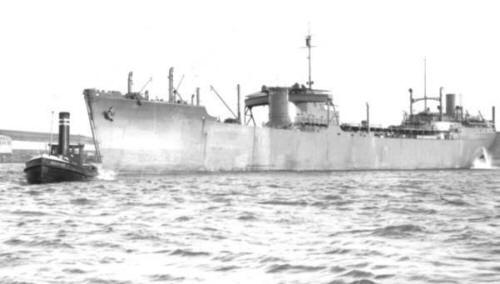 Operation Shingle (22 January 1944 – 1 February 1944), during the Italian Campaign of World War II, was an Allied amphibious landing against Axis forces in the area of Anzio and Nettuno, Italy.
Operation Tungsten was one of a number of aerial attacks on the German battleship Tirpitz while she was in Norwegian waters (the Altenfjord) by the Fleet Air Arm (the air units of the Royal Navy).
Operation Anvil (it’s name during the planning stages) but then renamed Operation Dragoon was the Allied invasion of southern
Flag Officer Force ‘N’ (Rear Admiral C.S. Holland, CB) sailed from Trincomalee for Singapore on 31 August 1945 in H.M.S. SUSSEX, with the destroyer VIGILANT in company. Rear Admiral Holland, on behalf of the Supreme Allied Commander, South East Asia, was to make preliminary arrangements with the Japanese for the occupation of Singapore Island.
On 15 August, 1945 Vice Admiral Harold T.C. Walker, CB, Vice Admiral Commanding Third Battle Squadron, was ordered to carry out Operation JURIST, D Day being fixed as 21 August 1945 In accordance with these orders, the following forces sailed from Trincomalee.
Operation Stacey was the code name for a Royal Navy force (Force 62) to carry out photographic reconnaissance of Penang and the Kra Isthmus between latitudes 7 degrees North and 10 degrees North, and Northern Sumatra in February and March 1945
During World War II, Operation Dracula was the name given to an airborne and amphibious attack on Rangoon by British and Indian forces, part of the Burma Campaign.
Between 3rd to 27th February 1945 Operation Hotbed was the safe conduct of Convoys JW 64 and RA 64 to and from Northern Russia with Rear Admiral Commanding, First Cruiser Squadron in charge.
JW 64 arrived safely, although attacked by enemy aircraft. HMS DENBIGH CASTLE was torpedoed outside Kola, but was towed in and beached where she capsized. The U-Boat - U425 was sunk by HMS LARK.
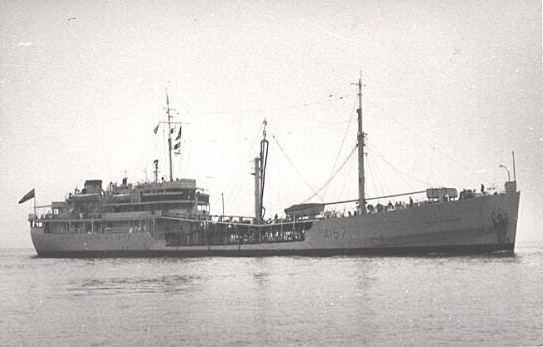
Operation Judgement took place between 1st and 6th May 1945 and was the last Home Fleet operation against German Forces in World War 2
The Objects of this Operation were:
1.The destruction of U-boat depot ships at Kilbotn
2: To destroy shipping anchored of Sandnesjoen
Operation Zipper was a British plan to capture either at Port Swettenham or Port Dickson, Malaya as staging areas for the recapture of
Between 11 to 30 March 1945 Operation Scottish was put in place with the object of ensuring safe passage for Convoys JW and RA 65 to and from North Russia.
The Battle of the Malacca Strait, sometimes called the Sinking of the Haguro, and in Japanese sources as the Battle off Penang, was a naval battle that resulted from the British search and destroy operation in May, 1945, called Operation Dukedom, that resulted in the sinking of the Japanese cruiser Haguro. Haguro had been operating as a supply ship for Japanese garrisons in the Dutch East Indies and the Bay of Bengal since 1 May 1945.
Operation Deadlight was the code name for the scuttling of U-boats surrendered to the Allies after the defeat of Germany near the end of World War II.
In the aftermath of the Second World War no task fell to the Royal Navy more demanding than the interception of sea-borne illegal immigration into Palestine between 1945 – 1948.
Warfare between North Korea (Democratic People’s Republic of Korea) and South Korea (Republic of Korea) began on 25 June 1950 and paused with an armistice which was signed on 27 July 1953.
Operation 'Weldfast' was conducted in the general area of
On 10 January 1954 a De Havilland Comet aircraft registration G-ALYP operated by BOAC crashed into the sea off the Island of Elba killing all those onboard. A number of Royal Navy ships together with RFA SEA SALVOR were deployed to recover the wreckage.
The Operation was undertaken from 20 January 1954 until 11 April 1954. Approximately 85% of the wreckage was recovered and subsequently brought to the UK by RFA FORT BEAUHARNOIS for examination as to the cause of the crash.
The Suez Crisis was a military attack on Egypt by Britain, France and Israel commencing on 29 October 1956.
Operation Grapple, and operations Grapple X, Grapple Y and Grapple Z, were the names of British nuclear tests of the hydrogen bomb.
Read more: 1956-58 Operation Grapple - British Nuclear Tests
Operation Crescent was a joint RN, USN, India and Pakistan Naval operation off
The Cod Wars, which have also been called the Iceland Cod Wars, were a series of confrontations between 1958 and 1976 between the United Kingdom and Iceland over fishing rights around the coast of Iceland.
Operation Vantage was a British military operation in 1961 to support the newly independent state of
INS Dakar (77-?) was a modified British T class submarine previously HMS Totem (P352) of the Royal Navy. Built at H.M. Dockyard, Devonport, she was launched on 28 September 1943 and served in the Royal Navy until she was purchased by Israel, along with two of her T-class sisters, in 1965. She was commissioned into the Israeli Navy on 10 November 1967 as Dakar (???), ("Swordfish" in Hebrew), under the command of Major Ya'acov Ra'anan.
Following Flight 712, operated by Aer Lingus crashing en route from
Operation Burlap - the 1970 Bhola cyclone was a devastating tropical cyclone that struck East Pakistan (later to become The Peoples Republic of Bangladesh) and the State of West Bengal, India on 12 November 1970.
Operation Lymelight ran from the 2nd to 8th August 1971 in the English Chanel off Dorset and was the code name for a live BBC TV Programme involving Fleet Exercises with HMS ARK ROYAL and two other RN warships together with RFA’s OLMEDA and REGENT
Operation Zealous was an operation to provide, on standby, naval support and facilities to assist in the evacuation of British nationals from
The Cod Wars, which have also been called the Iceland Cod Wars, were a series of confrontations between 1958 and 1976 between the United Kingdom and Iceland over fishing rights around the coast of Iceland.
At the end of the Vietnam War – Operation Stella – was put into action when three ships from a Far East deployment – HMS Lowestoft, HMS Achilles and RFA Green Rover were deployed from
The Cod Wars, which have also been called the Iceland Cod Wars, were a series of confrontations between 1958 and 1976 between the United Kingdom and Iceland over fishing rights around the coast of Iceland.
In the late 1970’s a very secret operation took place that was kept under wraps until the Falklands war of 1982. In November 1977 a group of fifty Argentinean “Scientists” landed on the island of South Thule, part of the Falkland Islands Dependency and proceeded to set up a military base on the island.
Operation Culex was conducted by British Forces and local Security Forces between 16 July 1979 until October 1979 following an influx of illegal immigrants into
Hurricane Allen was a powerful
The Falklands War was fought in 1982 between Argentina and the United Kingdom over the former country’s occupation of the Falkland Islands and South Georgia and the South Sandwich Islands. The Falkland Islands consist of two large and many small islands in the South Atlantic Ocean east of Argentina; their name and sovereignty over them have long been disputed.
The Invasion of Grenada, codenamed Operation Urgent Fury, was an invasion ordered by U.S. President Ronald Reagan of the nation of Grenada, an island in the Caribbean Sea, 100 miles north of Venezuela, and over 1,500 miles southeast of the United States.
Operation Offcut was the British code name for Royal Navy support in a multi national force in the Lebanon following a massacre of Palestinian refugees. The Operation was to protect its peacekeepers (the BRITFORLEB deployment) and nationals in that country. In support of five Royal Navy ships RFA’s BLUE ROVER, BRAMBLELEAF (3), GREY ROVER, and RELIANT (3) were deployed. The ships were variously deployed between 18 November 1983 and 23 March 1984
Operation Grapple was the codename given to the deployment of British forces in Bosnia from 1992 as part of the United Nations Protection Force (UNPROFOR).
In July 1995, the island of Montserrat's Soufriere Hills volcano, dormant throughout recorded history, rumbled to life and began an eruption which eventually buried the island's capital, Plymouth, in more than 12 metres (39 ft) of mud, destroyed its airport and docking facilities, and rendered the southern half of the island uninhabitable.
The Sierra Leone Civil War (1991–2002) began on 23 March 1991 when the Revolutionary United Front (RUF), with support from the special forces of Charles Taylor’s National Patriotic Front of Liberia (NPFL), intervened in
Hurricane Mitch was the most powerful hurricane and the most destructive of the 1998 Atlantic hurricane season, with maximum sustained winds of 180 mph (285 km/h). The storm was the thirteenth tropical storm, ninth hurricane, and third major hurricane of the season. Along with Hurricane Georges, Mitch was the most notable hurricane in the season.
The Kosovo Force (KFOR) is a NATO-led international force responsible for establishing a safe and secure environment in Kosovo, the self-proclaimed, independent and partially recognized landlocked country in the Balkans, which has been under United Nations Nations administration since 1999.
Operation Barras was the name given to a hostage rescue operation by the Special Air Service, Special Boat Service, and Parachute Regiment in Sierra Leone on 10 September 2000. The men on the ground nicknamed the dangerous mission 'Operation Certain Death'.
Operation Barwood was the name given to the provision of humanitarian aid to the people of Mozambique. In February and March 2000 that country was hit by catastrophic flooding and British military units were sent to assist.
RFA support for the Operation was provided by RFA Fort George
Operation Veritas was the codename used for British military operations against the Taliban government of
Operation Telic was the codename under which all of the United Kingdom's military operations in Iraq were conducted between the start of the Invasion of Iraq on 19 March 2003 and the withdrawal of the last remaining British forces on 22 May 2011. The bulk of the mission ended on 30 April 2009 but around 150 troops, mainly from the Royal Navy, remained in Iraq until 22 May 2011 as part of the Iraqi Training and Advisory Mission. 46,000 troops were deployed at the onset of the invasion and the total cost of war stood at £9.24 billion in 2010
The 2004 Indian Ocean earthquake was an undersea mega thrust earth quake that occurred at 00:58:53 UTC on 26 December 2004, with an epicenter off the west coast of Sumatra, Indonesia. The resulting tsunami itself was given various names, including the 2004 Indian Ocean tsunami, Asian Tsunami, Indonesian Tsunami, and Boxing Day Tsunami.
The Naval Task Group for Operation VELA, a three month deployment to
Operation Highbrow was the name given to a large-scale military evacuation of British nationals from
Operation Zest was conducted between 1 February 2008 until 25 March 2008 when a Joint Service task force commenced work on the reconstruction and reinforcement of
OP Panlake was the UK's military contribution to the humanitarian relief effort following the earthquake in Haiti.
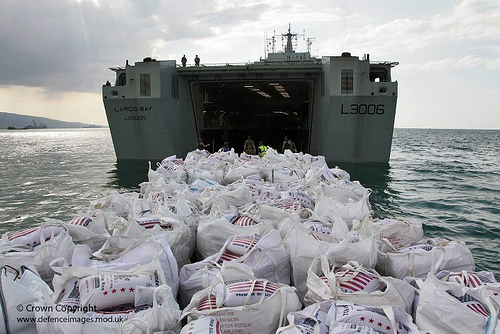
Picture Crown Copyright
Operation Ellamy was the codename for the
Operation Gritrock was the code name given to the British participation in the fight against the Ebola virus epidemic in West Africa. In November 2015, Sierra Leone was officially declared Ebola free. Military Forces from the Irish Defence Force and the Canadian Armed Forces also took part
During Operation Herring in 2014 more than 16,000 people in Sierra Leone had food for a month thanks to a three-day mission by Britain’s Armed Forces to islands cut off from the rest of the country by the Ebola outbreak