

Ships starting with I
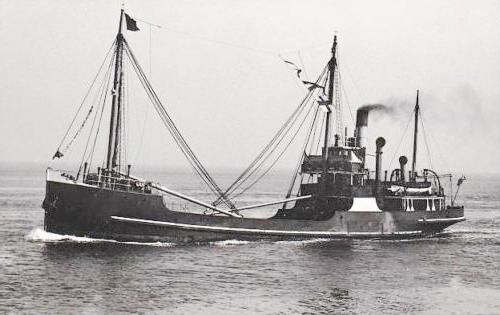
Subsequent name:
Official Number: 133101
Class: Armament Stores Carrier
Pennant No:
Laid down:
Builder: Ardrossan Drydock & Shipbuilding Co Ltd, Ardrossan
Launched: 6 December 1912
Into Service: 26 March 1913
Out of service: 25 January 1942
Fate: Stranded and sunk
Items of historic interest involving this ship: -
Background Data: One of a group of nine coasters which were not normally classed as RFA’s although some, on making deep sea passages, had a proportion of RFA Officers among their complement. They are included here as the ancestors of the more modern ammunition ships
6 December 1912 launched by Ardrossan Drydock & Shipbuilding Co Ltd, Ardrossan as Yard Nr: 241 named ISLEFORD for Messrs Mann, MacNeil & Co, Glasgow
20 February 1913 to 21 February 1913 ran exhaustive trials
24 February 1913 at Glasgow registered as ISLEFORD under reference 9/13 in the Registry
26 February 1913 the Times newspaper reported that -
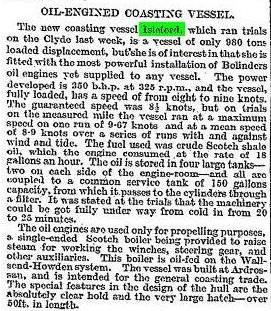
28 February 1913 completed for her owners’ coasting trade
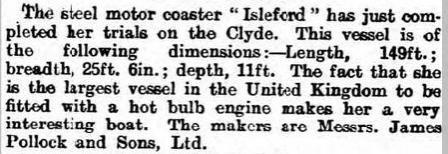
Press report of Dover Express & East Kent News of 14 March 1913
26 March 1913 purchased by the Admiralty for service as an Armaments Stores Carrier, name unchanged
June 1913 the ships Master was Captain W Soper
14 June 1913 sailed Woolwich for Portsmouth
15 June 1913 off Folkstone Able Seaman Caleb Edgecombe Evans discharged dead - natural causes - heart disease. The ship diverted to and berthed at Folkstone
17 June 1913 an inquest touching on the death of Able Seaman Caleb Edgecombe Evans was held at Folkstone Town Hall by the Borough Coroner Mr W G Haines and jury
18 June 1913 the body of Able Seaman Caleb Edgecombe Evans was removed in an elm coffin to NAV Upnor for conveyance to Southampton for burial
19 June 1913 berthed at Portsmouth Harbour in No: 5 basin
25 August 1913 at Portsmouth Harbour moved to No: 5 basin
19 January 1914 at Portsmouth Dockyard moved out of No: 3 basin
26 June 1914 berthed at Portsmouth Dockyard in No: 3 basin
1918 Captain C Harrison was Master
24 March 1919 alongside RFA RUTHENIA at Longhope, Scapa Flow
20 May 1919 sailed Leith Docks for Inverness
21 June 1919 arrived West Hartlepool from Inverness
27 June 1919 sailed West Hartlepool for Inverness with a cargo of mine sinkers
29 April 1920 sailed Granton to Portsmouth
1922 Captain W G Williams appointed as Master
21 March 1922 arrived at Devonport from Woolwich
20 October 1922 sailed Plymouth
16 March 1923 arrived at Devonport
19 March 1923 sailed Devonport for Portsmouth
16 April 1923 arrived at Devonport from Woolwich
14 July 1923 Mr J A Le Cointer appointed as Chief Engineer Officer
15 July 1924 berthed at Priddy's Hard along with NAV's UPNOR and BISON
15 December 1924 arrived at Devonport from Portsmouth
23 July 1925 arrived at Devonport from Portsmouth
14 October 1925 berthed at Priddy's Hard along with NAV UPNOR
29 March 1926 arrived at Plymouth
6 August 1926 sailed Devonport for Portsmouth
21 October 1926 berthed in the Tidal Basin, Portsmouth Harbour
25 November 1926 berthed on North Corner Jetty, Portsmouth Harbour
30 December 1926 berthed at alongside at the Naval Armanents Depot, Priddy's Hard. Gosport
26 January 1927 arrived at Portsmouth from Devonport
27 January 1927 berthed on Priddy's Hard, Portsmouth Dockyard
15 February 1927 arrived at Grangemouth from Crombie in ballast
17 February 1927 sailed Grangemouth to Crombie with Government stores
28 March 1927 sailed Grangemouth to Crombie with a cargo of sinkers
14 April 1927 berthed in the Tidal Basin, Portsmouth Harbour
10 May 1927 sailed Grangemouth for Crombie with a cargo of sinkers
24 May 1927 berthed at the Naval Armanents Depot, Priddy's Hard, Gosport with NAV BISON
2 August 1927 alongside at the Naval Armanents Depot, Priddy's Hard, Gosport
21 September 1927 sailed Devonport for Portsmouth
21 October 1927 sailed Devonport for Portsmouth
24 May 1928 arrived at Devonport from Portsmouth
3 June 1928 sailed Devonport for Woolwich
1929 re-engined with a steam triple expansion engine by Ferguson & Co,
31 December 1929 Captain William E Truscott appointed as Master
1 January 1931 detailed in a published list of RFA's in Portsmouth Harbour together with RFA KIMMEROL, RFA EBONOL, RFA PETRONEL, RFA ORANGELEAF (1), RFA WAR AFRIDI, RFA PRESTOL, RFA BRITISH LANTERN, RFA LIMOL, RFA NORA and NAV UPNOR
11 March 1931 berthed at the Naval Armanents Depot, Priddy's Hard, Portsmouth Harbour together with NAV BISON
16 March 1931 berthed at the Naval Armanents Depot, Priddy's Hard, Portsmouth Harbour together with NAV UPNOR
3 April 1931 sailed Devonport for Portsmouth
27 June 1931 berthed at Pitch House Jetty, Portsmouth Harbour
2 October 1931 alongside at the Naval Armanents Depot, Priddy's Hard
29 November 1931 arrived at Devonport
15 June 1932 arrived at Devonport from Portsmouth
13 October 1932 arrived at Devonport
28 November 1932 berthed at Old Harbour, Hull after arriving from Newcastle
8 December 1932 berthed at the Naval Armanents Depot, Priddy's Hard, Gosport
13 December 1932 ran aground at Torcross Sands, Devon in foggy weather. Refloated with the assistance of an Admiralty tug from Plymouth
30 December 1932 alongside at the Naval Armanents Depot, Priddy's Hard, Gosport
16 January 1933 berthed at the Naval Armanents Depot, Priddy's Hard, Gosport
26 January 1933 berthed at the Naval Armanents Depot, Priddy's Hard, Gosport
3 March 1933 on No: 5 Buoy, Portsmouth Harbour
4 March 1933 berthed at the Naval Armanents Depot, Priddy's Hard, Gosport
1 April 1933 berthed at the Naval Armanents Depot, Priddy's Hard, Gosport
5 May 1933 in No 1 Basin, Portsmouth Dockyard
6 June 1933 in No: 5 Dock, Portsmouth Harbour
23 June 1933 berthed in No 1 Basin, Portsmouth Dockyard
24 June 1933 moved from No 1 Basin, Portsmouth Dockyard to alongside at the Naval Armanents Depot, Priddy's Hard, Gosport
30 June 1933 sailed Priddy's Hard, Gosport
29 July 1933 arrived at Plymouth from Portsmouth
16 August 1933 Captain Sydney C Moyse appointed as Master
28 August 1933 arrived at Priddy's Hard, Gosport
23 September 1933 berthed at Priddy's Hard with NAV UPNOR
2 September 1935 berthed at Woolwich
22 September 1935 arrived River Tyne from Woolwich
5 June 1937 Captain A H Paice appointed as Master
20 January 1938 sailed Devonport for Portsmouth
25 August 1938 arrived at Plymouth from Woolwich
21 November 1938 arrived at the River Tyne
July 1939 Captain E G L Geary appointed as Master
25 January 1942 lost near Wick when she ran aground in snow and heavy weather, striking rocks and sinking while on passage from Lyness to Invergordon fourteen of the crew and one DEMS gunner were killed - their details appear in the Roll of Honour for that year. Gunner John Frederick Clark is remembered with pride on the Chatham Naval Memorial, 2nd Engineer Officer William A Cleghorn, AB Cyril S Cook, Boy Sidney G Davis, Captain David A K Foalle, Chief Engineer Officer Horace D Gumbrell, Chief Officer William A Hall, AB Victor D Kingdom, Fireman Harry J Lawrence, OS Roy C J McGrane, Fireman Frank Rawlins, Boy Harry Rowe, OS George W Smith, and AB William G Witham are remembered with pride on the Tower Hill Memorial (Panel 130).
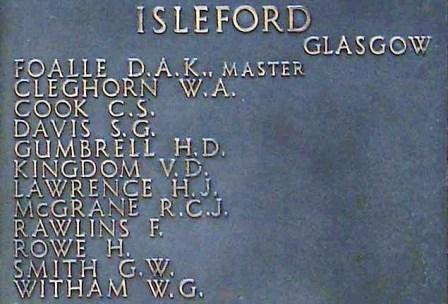
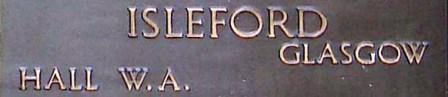
Images above from the Tower Hill Memorial
Fireman and Trimmer Hector MacNichol is remembered in Perth (Wellshill) Cemetery, in Section K, Jeanfield Div, , Grave 211
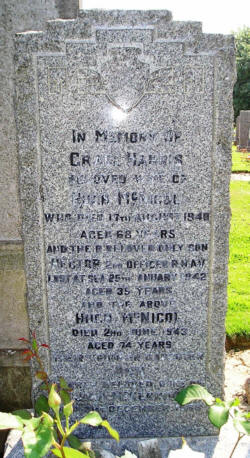
Courtesy and © of The War Graves Photographic Project
24 November 1953 the wreck was located at .5N, .5W, or on a bearing of 074 degrees and 880 metres from the Wick south pier light
13 December 1991 the area was determined as foul ground due to the presence of unexploded ordnance in the area bounded by positions: [a] .5N, .5W [b] .5N, 003 03 43W [c] .5N, .5W [d] .5N, .5W.
9 July 1992. Clearance operations are being carried out by a Royal Naval clearance diving unit commencing on 30 June 1992. It was expected to last 2 weeks
5 August 1992. Clearance operations were conducted between 30 June 1992 and 4 July 1992, during which a number of 4.7" cartridge cases, .303 rounds, .50 calibre ammunition and a depth charge were removed. A 1000lb solid shot projectile was located but left in situ. The Admiralty recommend that the legend remain unchanged on charts because further ordnance may be uncovered in the future
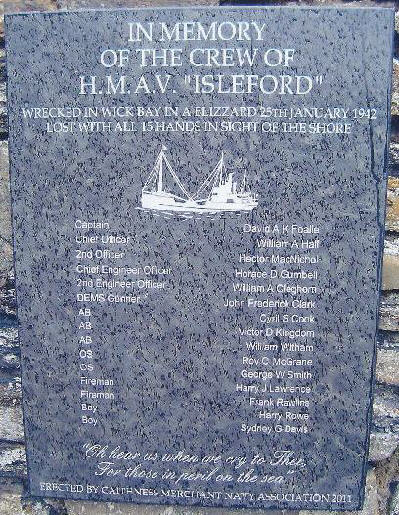
4 September 2011 a memorial was erected at Wick Harbour by the Merchant Navy Association - the RFA was represented by Captain Duncan Lamb RFA
16 April 2012 the wreck of NAV Isleford has been made a designated wreck under the Protection of Military Remains Act 1986 (Designation of Vessels and Controlled Sites) Order 2012
RFA Industry (1)
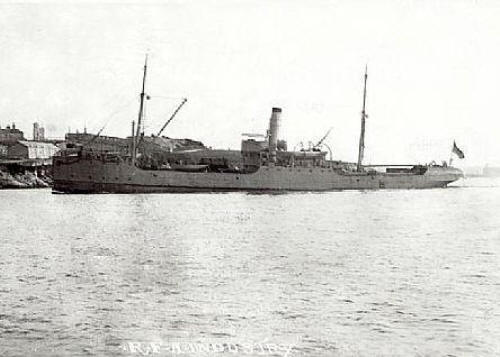
Previous name: Glasgow
Subsequent name:
Official Number 138989
Class: Stores Carrier
Pennant No: X24 and X31
Laid down:
Builder: William Beardmore & Co Ltd., Govan
Launched: 10 December 1900
Into Service: 7 June 1901
Out of service: 18 October 1918
Fate: Sunk
Items of historic interest involving this ship: -
Background Data: Soon after the turn of the 20th Century, the Admiralty acquired a number of small tankers and store-ships and from the experiments conducted with these tankers was obtained the experience which resulted in the building of a large number of tankers of various sizes which were especially designed for their task of refuelling warships. None of these early ships were sister ships, and they became the first Admiralty vessels to fall into the new RFA category on its inception in 1905
10 December 1900 launched by Wm Beardmore & Co Ltd, Govan as Yard Nr: 473 named INDUSTRY having originally been laid down as GLASGOW
7 June 1901 completed and was under a Yard Craft Agreement having been specifically designed for carrying guns and stores between different Dockyards and was fitted with extra large hatches
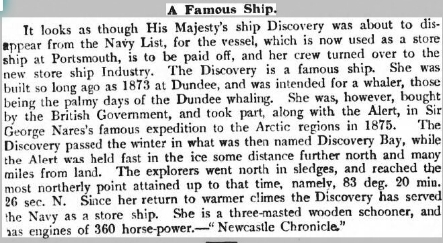
15 November 1901 the St James's Gazette reported
6 February 1902 berthed at Devonport Harbour
10 October 1903 berthed at Portsmouth Harbour
24 May 1906 berthed at Portsmouth Harbour
30 May 1906 arrived off Lundy in the Bristol Channel to deliver equipment for the salvage of HMS MONTAGUE which had been stranded on the island and receive onboard stores and other equipment from the ship
30 June 1906 sailed Pembroke Dock with three portable steam boilers to assist with the salvage of HMS MONTAGUE
1 August 1906 arrived Devonport from Portsmouth Harbour
21 December 1906 arrived at Portsmouth Harbour
15 August 1907 sailed Portsmouth Harbour
19 March 1908 sailed Portsmouth Harbour
18 September 1908 sailed Portsmouth Harbour
19 March 1909 berthed at Portsmouth Harbour
3 July 1909 the Portsmouth Evening News reported ...
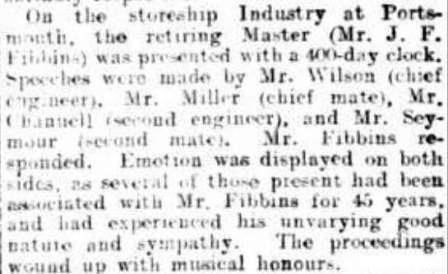
12 November 1909 arrived at Portsmouth Harbour
2 December 1909 arrived at Portsmouth Harbour from Portland
14 January 1911 arrived at Portsmouth Harbour
18 January 1911 the Portsmouth Evening News published the ships sailing programme which, seeing the entry below dated 1 February 1911, plainly slipped ...
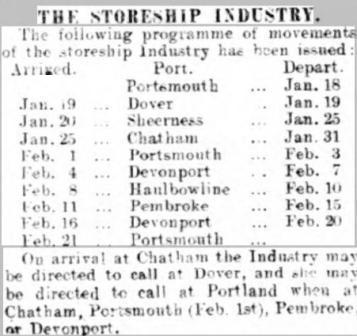
1 February 1911 arrived at Dover delivering a steam pinnace for use by the Kings Harbour Master sailing the same day
6 April 1911 in No: 8 dry dock at Portsmouth Harbour
22 April 1911 the London Daily News carried an advert for the sale of the ship by auction
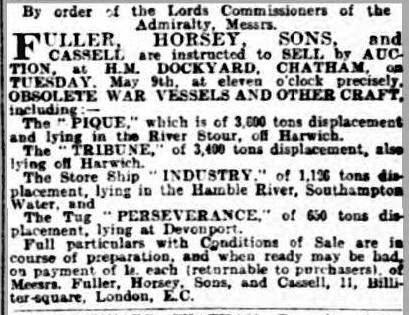
3 January 1912 sailed Portsmouth Harbour
29 July 1912 the Scotsman Newspaper reported ...
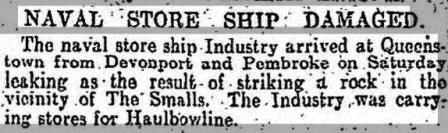
21 February 1913 arrived at Portsmouth Harbour and berthed on Boat House Jetty
15 March 1912 arrived at Portsmouth
25 April 1913 arrived at Portsmouth Harbour and berthed in No: 2 basin
1914 transfered to RFA manning
April 1914 Captain Philip J Finch RFA appointed as Master
29 March 1915 Lieutenant Frederick W Dunn-Taylor RNR appointed in command
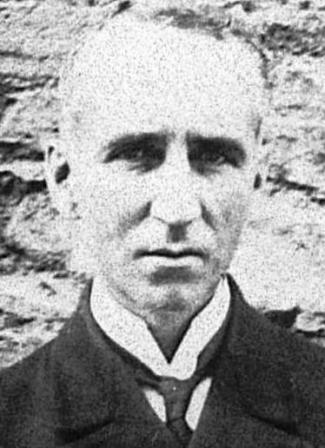
Lieutenant Frederick W Dunn-Taylor RNR
24 May 1915 at Rosyth supplying stores to HMS HIBERNIA
22 July 1915 and 23 July 1915 at Scapa Flow berthed alongside the Requisitioned Auxiliary Zaria
4 August 1915 Engineer John P Howard RNR appointed as Chief Engineer Officer
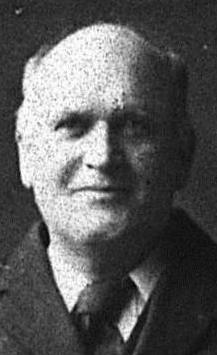
Engineer John P Howard RNR
5 August 1915 in collision with Dutch ship Zeeland off the Wold Lightship
14 December 1915 Lieutenant George L Capsey RNR appointed in command
17 May 1916 at Swin berthed alongside HMS HIBERNIA supplying naval stores
29 May 1916 Engineer Lieutenant Joseph C Tait RNR appointed as Chief Engineer Officer
1 September 1917 Lieutenant William Norman RNR appointed in command - killed in action on 18 October 1918 with 19 other members of the crew - see Roll of Honour
3 December 1917 Ordinary Seaman J Murta logged as being absent without leave. He returned to the ship on the 5 December 1917 and was discharged to HMS Victory 1. He had signed on the ship on 29 October 1917
24 December 1917 Stoker J S Elliott was logged as deserter from the ship. He had signed on the ship on the 7 November 1917
18 October 1918 torpedoed and sunk by the German submarine UB92 in the Irish Sea near the Strangford Light Buoy while under escort of the armed trawler HMS PERSIAN EMPIRE - Engineer Lieutenant Joseph Cook Tait RNR. Able Seaman William Robert Mason MMR 857858. Firemen Benjamin Ambridge MMR 912971. Ordinary Seaman Arthur Barlow MMR 882966. Fireman Victor Charles Berridge MMR 881783. Ordinary Seaman John James Carney MMR 836789. Leading Fireman Thomas H Foreman MMR. Ordinary Seaman John Robert Garrick MMR 955637. Stoker Charles Goddard MMR 801031. Able Seaman Percy Green MMR. Stoker John Alfred Jones MMR 862937. Able Seaman Reginald John Mole MMR. Able Seaman Frederick Westhorpe Mole MMR. Fireman Alfred John Mole MMR. Quartermaster Henry Pullen MMR and Able Seaman Harold Frederick Stoker MMR discharged dead. They are remembered with pride on the Plymouth and Portsmouth Naval Memorials - just four of the crew survived.
RFA Industry (2)
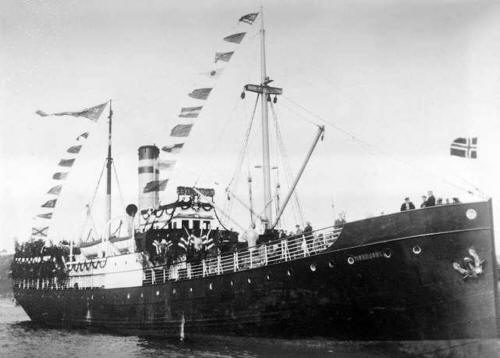
RFA Industry (2) as the Morejari in 1928
Previous name: Tay and Tyne, Cheriton, Dundreary
Subsequent name: Morejarl 1 Morejarl
Official Number 123329
Class: Stores Carrier
Pennant No: X83
Laid down:
Builder: Dundee Shipbuilding Co Ltd, Dundee
Launched: 8 November 1908
Into Service:
Out of service: 31 October 1926
Fate: Broken up
Items of historic interest involving this ship: -
Background Data: Soon after the turn of the 20th Century, the Admiralty acquired a number of small tankers and store ships and from the experiments conducted with these tankers was obtained the experience which resulted in the building of a large number of tankers of various sizes which were especially designed for their task of refuelling warships. None of these early ships were sister ships, and they became the first Admiralty vessels to fall into the new RFA category on its inception in 1905
9 November 1908 launched by Dundee Shipbuilding Co Ltd, Dundee as Yard Nr: 204 named TAY AND TYNE for Dundee & Newcastle Steam Shipping Co Ltd, Dundee. Launched by Mrs W Banks
January 1909 completed for Dundee & Newcastle Shipping Co Ltd., Dundee
27 January 1909 sailed Dundee
29 January 1909 sailed Newcastle on Tyne
2 February 1909 sailed Dundee
5 February 1909 sailed Newcastle on Tyne
21 December 1909 sailed Dundee
28 July 1910 sailed Newcastle on Tyne
2 August 1910 sailed from Dundee
5 August 1910 sailed from Newcastle on Tyne
9 November 1910 sailed from Dundee
11 November 1910 sailed from Newcastle on Tyne
15 November 1910 sailed from Dundee
18 November 1910 sailed from Newcastle on Tyne
14 December 1910 the Dundee Evening Telepgraph reported that ...
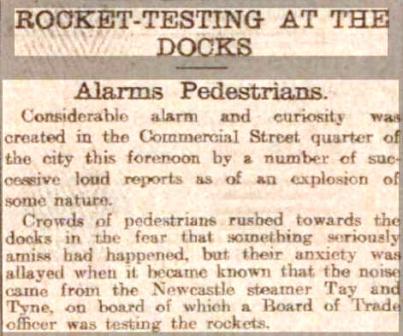
31 May 1911 sailed Dundee
2 June 1911 sailed from Newcastle on Tyne
6 June 1911 sailed Dundee
9 June 1911 sailed Newcastle on Tyne
6 December 1911 sailed Dundee
8 December 1911 sailed Newcastle on Tyne
12 December 1911 sailed Dundee
15 December 1911 sailed Newcastle on Tyne
24 January 1912 sailed Dundee
26 January 1912 sailed Newcastle on Tyne
30 January 1912 sailed Dundee
2 February 1912 sailed Newcastle on Tyne
19 June 1912 sailed from Camperdown Jetty, Dundee
4 September 1912 sailed Dundee
9 December 1912 at Broughton Ferry Able Seaman Peter Fraser discharged dead - heart failure
13 December 1912 at the River Tyne in collision with two other vessels suffering damage
14 December 1912 the Dundee Courier reported ...
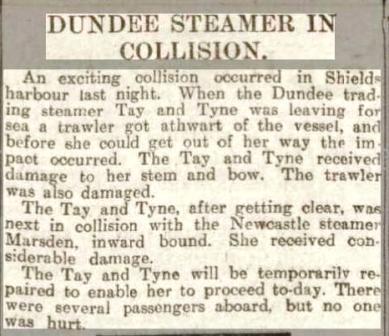
13 January 1913 berthed at Dundee having had to take shelter in the Forth with some 40 other vessels
9 July 1913 at sea Bill Inspector John G Scott discharged dead - he disappeared from the poop deck - possible suicide
25 November 1913 sailed from Dundee
28 November 1913 sailed from Newcastle on Tyne
4 December 1913 sailed from Dundee
6 December 1913 sailed from Newcastle upon Tyne
27 March 1914 sailed Newcastle upon Tyne
1 April 1914 sailed Dundee
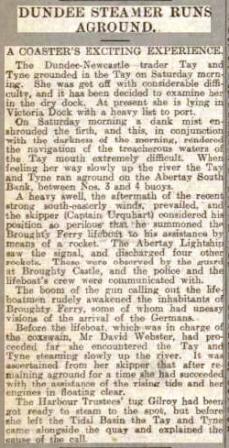
24 October 1914 grounded in the River Tay
26 October 1914 the Dundee Courier reported ...
20 July 1915 sailed Dundee
24 July 1915 sailed from Camperdown Jetty, Dundee
29 July 1915 sailed Newcastle on Tyne
29 November 1916 arrived at Montrose from Middlesborough with a cargo of Slag Manure
March 1917 purchased by Dundee, Perth and London Shipping Co Ltd, Dundee - name unchanged
28 June 1917 chartered by the Admiralty for service as a 'Q' ship serving under the names Cheriton and Dundreary
20 April 1917 Lieutenant Philip John Mack Royal Navy - Commanding Officer awarded a Mention in Despatches in the London Gazette of this day
26 September 1917 purchased by the Admiralty for £33,750 for conversion into a store ship
19 February 1918 sailed Lerwick, Shetlands to patrol off the Norwegian Coast as a 'Q' ship to take the place of Armed Merchant Cruiser India which had been sunk by the German submarine U22
1920 renamed Industry (2)
7 April 1920 Captain Stanley B Spilett RFA appointed as Master
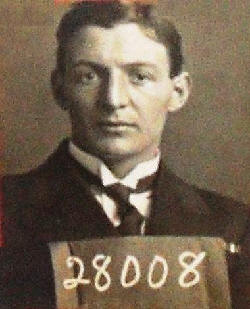
Captain Stanley B Spilett RFA
10 April 1920 sailed from Portsmouth Dockyard
24 May 1920 berthed at Portsmouth Dockyard
26 May 1920 sailed from Portsmouth Dockyard
27 July 1920 berthed at Portsmouth Dockyard
30 July 1920 sailed from Portsmouth Dockyard
28 August 1920 berthed at Portsmouth Dockyard
2 September 1920 sailed from Portsmouth Dockyard
29 September 1920 sailed Devonport for Haulbowline
28 February 1921 berthed at Portsmouth Dockyard
24 August 1922 sailed from Portsmouth Dockyard
5 December 1922 sailed from Portsmouth Dockyard
16 September 1924 offered for sale 'as lies' at Chatham
31 October 1926 sold for £2,610 at Chatham to C A Beard on behalf of James Kell, Sunderland - a ship broker for More Fylkes Rutelskap of Norway
28 November 1924 sailed Chatham, under tow - renamed Morejarl 1 - was employed on their coastal trade between Trondheim and Bergen. On purchase she was towed to Storvik Shipbuilders at Kristiansund to be rebuilt. An intermediate deck for the transport of live animals was added. The purchase and renovation cost a total of 480,000 kroner
1925 name abbreviated to just Morejarl
9 April 1940 when German attacked Norway the ship was loaded for the northbound sailing to Bergen. The City had been occupied by German forces that morning and the ship was requisitioned by German authorities as an accommodation vessel for Norwegian prisoners of war until 16 April 1940
End of 1940/1941 returned to her owners by the occupying German Forces
1950 owners name restyled as Morejarl og Ramsdal Fylkesbatar, Norway
1951 sold for breaking up to Ceuleman & Sons, Antwerp
January 1952 breaking up commenced
Ships of the same name
Industry. A sloop that was believed to be in service in 1665.
Industry. A fire vessel of 70 bm, 59.5 feet x 17 feet purchased in April 1794. Broken up in August 1795.
Industry. A gun vessel that was in service between 1806 and 1810.
Industry. A transport launched by Warwick of Ealing on the 13 October bm, 104 x 26 feet, armed with 4 x 12 pdr carronade, reduced to harbour service in 1829. Broken up in 1846.
Industry. An iron screw store ship of 1,100 tons by Mare of Blackwall, launched in 1854. Purchased on the 19 April 1854, became a boom defence vessel in 1901. Sold to Ward, Preston on the 10 October 1911.
Battle Honours for this Vessel: CRIMEA 1854-55.
Subsequent name: Awardity, Agia Trias, Kopanos, Prodromaki
Official Number: 187436
Class: Fleet Attendant Oiler
Pennant No: X112
Laid down:
Builder: J. L. Meyer, Papenburg
Launched: 1937
Into Service: June 1940
Out of service: 1945
Fate: 1973 Broken up at Eleusis
Items of historic interest involving this ship: -
Background Data:
One of the small ex-commercial tankers that were taken over by the Admiralty for service on Fleet Attendant duties in UK waters under RFA manning. She was returned to her former owners at the end of the War
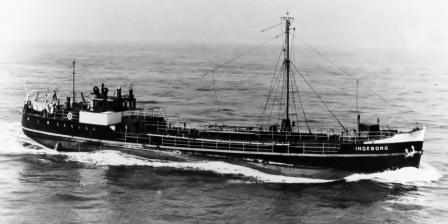
30 December 1936 launched by Jos. L. Meyer, Papenburg as Yard Nr: 407 named INGEBORG for Algemeen Vrachtkantoor N.V, Rotterdam
April 1937 completed
12 July 1937 arrived at the Sunderland from Gothenburg
28 December 1937 arrived at the Sunderland from Gothenburg
25 January 1938 arrived the River Tyne (Tyne Dock) from Sunderland
7 February 1938 berthed on the River Tyne from Gothenburg
11 February 1938 sailed from the River Tyne for Gotheburg
29 June 1938 arrived at Sunderland from Gothenberg
3 October 1938 sailed the River Tyne for Sunderland
28 December 1938 arrived at Blyth from Gothenburg
10 January 1939 arrived the River Tyne from Gothenburg the sailing the same day to Sunderland
23 January 1939 arrived the River Tyne from Gothenburg
21 February 1939 arrived the River Tyne
24 March 1939 arrived at Danzig from Stolpmude, Poland
27 March 1939 sailed Danzig for Rotterdam
1 April 1939 arrived at Rotterdam
6 April 1939 sailed Rotterdam to Itzehoe, Germany
8 April 1939 berthed at Itzehoe, German
12 April, 1939 sailed Itzehoe, Germany for Hamburg
19 April 1939 arrived at Riga from Hamburg
21 April 1939 sailed Riga for Degerhamn, Sweden arriving 24 April 1939
27 April 1939 sailed Degerhamn, Sweden for Danzig
3 May 1939 sailed Danzig to Amsterdam arriving 7 May 1939
9 May 1939 sailed Amsterdam to Rotterdam arriving the same day and onward to Neuss
17 May 1939 arrived at Gdynia
22 May 1939 arrived at Danzig
25 May 1939 sailed Danzig for Rotterdam arriving 29 May 1939
4 June 1939 sailed Rotterdam for Königsberg passing Holtenau on 6 June 1939
8 June 1939 arrived Königsberg, Germany
13 June 1939 sailed Elbing, Poland to Abo arriving 15 June 1939
17 June 1939 sailed Abo for Rotterdam arriving 22 June 1939
4 July 1939 sailed Lubeck, Germany for Stralsund, Germany and then Rotterdam arriving 12 July 1939
19 July 1939 sailed Rotterdam
20 July 1939 passed Holtenan, Germany arriving Königsberg, Germany on 23 July 1939
1 August 1939 sailed Kalman for Rotterdam
8 August 1939 sailed Rotterdam for Kappeln, Germany arriving 10 August 1939
15 August 1939 sailed Kappeln, Germany for Nakskov, South Denmark
22 August 1939 sailed Antwerp passing Rotterdam the next day for Duisburg, Germany
5 October 1939 sailed Amsterdam for Belfast arriving 10 October 1939
11 October 1939 sailed Belfast for Swansea arriving 13 October 1939
14 October 1939 sailed Swansea passing the Lloyds Signal Station on the Lizard the next day for Rotterdam arriving 18 October 1939
23 October 1939 sailed Rotterdam for Boston, Lincolnshire arriving 25 October 1939
2 November 1939 at Blyth
9 November 1939 sailed Blyth to Antwerp
3 June 1940 acquired by the Admiralty for RFA service and retained her name
9 June 1940 taken over as RFA INGEBORG for Fleet Attendant duties in UK waters
14 June 1940 Captain James Jolly RFA appointed as Master
18 June 1940 Mr William H V Davis RFA appointed as Chief Engineer Officer
1 December 1940 Mr Thomas H Cosby RFA appointed as Chief Engineer Officer
11 January 1941 Chief Officer Alfed Matthew Uglow RFA appointed as Acting Master until 13 January 1942
18 April 1942 Captain H C Coles RFA (Lieutenant Commander RNR (ret)) appointed as Master
Mar 1944 Mr W M. Howdle RFA appointed as Chief Engineer Officer
1945 returned to her owners, name unchanged
3 October 1945 passed Flamborough Head sailing south bound
21 November 1945 sailed the River Tyne for Gothenburg
6 February 1946 sailed the River Tyne for Rotterdam
30 December 1946 arrived at Sunderland
24 January 1947 passed the Lloyds Signal Station on the Lizard sailing west
15 February 1947 arrived at Sunderland from Gothenburg
17 February 1947 arrived on the River Tyne
10 July 1947 the Berwick Advertiser reported that ...
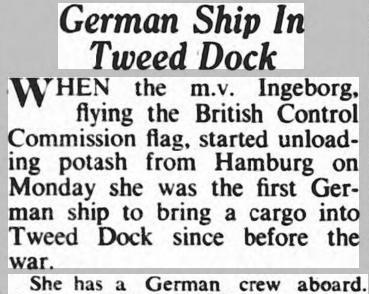
6 April 1948 passed the Lloyds Signal Station on the Lizard sailing west
26 April 1948 arrived at Sunderland
12 August 1948 passed the Lloyds Signal Station on the Lizard sailing east
25 November 1948 arrived at Sunderland
3 January 1949 berthed at Hull
20 January 1949 arrived at Liverpool from Plymouth
16 March 1949 passed the Lloyds Signal Station on the Lizard sailing east
July 1956 bought by F.T.Everard & Sons Ltd and renamed Awardity
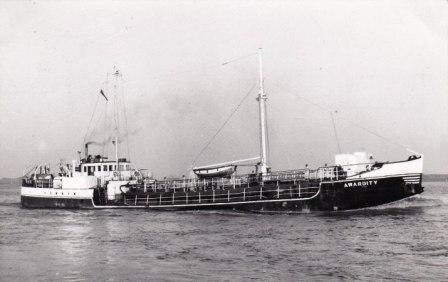
mv Awardity
13 July 1956 at London registered as AWARDITY under the reference 115/56 in the Register
November 1960 Re-engined by Newbury Diesel Co Ltd, Newbury
December 1965 bought by Koutlakis Thanopoulo and renamed AGIA TRIAS
1970 bought by J.Emmanouelides and renamed KOPANOS
1973 resold to Koutlakis & Thanopoulis and name reverted to AGIA TRIAS
1973 bought by Nicholas Tzonis and renamed PRODROMAKI A.
June 1973 broken up at Eleusis, Greece
Notes:
1. The above image was after she had been sold and renamed Awardity.