

RFA Oleander (1)
For details of RFA Oleander (1) please see the record of RFA Fernleaf
RFA Oleander (2)

Official Number: 146640
Class: 10000t OL CLASS Tanker
Pennant No: X46
Laid down: 1 December 1920
Builder: Pembroke Dockyard
Launched: 26 April 1922
Into Service: 20 October 1922
Out of service: 26 May 1940
Fate: Bombed (near miss) and beached
Items of historic interest involving this ship: -
Background Data: Of the six ships in this Class, two of them were built by HM Dockyards to keep the Dockyards busy after the end of WW1 in accordance with the Colwyn Committee‘s recommendations. Two other similar ships were built for commercial owners at the same time - MUREX at Portsmouth and NASSA at Devonport - and after producing these two well-built ships, the finances and materials appeared to be short and the two built for the RFA were supposedly built with odds and ends and auxiliaries taken from outmoded warships. With their cheap and second-hand fittings they had some heavy maintenance bills, which they paid for by spending most of their lives on charter.
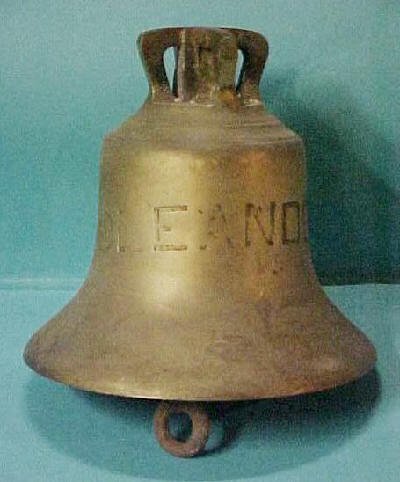
RFA Oleander (2) ships bell
Career Data:
1 December 1920 laid down
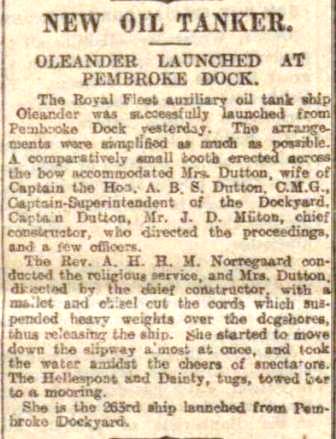
26 April 1922 launched by HM Dockyard, Pembroke as Yard Nr: 263 named OLEANDER (2). The Lady Sponsor was Mrs Dutton, the wife of the then Captain Superintendent of the Dockyard
27 April 1922 the Western Morning News reported the launching ...
21 May 1922 Mr Joseph S Harrison appointed as Chief Engineer Officer
28 June 1922 the Pall Mall Gazette reported ....
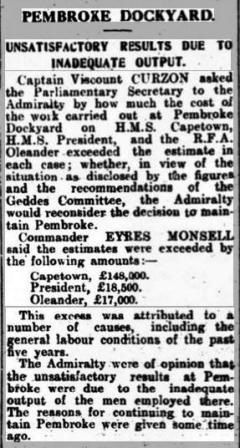
17 July 1922 Captain W Frost appointed as Master
20 October 1922 completed and placed under initial management of Davies & Newman Ltd, London
23 October 1922 arrived at Grangemouth from Pembroke Dock in ballast
26 October 1922 sailed Grangemouth for Rosyth
31 October 1922 arrived at Sheerness
23 November 1922 sailed Plymouth for Hong Kong
12 December 1922 arrived at Malta
17 December 1922 arrived at Port Said
24 December 1922 arrived at Aden sailing the same day for Hong Kong
3 February 1923 - berthed at Singapore
14 April 1923 alongside at the oil wharf, Kepple Harbour, Singapore
21 June 1923 passed the Lloyds Signal Station on the Lizard sailing east arriving at Plymouth later the same day
29 June 1923 sailed Plymouth for Tampico
21 August 1923 sailed Tampico for Buenos Ayres
30 August 1923 at Buenos Ayres
25 September 1923 arrived San Pedro from Buenos Ayres
10 October 1923 sailed Colon
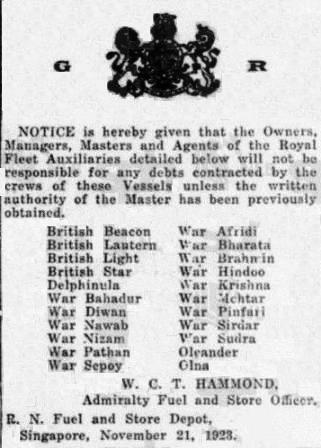
21 November 1923 the Admiralty Fuel and Stores Officer, Singapore advertised in the local newspapers -
24 January 1924 sailed Tampico for LEFO
17 February 1924 arrived Malta
23 February 1924 arrived at Port Said
28 April 1924 berthed at the oil wharf, Kepple Harbour, Singapore from Abadan
3 May 1924 sailed Singapore for Abadan
9 May 1924 at 5.58N 86.41E 2nd Engineer Officer Charles Bertram Harwood discharged dead having been lost overboard
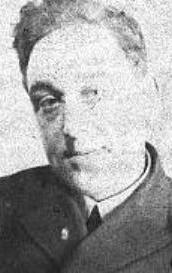
2nd Engineer Officer Charles B Harwood
15 June 1924 sailed Singapore for Abadan
21 January 1925 sailed Abadan for Singapore
11 February 1925 alongside at the oil wharf, Kepple Harbour, Singapore
26 February 1925 alongside at the oil wharf, Kepple Harbour, Singapore
9 March 1925 alongside at the oil wharf, Kepple Harbour, Singapore at the same time as RFA WAR SIRDAR
3 April 1925 at Mohammerah
7 April 1925 sailed Mohammerah for Aden
1 July 1925 alongside at the oil wharf, Kepple Harbour, Singapore
26 August 1925 sailed Abadan for Grangemouth
29 September 1925 berthed at Grangemouth from Abadan with a cargo of crude oil
14 October 1925 berthed at the Gosport Oil Fuel Jetty
15 October 1925 sailed from Portsmouth Harbour
19 November 1925 sailed Abadan
21 December 1925 Captain W Frost RFA appointed as Master
31 December 1925 at Swansea
19 December 1926 sailed Malta for Abadan
14 January 1927 sailed Abadan for Grangemouth
13 February 1927 in the English Channel near Dungeness in thick fog was in collision with Royal Mail Steamer Nebraska.
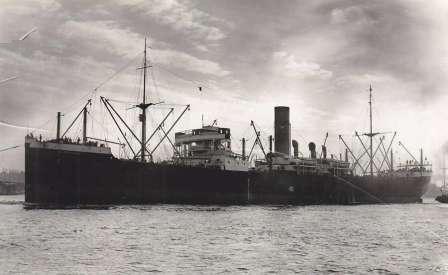
Royal Mail Steamer Nebraska
RFA Oleander was extensively damaged with a hole below the bridge on the port side and leaking her crude oil cargo
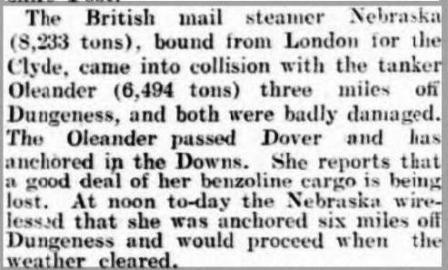
Press report from the Yorkshire Post & Leeds Intelligencer
22 February 1927 sailed Grangemouth in ballast for the River Tyne
3 March 1927 berthed in the River Tyne
23 March 1927 sailed Middlesborough for Colon, Republic of Panama
21 April 1927 at San Diego
3 June 1927 sailed Antofagasta
5 August 1927 Mr Frederick C Pavitt RFA appointed as Chief Engineer Officer
20 August 1927 sailed Manchester for Panama
22 September 1927 at San Francisco
30 September 1927 sailed Long Beach for Tocopilla
24 October 1927 sailed Tocopilla for Wilmington
13 November 1927 sailed Wilmington for Yokohama, Japan
1 December 1927 at 33.40N 178.15E Deck Storekeeper Ng Yow discharged dead from natural causes
27 June 1928 Mr Charles A Smith RFA appointed as Chief Engineer Officer
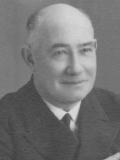
Chief Engineer Officer Charles A Smith RFA
8 December 1928 at Amsterdam
13 February 1929 at Rotterdam
18 February 1929 berthed at Portsmouth Harbour
19 February 1929 Captain W Frost RFA appointed as Master
1 March 1929 sailed from Portsmouth Harbour
12 June 1929 entered Aberdeen Harbour (at the time one of the largest ships ever to do so) from New Orleans and Thameshaven
19 June 1929 sailed Aberdeen
16 August 1929 at Rotterdam
18 December 1929 Mr Charles E Wrate RFA appointed as Chief Engineer Officer
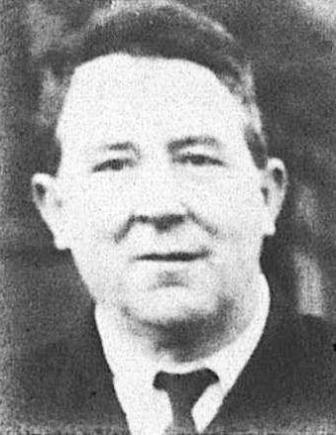
Chief Engineer Officer Charles E Wrate RFA
4 July 1930 arrived Killingholme from Devonport
29 July 1930 Mr Clifford N Ansell RFA appointed as Chief Engineer Officer
27 September 1930 berthed at Portsmouth Harbour
1 October 1930 sailed from Portsmouth Harbour
2 May 1931 at Devonport
5 May 1931 Mr T Perrett RFA appointed as Chief ENgineer Officer
10 July 1931 Captain W Frost RFA appointed as Master
8 October 1931 due Teneriffe
14 June 1932 at Chatham
2 September 1932 sailed Trinidad for Sheerness
6 October 1932 at Chatham Mr Charles A Smith RFA appointed as Chief Engineer Officer
5 December 1932 at Tilbury
17 February 1933 arrived at Glasgow from Aruba
3 June 1933 arrived at Glasgow from Aruba
31 July 1933 at Tilbury
16 October 1933 while in refit in Devonport Dockyard nuts were found in the machinery causing a stoppage in the main circulating engine - quoted in Parliament and in the press as deliberate sabotage (one of a number of incidents)
12 January 1934 at Tilbury
1 February 1934 sailed Sheerness
14 June 1934 Captain John Ross Gorrie RFA appointed as Master
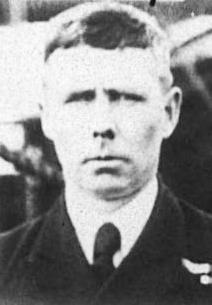
Captain John Ross Gorrie RFA
15 June 1934 at Tilbury Mr Frederick C Reynolds RFA appointed as Chief Engineer Officer
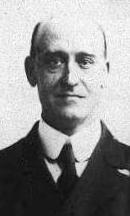
Chief Engineer Officer Frederick C Reynolds RFA
4 October 1934 arrived for refit on the River Wear at Sunderland from Sheerness sailing on 26 October 1934
30 October 1934 passed the Lloyds Signal Station on the Lizard steaming westward
6 December 1934 at Horta Harbour, Azores Able Seaman Henry Gomm discharged dead from an appendicitis
8 February 1935 Captain Reginald C E Neyroud RFA appointed as Master
24 July 1935 Captain J H Jones RFA appointed as Master and Mr Clifford N Ansell RFA appointed as Chief Engineer Officer
12 August 1935 arrived at Port Said
26 December 1935 arrived Port Said
24 May 1936 at arrived Garden Island, Sydney, Australia to discharge
6 August 1936 Captain Percival Skone-Rees RFA appointed as Master
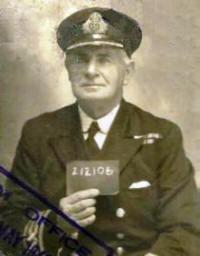
Captain Percival Skone-Rees RFA
14 August 1936 at Gibraltar while on passage from Plymouth to Abadan in ballast
29 September 1936 arrived Suez from Abadan
21 October 1936 berthed at Portsmouth Harbour
24 October 1937 sailed Portsmouth Harbour for Abadan
7 January 1937 Mr C A Smith RFA appointed at Chief Engineer Officer
16 March 1937 berthed berthed at Gibraltar from Abadan and Port Said to discharge cargo
30 June 1937 arrived at the new Admiralty tank farm at Chowder Bay, Mosman, NSW, Australia from Abadan to discharge. The first tanker to discharge at this facility since it was built
6 July 1937 sailed Mosman, NSW, Australia for Abadan
13 November 1937 scraping noise heard on ship’s bottom in the Shatt-al-Arab River but no recorded damage
22 December 1937 Mr Frederick E Langer RFA appointed as Chief Engineer Officer
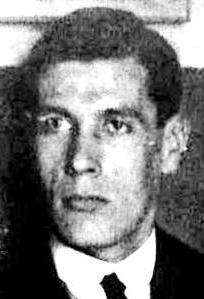
Chief Engineer Officer Frederick E Langer RFA
January / February 1938 fitted for defensive armament during docking. A 4” L.A. gun and mounting was stowed in her hold ready for fitting while a . 3” H.A. gun and mounting would be supplied in time of emergency. Also fitted for paravanes
14 January 1938 berthed at Sunderland
23 February 1938 sailed Sunderland for Abadan
27 February 1938 passed Ushant
25 May 1938 arrived at Williamstown, Victoria, Australia from the Persian Gulf to discharge (part cargo)
28 May 1938 arrived Garden Island, Sydney, NSW, Australia from Williamstown to discharge (part cargo)
7 June 1938 passed Thursday Island when on passage to Abadan
24 October 1938 berthed at Simonstown Dockyard, South Africa
19 November 1938 sailed from Simonstown Dockyard, South Africa
17 February 1939 berthed at Portsmouth Harbour
20 February 1939 sailed from Portsmouth Habour
29 February 1939 berthed at Sunderland
16 March 1939 carried out trials with the A frame paravane gear off Portsmouth before berthing at Portsmouth Harbour
20 March 1939 sailed from Portsmouth Harbour
31 March 1939 Captain A MacDonald RFA appointed as Master
1 April 1939 berthed at Portsmouth Harbour
6 April 1939 sailed from Portsmouth Harbour
19 August 1939 towed the lighter X 180from Singapore to Penang
12 September 1939 grounded whilst entering Masirah Channel. Temporary repairs effected by use of cement boxes
29 September 1939 in drydock at Bombay to effect permanent repairs
31 December 1939 sailed Gibraltar in convoy HG 13 with fuel oil for Naval storage on the Clyde. Arrived at Liverpool on 10 January 1940
18 February 1940 sailed Liverpool in convoy OB 94 (in ballast) to Trinidad - convoy dispersed
29 March 1940 sailed Halifax in convoy in HX 31 with fuel oil for Devonport
30 April 1940 in collision with a hulk at Llanion - no recorded damage
12 May 1940 Convoy NS 3 sailed from the Clyde - ship joined from Scapa Flow
13 May 1940 on passage to Narvick as part of Convoy NS 3
17 May 1940 off Narvik until fighter cover was available
19 May 1940 convoy NS 3 arrived Harstad Bay
26 May 1940 seriously damaged by a near miss during an air attack in Harstad Bay, Norway whilst in company with the carrier HMS GLORIOUS. She was beached and attempts were made to salvage her cargo. Three of her crew were injured and were taken to a Norwegian hospital.
8 June 1940 was officially classed as a total constructive loss although her remains were visible for many years
July 1941 two lifeboats which had been salvaged from the ship were taken on charge at Rosyth as spare gear. Valued at £170 for the 27ft boat and £135 for the 24ft boat. Both boats were repaired and re-equipped by Barclay Curle
Notes:
She was the last ship built at Pembroke Dockyard for the Admiralty
Oleander (3)
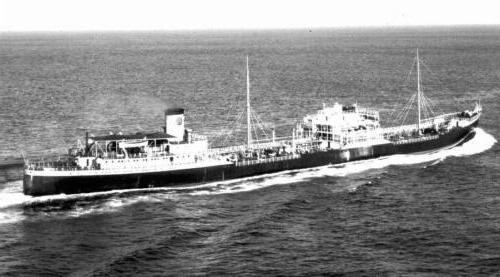
Previous name: Helicina
Subsequent name: Helicina
Official Number: 180983
Class:
Pennant No:
Laid down: 1945
Builder: Swan Hunter & Wigham Richardson, Wallsend
Launched: 4 April 1946
Into Service: Never saw service afloat as an RFA
Out of service:
Fate: 20 April 1962 broken up
Items of historic interest involving this ship: -
Background Data: In 1944, following the success of the American T-2 tankers, the Anglo Saxon Petroleum Co Ltd ordered 3 turbo-electric tankers of approximately 18000 tonnes from Tyneside builders. The first two of these were taken over by the Admiralty as the creation of the British Pacific Fleet Train had heralded the need for faster tankers to replace the older and slower vessels then in service. The problem was to find the capacity to build these ships. The position was unacceptable and to overcome it, compromises were reached and the two Shell tankers became stopgaps. The first of these, named HYALINA, was modified for Fleet Support Duties with the building of an OAS platform above her Upper Deck on the starboard side and the provision of state of the art OAS equipment. She commissioned as HMS OLNA, with a Naval Crew of 183 and was extensively armed with 1 x 4” gun aft, 4 x 40mm Bofors, 8 x 20mm Oerlikons on sponsors, Upper Deck stowage for depth charges on the port side, 60 lb of protective plating on the deck and side in the area of the petrol storage tanks, degaussing equipment and paravane gear. Initially it was not intended to retain her after the end of the War, but as she was so advanced, successful and much-needed, the Treasury approved her purchase in 1946. In the meantime her sister named HELICINA, which was to have been renamed HMS OLEANDER had not the War finished before her completion, was returned to her owners. HMS OLNA was converted to Merchant Ship status in 1946 and was transferred to the RFA. She was constantly used for fuelling-at-sea experiments and the ship itself and her RAS rigs underwent many modifications during her long career. The third ship in the series was not launched until 1948, also named HYALINA.
1945 laid down as HELICINA and acquired by the Admiralty along with her sister (Olna (2)) and was renamed OLEANDER
4 April 1946 launched by Lady Godber at Swan Hunter & Wigham Richardson, Wallsend as Yard Nr: 1711 named HELICINA for the Anglo Saxon Petroleum Co Ltd, London as no longer required for Admiralty service
October 1946 completed
13 December 1946 sailed Curacao for LEFO
14 November 1947 sailed Curacao for LEFO
18 March 1948 passed the Lloyds Signal Station on the Lizard sailing east
10 October 1948 sailed Curacao for LEFO
21 December 1956 in the Indian Ocean Engineer Apprentice Peter Ronald William Rackley discharged dead having fallen down the main pump room and suffering injuries there from
1958 laid up in the River Blackwater
11 April 1962 sailed under tow from the River Blackwater by the tugs TRADESMAN and SEAMAN to Blyth
20 April 1962 demolition commenced by Hughes Bolckow Ltd at Blyth
Notes:
1. While this ship never served as an RFA it is included for completeness of the history of the Service
RFA Oleander (4)
Reproduced with permission of the MOD

RFA Olmeda at Hobart, Tasmania on 14 July 1979 © Rex Cox
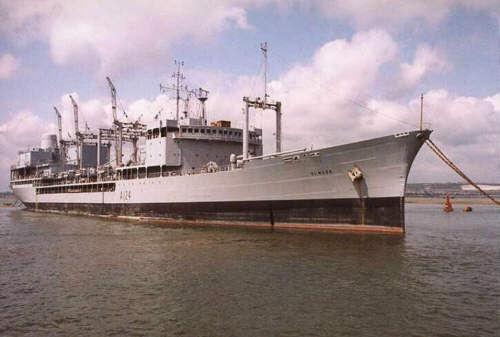
RFA Olmeda (ex RFA Oleander) laid up at Portsmouth in 1994 before sailing to the breakers
Subsequent name: Olmeda, Niaxco
Official Number: 305440
Class: OLYNTHUS CLASS Large Fleet Tanker
Pennant No: A124
Laid down: 27 August 1963
Builder: Swan, Hunter & Wigham Richardson, Wallsend
Launched: 10 July 1964
Into Service: 19 October 1965
Out of service: January 1994
Fate: Scrapped
Items of historic interest involving this ship: -
Background Data: The 1962 Defence Estimates included plans for “front line support ships” which would be capable of maintaining “fleet speed” a term which was later defined as sustained steaming at 20 knots. It was noted during the Kuwait Crisis in the summer of 1961 that the four oilers of the TIDE CLASS, together with OLNA (2) were the only RFA’s with this capability. Invitations to Tender were issued during 1962 and on the 4th February 1963, it was officially announced that an order had been placed for three ships in what became known as the OLYNTHUS CLASS. Early official references to the Class suggest that up to six ships were planned. They were designed by the builders to meet specific requirements and this design built on the success of the IMPROVED TIDE CLASS and when they entered service they were the largest and fastest ships in the RFA Fleet. Capable of operating 3 x Seaking helicopters, they had full hangar facilities too. Two of the Class were renamed in 1967 to obviate confusion with the names of HM ships. When built, the Class cost approx £10½m
4 February 1963 Ordered as AO 17
27 August 1963 laid down
1964 Her Ship’s Badge was officially presented to her
10 July 1964 launched by Swan Hunter & Wigham Richardson, Wallsend as Yard Nr: 2004 named OLEANDER. The Lady Sponsor was Lady Cary, wife of the 2nd Permanent Under Secretary of State (Royal Navy)
10 August 1964 Mr Thomas L Morton RFA appointed as Chief Engineer Officer
19 October 1965 completed ten months after the original planned completion date
12 July 1965 Commodore Eric Payne CBE RFA appointed as Master
28 October 1965 at Portland
17 February 1966 visited by a party of youth employment officers on a 'How to go to sea' course organised by the Shipping Federation
18 February 1966 sailed from the River Tyne on trials
12 March 1966 Humanitarian aid - assisted in the rescue of 37 of the crew of the blazing Liberian tanker WORLD LIBERTY which had been in collision with the Norwegian tanker MOSLI in the Red Sea. Five crew were posted as missing
23 August 1966 at Portsmouth
10 October 1966 Captain George Robson CBE RFA appointed as Master
19 October 1966 Mr G S Burnett RFA appointed as Chief Engineer Officer
14 January 1967 Mr Thomas L Morton RFA appointed as Chief Engineer Officer
18 January 1967 off the Singapore Training area RAS'ed with HMAS DUCHESS
30 April 1967 RASed with HMS RELENTLESS during the Beira Patrol
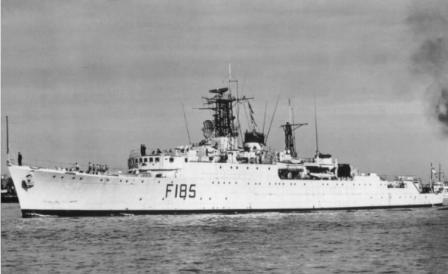
HMS RELENTLESS
2 June 1967 off Singapore RAS'ed with HMAS DUCHESS
28 August 1967 the Olynthus Class was redesignated as the Olwen Class
4 September 1967 sailed Fremantle with RFA's OLNA (3) and RELIANT (2) together with HMS's HERMES and MINERVA
16 September 1967 off Cape of Good Hope with RFA RELIANT (2) together with HMS's HERMES and MINERVA
16 October 1967 was renamed OLMEDA to obviate confusion with the frigate HMS LEANDER
29 November 1967 Captain J D Fisher RFA appointed Master
4 December 1967 renaming Luncheon ceremony at Portland after refit attended by the Lady Sponsor
February 1968 involved in the NATO Exercise Strong Stroke - Standing Force Atlantic
14 July 1968 Mr T J W Humphrey RFA appointed as Chief Engineer Officer
15 August 1968 Wessex HAS1 Helicopter No: XS881 on RFA OLMEDA when she returned to Plymouth - helicopter returned to Naval Aircraft Sport Unit at NAS Culdrose
13 September 1968 Wessex HAS1 Helicopter No: XS881 returned to RFA OLMEDA with an engine fault
17 September 1968 Wessex HAS1 Helicopter No: XS881 returned to RFA OLMEDA with severe vibrartion
10 October 1968 Wessex HAS1 Helicopter No: XS881 returned to RFA OLMEDA with an engine problem
30 October 1968 Wessex HAS1 Helicopter No: XS865 returned to RFA OLMEDA with an engine fault
31 October 1968 Wessex HAS1 Helicopter No: XS865 returned to RFA OLMEDA with loss of power when in hover
November 1968 took part in Naval Exercises 'Exercise Eden Apple' in the Mediterranean with 17 RN vessels and 33 other ships from Greece, Italy, the USA and France together with RFA's Olwen (2), Resource, Lyness and Tidepool
5 November 1968 berthed at Grand Harbour, Malta
24 January 1969 at Falmouth
16 May 1969 participated in the NATO Naval Review at Spithead when NATO warships were reviewed by the Queen
21 May 1969 at Portland Harbour
June 1969 for Portland Open Day had a hovercraft (from British Hovercraft Co) embarked and was modified to launch and recover the hovercraft
28 July 1969 took part in the Western Fleet Review at Torbay along with RFA‘s ENGADINE, LYNESS and RESOURCE along with the aircraft carrier HMS EAGLE and 34 other warships of the Western Fleet
1 October 1969 at Gibraltar supporting HMS's EAGLE and AURORA
25 November 1969 while operating Wessex HAS1 helicopter XP153 off Portugal ditched, then floated for 15 minutes before inverting and sinking. Crew were recovered by another Wessex Helicopter
10 February 1970 at Portland Harbour
13 April 1970 together with forty seven ships from 10 nations was at Sydney, NSW for the Bicentenary of Captain James Cook’s landing. Royal Navy ships present were HMS BLAKE and HMS WHITBY
28 May 1970 Wessex HAS1 No: XM331 suffered oil pressure problem whilst dunking RFA OLMEDA
7 June 1970 the ships football team played a game against HMAS DERWENT at Singapore and won 5-0
22 June 1970 RAS'ed with HMAS DERWENT
28 August 1970 acted as Flagship for Flag Officer (2), Far East Fleet
4 September 1970 at Singapore
21 December 1970 at Newcastle on Tyne (see note 1)
5 April 1971 at Portsmouth (see note 1)
4 August 1971 in Operation Limelight - a live BBC Television programme from the English Channel along with RFA REGENT
26 January 1972 RASed HMS ARK ROYAL in the North Atlantic
6 November 1972 at Invergordon
30 November 1972 at Plymouth
27 July 1973 Humanitarian aid - rescued a survivor from the sunken yacht SEALEGS off the Lizard and landed 2 survivors at Penzance
1 August 1973 Sea King HAS1 helicopter no XV675 – engine failure when dunking, landed on water 22 n.m off Start Point, unable to take off, water taxied for 2.5 hours to the RFA OLMEDA, recovered on board and then off loaded at Plymouth.
22 September 1973 deployed in support of RN units off Iceland during 2nd Cod War until 10 October 1973
14 October 1973 deployed in support of RN units off Iceland during 2nd Cod War until 27 October 1973
18 September 1974 Wessex HAS1 Helicopter No: XS862 returned to RFA OLMEDA off the Faroe Islands when the aircraft was damaged in a heavy landing when the ship rolled
25 October 1974 at Valetta Magistrates' Court Ordinary Seaman Robert Paul Gorka from the ship was found Guilty of maliciously spread false news likely to alarm public opinion or disturb good order or the public peace. He was conditionally discharged for 3 months. OS Gorka had swum across Grand Harbour from Pinto Wharf to Pariatorio Wharf where the ship was berthed at about 0200hrs. The crew were prohibited from swimming in the harbour and when asked onboard why he had been swimming in the harbour he claimed he had jumped into the water, when he saw two persons in difficulty, to their rescue. He had not suceeded and the two men had disappeared. A two hour fruitless search by the Police and a Naval Boat was undertaken.
12 December 1974 to 19 December 1974 conducted trials for FOST Portland with Wessex helicopters
6 February 1975 to 14 December 1975 stood by to the east of Malta along with HM ships TIGER, AJAX and CHARYBDIS owing to the political situation in Cyprus
8 March 1975 berthed at Grand Harbour, Malta with five ships from the 5th Frigate Squadron
4 February 1976 at Portland
20 December 1976 at Portsmouth
26 June 1977 at Portsmouth
26 August 1977 at Portsmouth
2 September 1977 in the Celtic Sea RASed with HMS ARK ROYAL during which two crew members from 892 Squadron, RNAS embarked in the aircraft carrier were washed overboard by a heavy sea. The SAR was quickly launched and the two were safely recovered within 10 minutes
5 November 1977 berthed in Grand Harbour, Malta with RFA LYNESS and HMS's ARK ROYAL, FEARLESS, HYDRA, CHARYBDIS and PLYMOUTH
13 November 1977 sailed from Grand Harbour, Malta with RFA LYNESS
4 February 1978 in the North Sea engaged in exercises with RN ships being lead by HMS ARK ROYAL during which she assumed the disquise of a stricken Spanish tanker the ss Óle
6 April 1978 together with RFA RESOURCE (2) joined HMS ARK ROYAL and HMS DEVONSHIRE off the Scilies and deployed towards the Azores
15 May 1978 off the US Virgin Islands and together with RFA's LYNESS, RESOURCE (2) and PEARLEAF (2) engaged in RASes with HMS's ARK ROYAL, DEVONSHIRE and ANTELOPE
21 May 1978 in the Atlantic off Jacksonville RASed with HMS ARK ROYAL supplying fresh water
14 June 1978 off Port Everglades and together with RFA LYNESS RASed with HMS ARK ROYAL
22 September 1978 while on passage off the south west of Ireland RASed with HMS ARK ROYAL
21 August 1979 sailed Norfolk, Virginia
March 1979 became the first RFA to be fitted with a satellite communications terminal
14 July 1979 berthed at Hobart, Tasmania with HMS Norfolk
1980 Humanitarian aid - whilst serving as Hospital Guard Ship she provided emergency medical support to the Danish tanker KRISTINE MAERSK in the Gulf of Oman whilst deployed in the area during the Iran-Iraq Conflict, along with RFA‘s OLNA(3) and FORT AUSTIN
26 June 1981 at Portsmouth
July 1981 deployed together with HMS's ARGONAUT and HMS RHYL on the Armilla Patrol
26 September 1981 at Mombasa
5 April 1982 sailed Devonport for service during Operation Corporate- the Falklands Conflict - with 824 NAS “A” Flight - Sea King HAS2 helicopter no: XV649 - embarked
8 April 1982 RASed HMS ALACRITY and HMS ANTELOPE
10 April 1982 RASed HMS INVINCIBLE
18 April 1982 RASed HMS HERMES and HMS INVINCIBLE plus four other ships enroute to Operation Corporate
19 April 1982 VERTREP with RFA STROMNESS and HMS ANTELOPE
23 April 1982 RASed with HMS HERMES, HMS INVINCIBLE and three other ships
25 April 1982 together with HMS YARMOUTH and RFA RESOURCE engaged in a rescue operation to search for Petty Officer Aircrewman Kevin Casey, D136093W, lost when a Sea King Helicopter from 846 Squadron embarked on HMS HERMES was forced to ditch. The pilot survived. The wreckage of the helicopter was recovered by RFA RESOURCE
2 May 1982 RASed with eleven ships
5 May 1982 RASed with ten ships
7 May 1982 engaged in a pumpover with RFA APPLELEAF (3) in bad weather and five other RASes
16 May 1982 RASed with RASed with eight ships
17 May 1982 engaged in a pumpover with RFA APPLELEAF (3) and RASed with HMS HERMES, HMS INVINCIBLE and two frigates
27 May 1982 engaged in a pumpover with the STUFT tanker British Tay
2 June 1982 RAS (L), the hospital ship ss UGANDA to port and the ambulance ship HMS HYDRA, east of the Falkland Islands, during Operation Corporate
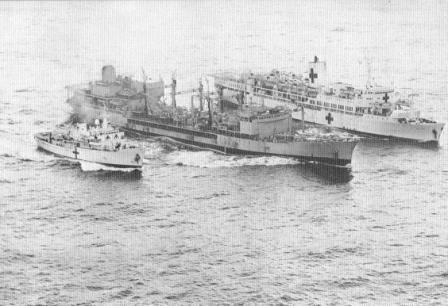
Crown Copyright via Lt Cdr Lester May RN
16 June 1982 still carrying Sea King HAS2 helicopter no. XV649
18 June 1982 embarked teams from 42 Commando Royal Marines at South Georgia for Operation Keyhole - the recapture of South Thule in the South Sandwich Islands.Rendezvoused with RFA REGENT and embarked a large volume of food and other stores by jackstay as a precaution in case the task group became entrapped in the rapid advance of the Antarctic ice pack
19 June 1982 took part in Operation Keyhole -the retaking of the island of South Thule - along with the frigate HMS YARMOUTH, the ice patrol vessel HMS ENDURANCE and the rescue tug SALVAGEMAN
20 June 1982 sailed South Thule with 9 captured Argentine PoW’s and one civilian held aboard
28 June 1982 departed the Falkland Islands for home
10 July 1982 disembarked her attached Flight to RNAS Culdrose
12 July 1982 arrived Devonport after 96 continuous days at sea, having covered 30,000 miles, had supplied 185 ships with 64,000 tons of FFO, diesel oil and avcat. In turn she had received 58,000 tons of fuel from 10 requisitioned merchant tankers
6 September 1982 Wessex HU5 Helicopter No: XS521 moved from the UK to Ascension Island
21 September 1982 Sea King Helicopter No: XV649 transferred to the ship from RFA FORT AUSTIN
19 December 1982 Sea King Helicopter No: XV649 returned to the UK from the South Atlantic in the ship
25 January 1984 Humanitarian aid - despatched her Doctor across to the container ship KOWLOON BAY
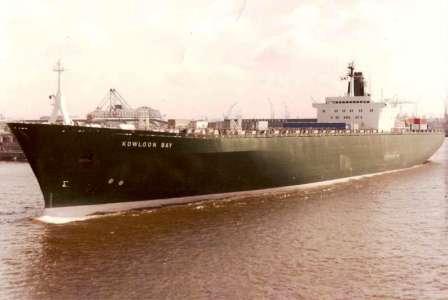
Container ship KOWLOON BAY
13 May 1985 was awarded her 1982 Falkland Islands Battle Honours at Devonport by Captain Cyril G. Butterworth CMS
23 April 1987 Captain Peter J Lannin RFA appointed as Master
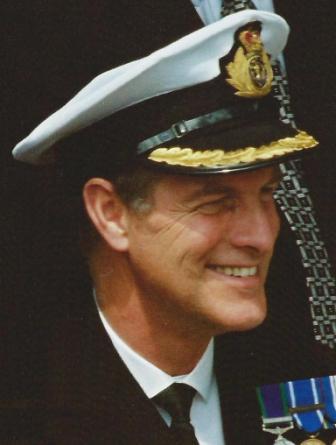
Captain Peter J Lannin RFA
27 January 1988 Captain Rex A Cooper RFA appointed as Commanding Officer
26 April 1988 alongside at Portsmouth Harbour
26 July 1988 at Gosport
12 January 1989 at Newcastle on Tyne
23 April 1989 at the River Tyne
August 1989 Captain David Wilson RFA in command
15 August 1989 at Plymouth
29 September 1889 at Portmouth
26 February 1990 at Portsmouth
22 July 1990 at Portsmouth
10 January 1991 sailed UK for service during Operation Granby- the Gulf War
14 April 1991 at Portland and Captain Alan T Roach RFA appointed as Commanding Officer
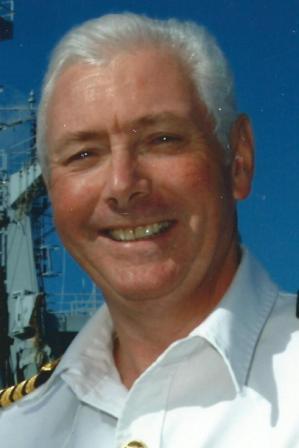
Captain Alan T Roach RFA
9 March 1991 Humanitarian aid - stood by the motor vessel LEGEND in the Adriatic Sea which was heavily laden with refugees from Albania
23 July 1991 berthed at Gosport Oil Fuel Jetty
26 July 1991 at Gosport Oil Fuel Jetty with Captain Alan T Roach RFA appointed as Commanding Officer
2 August 1991 at Rosyth
16 September 1991 at Rosyth
20 September 1991 at Plymouth
4 February 1993 at Portsmouth
26 May 1993 participated in the 50th Anniversary of the Battle of the Atlantic Royal Fleet Review by HRH Duke of Edinburgh off Moelfre, Angelsey and afterwards at the Royal Seaforth Dock in Liverpool
January 1994 laid up at Portsmouth.
5 July 1994 purchased for £1.2m by Singaporean owners Makundran and renamed NIAXCO
19 July 1994 sailed under her own power from Portsmouth to the breakers yard in India
22 August 1994 arrived for breaking up at Virenda & Co at Alang, India
23 December 1994 breaking up began
Notes:
1. Locations kindly provided by Bosun George Collings RFA (Retired) from his Discharge Book
2. Was one of the seventeen tankers employed in the Mozchan on Beira Patrol duties.